My wife Lizzy and I were invited onto BBC Radio Bristol to chat about LPP, a poem a week and our upcoming anthology ‘Why Poetry?’ as part of Laura Rawlings’ Monday Book Club. Even though the time always races by when you’re on the radio we had a lot of fun and Laura, who is a fantastic interviewer, made us feel very welcome. Lizzy even managed to squeeze in a poem and I got to mention the episode transcripts that are so important to us. If you’d like to listen you can follow this link… we pop up in the final 15 minutes!
Tag: Archive
Ep.116 – Ross Sutherland & C.I Marshall

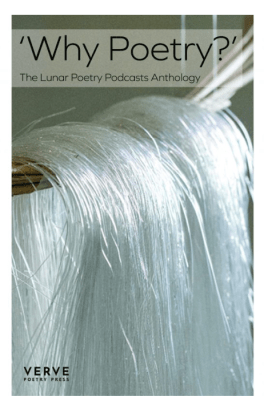
Episode 116, featuring Ross Sutherland and C.I Marshall is now available to download/ listen to via all the usual means, including iTunes, Acast, Overcast, Stitcher or here via SoundCloud. Further down this post you will find a transcript of this conversation, minus the poems read by Ross. For a full transcript follow this link. Pre-order our upcoming book, which will celebrate our fourth anniversary, ‘Why Poetry? – The Lunar Poetry Podcasts Anthology’ from Verve Poetry Press for only £9.99, including free shipping.
Episode notes:
This episode is in two parts:
Part one – David Turner is in Peterborough chatting to Ross Sutherland about his podcast ‘Imaginary Advice’ and how it now informs his writing. The pair discuss Ross’ recent British Podcast Award in the ‘Best Fiction’ category, how sound engineering can help with character development and pushing literary ideas and devices to ‘breaking-point’.
Links relating to this section:
www.imaginaryadvice.com/
twitter.com/rossgsutherland
Part two (1:06:54) – David Turner is at Verve Poetry Festival in Birmingham talking to Consuelo Marshall about her Verve Poetry Competition winning poem ‘Myself as a Playboy Bunny’, in front of a live audience. The pair also chat about the influence of San Francisco and long distance running on Consuelo’s writing.
Pre-order ‘Why Poetry? – The Lunar Poetry Podcasts Anthology’ here – vervepoetrypress.com/product/why-po…age-in-the-uk/
For more info about the podcast –
lunarpoetrypodcasts.com/
twitter.com/Silent_Tongue
www.facebook.com/LunarPoetryPodca…s/?ref=bookmarks
Download a full transcript here –
lunarpoetrypodcasts.files.wordpress.com/2018/…t.pdf
Episode music is an original composition by Snazzy Rat. You can find more from Snazzy here –
snazzyrat.bandcamp.com/
www.facebook.com/snazzyrat/
Transcript:
Transcription by Christabel Smith
Part one:
Host: David Turner – DT
Guest: Ross Sutherland – RS
DT: Hello, welcome to episode 116 of Lunar Poetry Podcasts. My name is David Turner. How are you lot? I’ve got a couple of announcements before we get on to the episode. Firstly, I finally added some intro music. You probably noticed. Regular listeners would have heard it on the last episode, but I got hold of it quite late, so I didn’t have time to work it into the chat. The music is taken from a track called Moon Museum, recorded exclusively for us by an artist called Snazzy Rat. If you like what you hear and want to listen to more by old Snazzy, get yourself over to his BandCamp page. See the episode description.
The next piece of news is very exciting. We’re publishing an anthology later this year to coincide with the fourth anniversary of the podcast series. I will return at the end of the episode with a list of the poets involved, but they’ve all appeared on the podcast and they’re all excellent. The majority of the poems are previously unpublished, so there’s lots of new work there. The book titled Why Poetry? will be out September 27th through Verve Poetry Press for £9.99, which is very reasonable.
There’s also going to be a deal whereby if you pre-order it, you will get free delivery. The bargains never end. As well as through the website, you will obviously be able to buy the book in, I was going to say all good bookshops, hopefully it will be available in the rubbish ones as well. For more information, get yourself over to Verve’s website or click the link in the episode description. It’s going to be a really fantastic book and the level of poetry in it is very high.
So, on to today’s episode. It is in two parts. Coming up later, I chat briefly to C.I Marshall at Verve Poetry Festival in Birmingham. You see? Pieces in the jigsaw. It’s all making sense now. First up though is me in conversation with Ross Sutherland. We met up in Ross’ home in Peterborough, an area of England that is hard to pinpoint. It’s not quite the Midlands, not quite East Anglia, and they really don’t like it if you give up and say it’s near Cambridge.
We met in June this year to talk about his award-winning podcast series Imaginary Advice. If you haven’t listened to Imaginary Advice before, you’re really missing out. It’s an amazing exploration into what can be achieved with music, voice distortion and brilliant story-writing and telling combined. It’s an oasis in the desert of long-form interview podcasts, true-crime stuff and let’s face it, men shouting over each other. It was fascinating hearing how this medium is now shaping the way Ross writes and the way he is now thinking about performing.
His Best Fiction win at this year’s British Podcast Awards was very much deserved. If you enjoy this chat or anything else we do, then do tell people about us. It really is the best way for us to reach new listeners. Here’s Ross.
Conversation:
RS: My name is Ross Sutherland. This poem is called;
Please download the full transcript in order to read this poem.
DT: Thank you very much, Ross. This doesn’t happen to me very often, but I sort of assumed I was going to be biting my lip through whatever you were reading and trying not to laugh. I normally don’t corpse, but I nearly went then. That was really good. I’m going to start off by saying congratulations on your recent British podcast award.
RS: Cheers, thanks, dude.
DT: A win in the Best Fiction category, is that right?
RS: That’s right, yeah. You could argue that my podcast is not a fiction podcast, because it sort of covers a bunch of stuff. I tell stories on it, definitely there’s fiction inside it, but it’s also got essay-writing in it and it’s also got poetry in it as well, but there is never going to be a category which I fit into well, so that was the closest, I think.
DT: How does it feel to be the best UK liar that has a podcast?
RS: Very good, yeah, absolutely, that is how I should introduce myself. I really love being able to increase the quality of a lie with some sound production. I really like the editing part, actually. That’s kind of become my new passion. The amount of stuff you can solve or realise about a bit of writing when you’ve got to listen to yourself saying it, over and over again.
DT: I should say now that your podcast is called Imaginary Advice. I don’t know if you have this, but there are a couple of podcasts that I like and I really hope there is a large crossover between my listeners and their listeners, because I sort of want the same people that like that thing I like to like what I’m doing. I would hate to think the people who were really into Imaginary Advice think that I’m a prick.
RS: They don’t think that, they don’t think that. I can guarantee they don’t think you’re a prick, David.
DT: Do you have that relationship with other podcasts as well? You sort of wonder about their listeners and the life behind the podcast.
RS: Yeah, I do, I’m really obsessed right now with this Twin Peaks podcast from Brighton called Diane. I just love it because it’s so much more than a podcast about Twin Peaks. It’s much more about using some of the elements of Twin Peaks to talk about mythology and psychology and to really explore a whole bunch of different stuff. It’s really, really well researched and also seems to have its core of a big, big following behind it of Twin Peaks fans, both here and over the world.
I suppose with any podcast, after listening to it for a little while, you do build up that intimate relationship with these voices that you’ve never actually met, right? I use podcasts at my most fragile, intimate moments. Yes, walking to work or when I’m stuck on a train or in the bath or going to bed. It’s these quite sensitive moments that I then go ‘argh, I need to shut out the noise, let’s listen to somebody else’. I’ve convinced myself that they’re my mates and I want everyone that listens to my show to listen to theirs and I wish it was the other way around as well.
DT: I have to clarify, I’m from South London and I don’t care if anyone thinks I’m a prick anyway. I was born into that acceptance that people probably do and you sort of have to ride it out, so that’s fine. I tell you what we’ll do, maybe you could give a brief description a bit deeper into what Imaginary Advice is, when it started and why it started.
RS: Yeah, so I started it about four years ago, about the same time as you. I’d been a writer for about 15, 16 years and at least 10 of that has been without a day job, which basically means frantically trying to piece together enough small bits of work to stay afloat. The longer you do that, the harder it is to go back and undo that particular mistake. I had, over the course of those years, created all these very, very small little commissions, which were for a particular project, which had been released, maybe heard by like 30 people, and had never had another purpose for them again.
I was feeling increasingly like the platforms that were available to me as a writer, performer, poet as well, if you want to call it that, were actually quite limited. If you want to stand up and do a poetry reading as part of an ensemble bill then, maybe you’re going to get 20, 25 minutes to read something that fits in that environment. Or maybe an essay commissioned or a poem in a magazine, but the boxes are still quite rigid, so I really wanted to find a place where I could take all those commissions and put them into a new place where they could grow a little bit and connect them to my main body of work.
So it started like that. I had a couple of anecdotes and poems and stories that I then recorded for the podcast and I found it just so, I don’t know what the word is, it opened up so much for me about what I could do as a writer and the idea that I could have something that was basically like an essay, but then, in the middle of that essay, I could drop a poem into it and the poem functions a little bit like a dream sequence. It enables me to tackle the same questions, but in a different type of language and with a different kind of logic, and finding out ways of putting together different styles of writing became really exciting to me.
DT: Obviously, our podcasts are very different in style, but it seems as though they started, not only did they start at the same time, because I had actually remembered the first few episodes going out and Dan Cockrill saying to me ‘have you heard Imaginary Advice?’ because he’s been listening right from the beginning and he mentioned it to me, for those who don’t know, Dan Cockrill is one of the gang that started Bang Said The Gun in London, which was really great.
RS: One of the navigators.
DT: Yeah. So there’s that aspect of you just wanting to find a space to archive some work and just have it there and publicly available, but the reason I started these interviews was I used to write reviews of spoken word events and I was given quite generous word counts, like 1500 words in a review, which is a lot to put down, but I found that limiting and I just wanted my own space where I could decide if I wanted to go on for another 10 minutes, I could because nobody was going to stop me.
People might press stop and stop listening, but at least I had that space. Of course, with all of these projects, there’s a certain amount of ego attached, but at what point did it stop being a place to put old work and a space for you to actually do something new?
RS: I don’t know, I think it has been a gradual, parallel processing thing, but you’re absolutely right, just that freedom to keep going and see what comes out. For me, it is also about this idea that in a podcast, through sound design, yes, you can use music and create audio beds, but you can also do really crazy stuff with time. You can have two scenes happening in two completely different time periods, like overlapping with each other, something that just from listening to Radio LAB, oh my gosh, they’re able to have three different environments which we are moving between in conversations, happening over the top and you can still distinguish them.
Even through having my voice and slightly EQ-ing my voice differently, was able to help weave together different voices. The more I found that I could almost save bits of writing, which I’d done, which didn’t really make sense, and I was able to use that sound design to pull them apart, then that gave me the tools to think more in those terms and to create stuff more bespoke in that format. I think the difference for me also was I fell in love with it because it felt like all the best parts of stage and all the best parts of what I get from the page, so from the stage, it got to be in my voice and you got to hear me come through the writing and to give it that extra vector, I think that was something I really missed on the page.
Simultaneously, what you got from the page I think in radio is that intimacy, that idea of it feeling like a one-to-one conversation with someone else. I think that Ira Glass quote, in relation to telephones, but he talks about telephones, the most intimate form of communication because you’re literally whispering in someone’s ear. He’s really talking about radio there, but I think that level of intimacy, you don’t necessarily get in a gig, unless the gig’s going really badly and there’s just one person in the audience, which happens. I think marrying together those two just made me fall in love with the format.
DT: Even the biggest stage stars when they perform are never going to perform a gig where 100% of people in the room have come purely for them. People are going to be there with their partners or their friends and just giving someone a chance. That doesn’t happen with podcasts. If someone keeps listening to your podcasts, it means they’ve chosen to keep you often, like you’re saying, maybe through earbuds in a public place, they’ve chosen to slide off with you. We’re then whispering in your ear and it’s a completely different thing.
My question about that would be where do you see your natural home? If you had an unlimited budget, would you be trying to do this on stage? How much of it is this is an affordable way of developing these ideas?
RS: Maybe that’s how it started. Simultaneously, I’ve made theatre and the theatre I’ve made was meant to be the same thing, meant to be taking stuff I liked about poetry but expanding it in a different format, but theatre actually has a completely different set of protocols and stuff like that. Everything in theatre is a metaphor for something else. That’s not necessarily the same way I would treat creating a radio story. These days, I would say I think audio is the form for me and I’m doing some live shows of the podcast over the summer, so I’ll be able to tell you better in a couple of months’ time.
I’m going to enjoy that because I’ve missed live audiences and there are definitely things I like doing with video as an element I miss working in, in this format, for the podcast. I kind of feel like finally, when I was 35, I’ve found this style of writing that I really like, so I got there in the end. I couldn’t have found it that much sooner because I wouldn’t have been able to afford the kit or it didn’t exist.
DT: I’m being quite careful with this not to geek out into a podcast chat, but there are very serious considerations here, aren’t there? We were just having a brief chat about which type of editing software we both use and it’s only been very recently, in the last couple of years, that really affordable versions of very, very good editing suites have become available to producers and the artists, because that’s something that’s interesting about podcasting, I think.
The artists become producers, almost exclusively, in a way you can’t do in other mediums, unless you’ve got a huge budget or you’re a stand-up and you don’t need anything other than a microphone in a room and even that, you need to get around the country presumably. You need to publicise it and pay for advertising. But this that we’re both deeply engaged in feels much more egalitarian, as long as you’ve got the initial income to buy some equipment.
RS: Yeah, but you know, if you’ve got a smartphone, my first couple of episodes were recorded on my smartphone, sat in my wardrobe and I edited it on Garage Band, which came free, I suppose I’ve still got the laptop, but yeah, it does feel like we’re in the middle of this huge boom of that and I love live gigs, but touring becomes increasingly hard. It did also come as a result of, I ran a night at Bethnal Green Working Men’s Club for six or so years with a group of poets, which was called Homework, where we set ourselves a new writing exercise every month and it was great for us, it was the reason we kept writing, it gave us new deadlines, it was so important to me.
But as it got harder for everybody for everybody to clear enough space in their diary to be able to do that, even though we knew it was good for us, you know what diaries are like and life in general, we just couldn’t continue, but then radio, well, I call it radio, it’s not even radio, is it? It’s not radio at all. But podcasting basically means I get a gig once a month with about 700 people and I can pay myself a little bit for it.
DT: We might come on to those issues later, but it’s odd how things, the coincidences when I have guests on the podcasts, so I don’t particularly plan which poet should follow which, because it’s all down to people’s diaries and when they can do interviews and I try to keep a mix of guests, but often it’s other factors that dictate that. But I’m going to have to do that weird podcast thing where I say that my latest episode, which hasn’t gone out yet, is with Jane Yeh.
RS: I love The Ninjas. It’s such a great book.
DT: And I’m really excited about the book she’s got coming out in March 2019. She’s working on her third collection and we talked a lot about how she is a fiction writer first and foremost. That aspect of her poetry where she’s assuming characters is really fiction-based, so it’s odd you’re back to back and there was no actual decision there. My guests have gone sort of ‘confessional, confessional, confessional, fiction, fiction’ and it’s a really nice break because I think I mentioned this in the last conversation, but it’s easy as an emerging writer to perhaps think well, if it’s not confessional, it’s not going to get picked up and where’s the space to just play around?
RS: Yeah, in relation to that, I did some teaching not that long ago for a group of young writers, emerging writers probably, like 18 to 21, and all of them in their sets pretty much had a poem about the most traumatic thing that had happened in their life to that point. They were intense, intense things. I’m presuming somewhere along the line in the workshops they run, someone has encouraged them to do that. Towards the end of the week, we were going to have kind of like a show and tell, come read a poem, and there was one poet, she was like ‘I just can’t keep getting on stage and saying this’.
It’s just like yeah, right, if you are a performer, it’s Groundhog Day and you are forcing yourself back there again and again and again. It’s not like ‘oh, it was cathartic to write it, now it goes in a drawer, goes in a book and I’m glad I got it out there’. It’s like no, you have to relive that moment again and again and again. When does that stop being cathartic and liberating and when does it become this kind of repetition compulsion where you’re just stuck with it? I have sympathies for anyone who’s been working in confessional for a long time who then goes ‘I want to change voice here a little bit or do something else’.
DT: I think it’s hard to redirect that mirror, whichever way we’re choosing to shine our creative practice.
RS: Yeah, because it will always be about you. The party can’t start without you. Whatever it’s about, it will still be about you. Absolutely. It’s tricky. These things form really early on about what our entire relationship with writing is. It’s really deep down in the psyche as to what it is about the art form that makes you happy.
DT: With Imaginary Advice, I suppose…Every time I say it, I keep hearing…
RS: My weird robot voice.
DT: Yeah, I couldn’t put it better than that. Your weird robot voice. People go and check out Imaginary Advice and you’ll know what I’ve got stuck in my head, but I suppose what people are tuning in for is there’s a real variety across the type of writing and the ways things are recorded and presented, but there are repeat characters if you like and I presume they are facets of your personality and who you are and your identity.
One thing I find really fascinating, maybe because it reflects something deep in me, is the slightly neurotic writer breaking down throughout the presentation of the piece and the repetition of these things and I was just wondering from that – I’m making an assumption here, you can just say I’m wrong if I am – but that seemingly blending the confessional, not the confessional but the inward-looking with the fictional, and whether you feel that could ever work on stage or whether you feel that’s purely something you can only develop through trust with a listener perhaps.
RS: That’s interesting. I think in terms of combining half-truth with fiction, that is something I feel I do on stage and partly for reason we were just talking about. It’s like if I have to get on stage every day for 24 days of like the Edinburgh Fringe, I’m going to twist to the truth to protect myself. I know the truth when I say it, even if I’m saying the other version of it, but I want to give myself a little bit of distance. I want to be the character.
If you’re a live performer, I don’t know, that level of sheer, complete honesty and fragility, particularly going up in front of a crowd that may not all be there for you, they’re not necessarily your mates. When they come in, some may know your stuff and will be giving you the benefit of the doubt, some people are here almost against their will.
DT: Particularly poetry, solely poetry audiences. Not the most supportive of people.
RS: This is the problem, isn’t it? We’ve got such a broad church, we have a lot of factionalism. There’s not really a huge amount to unite us because it’s this nebulous, grey area in between lots of other art forms, where lots of people are almost passing through or ideas start off as poems then actually crystallise into other stuff, but it’s in that weird grey area. When someone says to me ‘there’s a poetry night on near me, do you think I should go to it?’ Like ‘No!’ You should find out who’s on the bill and Google them and listen to their stuff and decide. The fact there’s a poetry night on near you, that could be anything from avant-garde noise poetry to stand-up in rhyming couplets to I don’t know what, it could be anything. Do more research.
Audiences are an unknown quantity and it’s difficult to put yourself out there like that and I think that’s naturally why poets that spend a lot of time on stage callous over their actual personalities a little bit, sometimes in a bad way, because I think you become weird exaggerations of yourself, and sometimes things become more exaggerated, but I think in every circumstance, it helps to play a part a bit. I feel that does apply. It’s easier in radio, definitely, and I do love the fact that with each new episode of Imaginary Advice, I try to change the format. Now I’ve been doing it for four years, formats are resurfacing, things I’ve liked in the past that I want to go back to, but that freedom is difficult to replicate
DT: I think now would be a good time to take a second reading.
RS: Yeah, absolutely. This is a new thing I’ve only just been working on this week because I’ve had a big break from just writing poetry. I feel poems have come out accidentally in doing other work, but I wanted to sit down and fall in love again with writing for the page, writing poems more in discreet units. So what I’ve been doing is at Christmas, I got a book of family wordsearches and I’ve been taking one wordsearch and reading along the lines and trying to decipher it, almost as if it was a poem that had been encrypted.
So sometimes it’s about adding letters in between or decoding in various ways. It tends to come out as gibberish, then in the next draft, I push it out even more and add more lines to make more sense of it.
DT: Has it gone so far that you’ve developed any rules for yourself or are you just letting it flow?
RS: Yeah, the rules are coming out in that I’ve become much more comfortable with first drafts being utter gibberish, then taking quite a long time with the second draft and allowing myself more rules about moving lines around and adding new lines if necessary. To begin with, the poems were just me trying to enjoy language and I set myself that as the end goal, like ‘don’t worry, Ross, just enjoy the process’. Now, some of the more recent ones have been revised enough times that actually, they’ve turned into stories and feel more like me in conversation with myself, rather than just deciphering. So let me read you this one. It’s called;
Please download the full transcript in order to read this poem.
DT: Thank you very much. You’ve sort of touched on this already and it almost feels like a really naïve question, but just a bit of history, the first question I ever asked was in October 2014 to Pat Cash and it was Why Poetry? That was the fundamental starting point for too many interviews, before I had the confidence to think of more nuanced ways of saying that. I want to change that round a bit. I’d like to know where poetry starts in your writing, if you know.
What do you see in the podcast and in your own writing as being poetry, because it’s quite a broad term with your poetry, isn’t it? I’m not being negative, I think it’s a really pleasant thing, a really wide view of what poetry is.
RS: I think what’s quite nice these days is maybe I don’t have to worry so much about that. I tend to say ‘I write poetry’ rather than ‘I am a poet’. I feel it’s a lot nicer to define myself by the verb as opposed to the noun. It makes it a lot easier to a certain degree. As someone who, not so much these days, but definitely in the past, spent a lot of time doing poetry workshops in schools, sometimes with quite young kids, but really any age in a school, any pupil asked to write poetry, that’s going to come with a lot of anxiety about ‘who am I to do that?’ Part of my role there is basically to try and throw all of poetry under the bus and say ‘you call yourself a poet by writing and that’s it.’
The confidence which comes from sitting down and beginning a thought you don’t know the end of, for me, that I feel is what starts to be the centre of what a poem is. It’s that kind of, if I was going to be all hippy about it, it’s more like a dream space where you don’t know where you’re going and you’re working intuitively into something, which is why I say almost all ideas begin for me as poems and then some move off into different formats and the ones that stay as poems remain crystallised in that original state of exploration.
DT: That’s interesting, the nub or essence of an idea. I think one of my biggest points if anyone ever asks for feedback on their work, especially what would be considered more spoken-word stuff, is that the idea was good, it was just never an idea for a poem and the fact they stopped at a poem was what shackled that idea. It could have gone in many different directions, but trying to be a poet and control that idea was perhaps what let it down.
RS: Yeah, I mean I feel it always helps with a poem to know what the door is, the way into a subject, but I don’t know which poet says, maybe it was like Billy Collins, I don’t know, maybe he was quoting someone else, about how a poem tries to escape its own subject matter, which is why when someone knows the end of a poem before they’ve begun it, then it’s like ‘I don’t think this should have…’
DT: Like the build-up was just to get to that end point.
RS: Yeah, it’s like ‘this should have been something else. That point should have been the start or you should have worked in a medium where I feel like you could have explored that further’. But yeah, it’s a thorny thing, isn’t it? I suppose you probably spend a long time specifically trying not to think about it too much at the risk of then killing any urge to do it in the first place.
DT: Throughout the 116-odd episodes, I’ve tried to stop myself giving caveats of what we’re saying, but I think it’s important in moments like this to say ‘if you don’t agree with these ideas about your own writing, that’s fine, because out of the 200+ guests I’ve had on, every one’s got their own version of what the answers to these are and I think that’s perhaps what stops people answering fully, because they don’t want to sound like they’re dictating to other writers how they should be writing. What I’m asking is how you feel about your own writing and it’s not that I want answers for myself or the listeners, it’s just interesting to see how everyone works in such different ways.
RS: This is it, isn’t it? It’s like I love a very, very open definition of poetry. I feel like it’s just that exploratory space. You could also say that for me, it becomes a poem when it’s outside the flow of capital. That is probably also like a bit of a definition of it. I don’t know whether therefore if a poem was commissioned, whether that means it stops being a poem, but certainly, the less money involved in it, the easier it is for me to tell you if it’s a poem.
DT: Moving on and taking that idea of exploration, I’m thinking definitely about specifically your podcast episodes where repetition is explored. How important is it for you to find and locate a breaking point in a narrative? It almost seems like you’re trying to break the piece in where you’re getting to. I’m thinking specifically about, is it Seven Trips to Spar?
RS: Me Versus The Spar. I think there are seven versions, yeah.
DT: It’s not only a particular highlight of mine of your podcast, but it’s one of the best things I’ve listened to in ages. I really do love that and what draws me to it is that idea that you could just keep doing that until it completely breaks down and it almost does at some point as well.
RS: I’m a huge fan of the OuLiPo, that’s the origins of a lot of that stuff and it really inspired my work, so for anyone listening that’s not familiar with the word, it means ‘Ouvroir de Littérature Potentielle’, it was a group of French writers who began in the 1960s and they set themselves up as a kind of anti-surrealist movement. They didn’t like the surrealists. Well, the surrealists were saying ‘we’re accessing our unconscious minds, we’re breaking through the bourgeois mindset by painting our dreams and we’re totally free.’
The OuLiPo were interested in the same thing, but they were like ‘no, you’re not free by just removing the rules. You’re just becoming slaves to rules in your subconscious that you don’t understand’. So the OuLiPo flooded their work with rule-based systems and created all these arbitrary rules around it as ways of disrupting their natural thought patterns and therefore avoiding cliché, because they would make it fiendishly hard to write, by putting all these obstacles in the way. Then just in the way the mind has to think around the obstacles, you’ll end up in more interesting parts of your brain.
That’s kind of the OuLiPo thing and I fell in love with various techniques they’ve gone and done. I really love the univocalisms, which are poems that only have one vowel, I find them really fun and interesting ways of thinking about writing. I loved Raymond Queneau’s exercise in style, which is exactly the same as my Spar thing, it’s a very short anecdote which then gets told over and over again in different styles. I think I like loops and retelling the same story over and over again from this way of advancing a story in a kind of lateral way, as opposed to a linear way.
So actually, a very, very small text, but then by revisiting it, either in a different genre or with a slightly different angle over and over again, you get to explore different aspects of that same thing. It is about breaking it eventually. It’s about exhausting…
DT: It’s what Georges Perec said, isn’t it? His book was Exhausting A Place In Paris, where he sat in a square, he was an OuLiPo, part of that movement and tried to describe every single thing he saw, to the point where everything lost all meaning, because if you’re actually seeing everything, you’re not seeing anything. The reason I bring that up is if any listeners are interested, you can go back through the archive to somewhere in the 60s, between 60 and 70 in episodes, there’s an episode about collaboration.
I’m sure you know them both, but Sarah Lester and Nathan Penlington on the 40th anniversary of that Georges Perec book, they repeated the exercise over a weekend in Hackney Town Square, [An Attempt At] Exhausting A Place In London, which is out through Burning Eye and it’s a really interesting look at how you can just exhaust an idea and eventually, it may loop back on itself. It’s all about loops, isn’t it? You can exhaust an idea and suddenly by continuing with it, you can reenergise it in a lot of ways.
RS: I love working in that kind of way. What actually inspired me to do a lot of that stuff as well does actually come down from this aspect of live performance that an audience doesn’t see, which is repetition. That idea, like when I’ve toured with a bunch of people and we’re doing the same show every single night, and you gain this kind of real, granular interest in other people’s performances, and when someone else does their bit on stage that night, slightly different, that becomes really interesting and I think that idea of how through repetition, things can shift and change, that I absolutely love.
One of the things I like about using repetition is allowing one audience member to experience what that’s like. I did this theatre piece years ago and it was called Comedian Dies In The Middle Of A Joke and it was a seven-minute show. It was set in a working men’s club, a stand-up comedian comes out on stage to do a routine, I’ve already told them in advance this is a reconstruction of a murder, that after seven minutes, someone in the audience stood up and shot the comedian, but before you get to the gunshot, the show stops. There’s a sound like a record being wound back and the entire show resets and then everybody moves one seat along and it starts again.
This time, you’ve got a different person playing the comedian and we’re all in a different space in the room. The thing is, the comedian is actually just an audience member as well and they’re reading the routine off an autocue. There are various points in the script for people to heckle. The only thing that’s unscripted are the heckles. You can’t heckle at any point, you have to heckle when you’re sitting in the right seats and it’s the right time. What you find is over the seven performances in one sitting, with one audience, the heckles get smarter and smarter and funnier and funnier as people try and break the show.
They know what the comedian has to say in response to their heckle, so they can make them sound even more stupid by setting it up. What I really loved about that idea was that level of prescience, is that a word? The fact that the audience feel like gods for that little time. They know everything that’s going to happen and the confidence that comes when you know the structure so well that even they can feel comfortable playing with it.
DT: I wonder how much of that attraction for you comes from, you have a background in fine art, right? Is that what you studied?
RS: No!
DT: Did you used to write in Liverpool?
RS: I briefly taught electronic literature, so a kind of English and Cultural Studies course, that’s when I was doing my PhD, but I studied at UEA, I did Creative Writing.
DT: I might just leave this bit in. Like I said, I don’t mind if people think I’m a prick. That’s interesting actually, because I had made an assumption and it’s interesting how I was wrong, so I was going to say that I’ve found with a lot of writers that have a background in having studied Fine Art is the overlap of what happened in the early 70s with Performance Art when the process was the thing and the final act wasn’t actually part of the artist’s practice, it was just the bit that sold tickets, the public-facing part of it.
It seems to me with the repetition and this idea of you showing your drafts, is that through the podcasts and through your performance work as well, that you’re trying to give the audience the process as well. A book isn’t perhaps enough at the end. The final piece isn’t enough. You’re inviting the audience into the process of making a piece.
RS: That is true. It turns out no, I don’t come from a background of Performance Art, but that is absolutely on the nose and if I was being cynical, I’d say maybe that’s because deep down, I secretly believe that writing poetry is more fun than reading it. On a different day, I might not answer that one, but I love the idea of, I don’t want to meet the audience at the end, I don’t want to sand off all the edges and make the thing perfect and then hand them something which is this completely-made thing.
I think because the journey of exploration I go on when I write, I want them there with me as I’m exploring it. I want them to see the moment that I finally work out what it’s about and that is about opening up the process. That is partly why I like using at least sometimes in my writing career, why I really enjoy using form is because form writes that large, particularly in something like univocalism when you can only write using one vowel. People can see you struggling to tell a story and having to find these workaround solutions to getting through scenes and they’re there with you in your room, writing it, when they see you doing that, but not being presented with this perfect work of art.
I guess because for me, teaching poetry to young people, that’s so much of the uphill struggle, basically trying to expose the wires. One of the exercises I run with students is to get them to take an existing poem and then just write the opposite poem, take every line and reverse it. Some of those would be obvious and some would be really, really hard, like ‘what’s the opposite of February?’ I always feel like through the act of writing, it’s like playing a musical instrument, it’s like what are you going to do to begin with? You’ve got to learn the standards. It’s only through playing and being inside of the music that you can work out how to do it. I always feel writing through learning is the best way to do that and so, as much as I can make my audience also writers, the better.
DT: As you said earlier, on a different day, you may answer these questions slightly differently, so I’m not locking you down in this one way of thinking, but had it not been for Penned In The Margins and your having such a large attraction to the process of things, do you think you would have found it that easy to be published? Because there don’t seem to be many publishers in the UK that are taking those kinds of chances on writers and allowing them to develop those ideas, in that like you’re saying, if you’re interested in what leads up to the book more, you need quite an understanding publisher.
RS: Yeah, you do. I was really lucky that I met Tom at the right time in my life. My first collection was one of the first ones, I don’t think it was the first one that Penned In The Margins put out, but it was at the very, very start of that imprint and so I think we met at the right sort of time. I think Tom also being someone who’s not only interested in being a publisher, but also interested in producing live literature and theatre and who kind of understands this dual process of both finding how page and stage fit together.
I’m really lucky and all the books we’ve made have been experiments, with us trying to locate that voice and trying to find ways of allowing poems to… There’s something very exploratory about how I try and write and experiments, you never usually hit the ball in the middle of the bat, do you? There are going to be mixed results and being able to work with Tom to basically help cast off the bad ones, I feel really grateful. I presume maybe now, I feel slightly out of touch in terms of poetry presses and what small, hip, young presses are doing stuff.
DT: I’m wondering, actually. You’ve definitely got people like Offord Road Books, Test Centre in particular, who are very interested in producing vinyl LPs alongside collections of books.
RS: Their stuff looks beautiful.
DT: Beautifully presented. I’m just wondering whether, because you’ve been involved in writing and publishing poetry for a lot longer than I’ve been in doing this podcast and sort of examining it, I do wonder if perhaps then when you first started working with Tom, whether the scene was more open to experimentation and whether it’s become more unified now. It definitely does feel more like there’s a particular style and I would be happy for people to come on the podcast and prove me wrong, but I do feel like things are becoming restricted for writers.
I’ve always loved what Tom’s doing at Penned and what the guys are doing at Test Centre because it’s nice to know there is something going on and they’re proving you can sell books as well. Not only are they printing them, I hope they’re not running at a huge loss, I’m hoping they’re turning over. I’m rambling.
RS: Not at all. It’s so hard, isn’t it? I don’t really feel, at the end of the day, advice I always give to any sort of young writer who is feeling like the gatekeepers aren’t returning their calls, who feels like the scene is getting smaller and smaller, it’s always like ‘yeah, was ever thus’. Eventually, I think it just comes down to creating your own platform, whether that’s setting up your own imprint or running your own night or setting up your own podcast. As we said, the church of poetry is so broad, so big, and yet, it’s very hard to join existing clubs.
DT: Just because I would like to give people a bit of faith and a bit of confidence, if you are writing experimentally, do also check out Hestorglock Press in Bristol and Dostoyevsky Wannabe in Manchester, especially if you’re looking at crossovers between essays, prose-writing and poetry.
RS: The Dostoyevsky Wannabe stuff is great.
DT: And it’s all affordable, they’re trying to make accessible books by selling at 2% over cost or something. It’s crazy. You can get most of their books for £4 or £5 on Amazon.
RS: Did you say they were based in Manchester?
DT: Yeah. They’re really good. They published something of mine, but that’s not why I mention them. They’re a good publisher despite publishing me. We’re running out of time. I just wonder, because I’m asking these questions of myself as well, with the podcast and the audio stuff, if we move away from it being a podcast and this experimentation of audio and musical bed and voice distortion, have you tried to think of some ways that can return to the page in any way or do you think that’s the limit of it, that has to be where it exists?
RS: I think interesting stuff always happens at the boundaries between art forms and so I think it’s exciting to try. I don’t know what will come out of that, but I’m always interested in taking stuff that worked in one form and seeing exactly what happens when you migrate it across. I don’t know. I think so. It starts to almost blend as art writing and that’s funny because that’s a world I knew absolutely nothing about and yet, I should look at because I should be looking at how art writing could be translated into sound.
I think there are definitely loads and loads of artists grouped around that area on the other side, the page side, who are doing stuff with writing over the top of other writing or are kind of using text in a much more experimental way, using text with image and stuff like that. I know the sort of Poem Brut night which runs at Rich Mix would probably be analogous to that kind of stuff in terms of exploring.
DT: My wife Lizzy and I were part of a Poem Brut night in Bristol and Paul Hawkins and his partner Sarah run Hestorglock Press. Paul has published Steven J. Fowler, who set up Poem Brut, so he put on an event in Bristol and it was a really interesting point at which mainly performers, stage performers, were encouraged to put stuff up on the walls and try and represent their vocal or audio work in image form, because it exists in this fabulous archive online, Poem Brut, the crossover between handwriting and the spoken word and glitches and slang and broken-down text and found text and collages.
It’s an amazing project. I hadn’t thought about that before, but now you bring it up, that perhaps is what led me to think I would like to see some Imaginary Advice try to return to the page, because it seems like ideas that on the face of it seem like they won’t work, there has to be something there, doesn’t there?
RS: Too right. Only when something becomes impossibly hard does interesting stuff come out of it. Exactly. I’d like to give that a whirl because I think it might fail. Just for one year of my life, I would like to commission myself to do a project that I actually knew how to do.
DT: Unfortunately, I think we’re running out of time. Before we take a third and final reading, we’ll just wrap everything up. Listeners, if you want to see or find any of Ross’ writing, the best place to go is to the Penned In the Margins website. All the links I’m about to mention will be in the episode collection so you can go down and click. Do go and check out Imaginary Advice, there’s a website link to that in the episode description. Any podcast app that’s worth its weight has got a link to both Lunar Poetry Podcasts and Imaginary Advice. If they don’t have it, don’t use them, find a new app. Just before we go, Ross, is there anything you’d like to mention coming up?
RS: I’m doing a couple of live versions of the podcast. That’s me taking a similar kind of approach to writing which I do in the podcast and trying to move it to a live space, which means using video and some other stuff as well. I’m doing one at Edinburgh International Book Festival on 14 August and then 13th September at Anthony Burgess Foundation in Manchester and then 14th September at London Podcast Festival.
DT: I have to say, one thing that’s constantly coming up is this Anthony Burgess centre. They seem to be having the best, not just because you mentioned it there, but honestly, I keep hearing it come up and there seems to be a lot happening in Manchester. That Anthony Burgess Foundation seems to be booking the best people.
RS: It’s an awesome space. I’ve only done something there once before, but it was great. Already, even back then, which was years ago, it felt like a really important meeting place for writers in Manchester.
DT: Thank you for joining me, Ross. This has been 18 months in the planning. Well, not much planning, but 18 months since first invitation, but it takes a long time to meet up sometimes. Really enjoyed it.
RS: I really appreciate it, man. This is called Dedication. Sorry, David.
Please download the full transcript in order to read this poem.
DT: Dear listener, try and imagine that being read to you three foot away.
RS: That was more intimate than even I expected.
Part two (1:06:54):
Host: David Turner – DT
Guest: C.I Marshall – CM
Intro:
DT: That was Ross Sutherland. If you get the chance to see him live, then take it. He’s a great performer and I’m sure his live podcast shows are going to be unforgettable. As mentioned, you can check all live dates on his website.
Next up is the last of four short conversations recorded at this year’s Verve Poetry Festival and in this instalment, I chat to the winner of the Verve Poetry Competition, CI Marshall. It was great fun getting to know Consuelo over the couple of days we were in Birmingham together and listening to her talking about marathon running, San Francisco and the Playboy Club in the city was illuminating. Here’s Consuelo. Me again, then Consuelo.
Conversation:
DT: Hello, Verve, how are you doing? Come on, cheer, cheer, cheer! We’re nearly there, we’re nearly free from poetry, but you’ve got one more bit of nonsense from me. This is the fourth and final…I’m wondering if I should mention this because they might not go out in order when I release them… I said fourth and final, so that’s dictated when that has to be released now… the fourth and final short conversation with poets at the wonderful Verve Poetry Festival in Birmingham.
Today, I am joined by the fantastic CI Marshall, originally from Northern California, who has travelled here from Chapel Hill, North Caroline. Consuelo was the winner of the Verve Poetry Competition 2018 and we’re going to begin with a reading of that poem.
CM: Thank you, David. Myself As A Playboy Bunny.
Apologies, we are unable to reproduce this poem at this time.
DT: Thank you very much, Consuelo. I used to always say to people ‘I don’t care about first and last lines, don’t keep telling me poems need to begin and end well if there’s enough meat in the middle of them’, but people keep contradicting me by writing really excellent last lines. I really love that ‘fast, fast as an autumn wind whipping the bay’. Would you mind explaining a bit to the audience and to the listeners how this poem came about?
CM: I’d been wanting to write this poem, I’m trying to think, maybe for 45 years and I didn’t started writing until 20 years ago, so I’ve had this running around in my head, because I actually did interview to be a Playboy Bunny at the San Francisco Playboy Club, which is really hysterical. So the poem is supposed to be funny and people don’t laugh, but maybe that’s because they don’t remember Playboy Club.
An interesting thing I told the audience and those of you who heard me when I read, I just love this, I’m very interested in architecture and the 1966 Playboy Club in London was the final design of the Bauhaus architect Walter Gropius, which I find to be very, very amusing. He was a very serious man. His work was all concerned with light and space, it’s beautiful if you’ve never seen it, so I thought that was interesting. So what happened was, I had never been able to write this poem, so when I saw the Verve contest on Twitter, I thought ‘cities, I know about cities’ and San Francisco is one of my favourite cities.
If you haven’t been there, it’s very, very beautiful. It’s got beautiful bridges and the bay is beautiful, it’s got the best coffee in the world and it’s got steep hills and great car dealers and of course, now it’s too expensive to live there, but anyway, that’s what happened. I sat down and obviously, they didn’t hire me, for obvious reasons, so I had to put an ending to it and I was a very serious marathon runner. I remember I just had this vivid image, just before the AIDS crisis hit in ’78, I had this vivid memory of Mayor Mesconi placing, it was on a gold ribbon, the medal around my head and then a month later, he and another supervisor Harvey Milk, were shot in their offices. So I guess it was a great thing for me to do so well in the marathon, but it was also tragic and very American that they were shot.
DT: You said this had been germinating in your head for a very long time. Is that usual for your writing practice?
CM: I think someone who’s lived the type of life I’ve had, which has been extremely varied and extremely different from most people’s lives, when you get to a certain age, these things keep coming up in your head. And I teach, so I love to tell the students about things that happened when I was younger, the same age they were, and how different it was then. So yes, I have a lot of food for fodder, I guess we would say in the States. I have a lot of experiences, a lot of really unusual people. Some of those people are quite well-known people.
I just heard a young woman out on the street, you have great music here. She was singing Free Falling. I’m a huge Tom Petty fan. I don’t know what the money means here, I don’t even know what it was, I just threw it in her guitar case and told her ‘Yeah, Tom Petty forever’. I’ll get off on a tangent, but I was on the Strip in the 60s and the Rolling Stones were walking down the sidewalk. I saw Jim Morrison and Whisky A Go Go and there were 25 people there. I’ve written a poem about him and that’s another poem I haven’t completed, I mean, I’ve stuck away some place.
DT: I once saw The Ordinary Boys walking across Clapham Common.
CM: That sounds good to me.
DT: Very self-indulgent of me. I was wondering if there’s a connection between the long-distance running and the germination of ideas, because I’m a middle-distance runner myself and I have a very similar relationship to writing as well, I think, in that I don’t write for a while and things have to sit with me.
CM: When I ran marathons, I didn’t use my mind. The watches weren’t that good, so I would take a Sharpie and write my splits, which would be my times that were supposed to be 10 miles, 20 miles, that whole thing, but I didn’t use my mind. I ran Boston. I ran too many, that’s probably one of the problems in terms of brain cells, but what I learned later in life was I couldn’t run anymore because you deteriorate the vertebrae in your spine from the impact. No one told us that, I found that out.
So I started doing yoga, I got my certificate. I’m very interested in that. The biggest thing yoga taught me was introducing my body to my mind and having them being the best of friends. Because I’ve been able to do that through the practice of yoga and actually, I’m stronger now probably than I was when I was running 125 miles a week. And the breath. I wasn’t really cognisant of my breath when I ran, which sounds absurd, but I wasn’t. So it’s that blending of the mind and the body. Running, I either wasn’t conscious of it or didn’t use it, but now, I use it a lot in my writing. A lot. It makes me sit down. There are a lot of things I use, that balancing of my mind and being able to tell my mind what to do and it will actually do it.
DT: That point you made about writing the split times on your wrist, I often talk about long-distance running to people in terms of it’s not a slog, you’re not running 10k, 20k, 40k, you’re breaking it down in your mind into splits, into kilometres or miles, much in the same way you might break a collection or a manuscript into smaller pieces and break down the points of your life into smaller, manageable parts.
CM: I think one thing I would say when he was saying that, it triggered again, these cells kick in and I think I can actually grow new ones now, anyway, the fact that you can pull these things out and they come back to you and you can actually write them and you can control them much better than you could have before. That’s a major thing. The other thing I was going to say too is the discipline. There’s no way you can run a marathon unless you’re really disciplined and of course that takes some mind control too.
That discipline and that time, like ‘I have to get this poem in the calendar in Poets and Writers’ and I’m always looking at that, I have it on my own calendar and all these ways to make me do it. It’s that sense of time, that big digital clock they invented in the 80s, I always see that, because it’s on the finish line when you’ve run a marathon, so I always see that digital clock and that helps me be able to finish a manuscript, to be able to finish a poem, to meet the deadlines.
DT: Talking of finishing, we’re running quickly out of time. We’re going to take a second and final poem. I’m really annoyed, because I want to keep talking, but we’re going to have to finish. Thank you, Consuelo.
CM: Thank you. This, well, you’ll know who it is, it’s in the title, so I’ll just read it.
Apologies, we are unable to reproduce this poem at this time.
DT: Thank you, CI Marshall, thank you to Verve 2018. I love this festival, it’s brilliant.
Outro:
DT: That was CI Marshall. You stuck around to the very end. Grab a biscuit, etc, etc. This anthology I was telling you about, I’m not going to list all the names of the poets in the book because there are too many, but just as a little taster, we’ve got work from Helen Mort, Travis Alabanza, Melissa Lee-Houghton, Nick Makoha, Luke Kennard, Khairani Barokka, Zeina Hashem Beck, Susie Dickey and Mary-Jean Chan, to name but nine of the 28 poets. If you want to know more about the book or what else is coming up in the series, get over to lunarpoetrypodcasts.com, where you can also find a full transcript of this episode.
You can always find us @Silent_Tongue on Twitter or Lunar Poetry Podcasts on Facebook and Instagram. This episode and the accompanying transcript were made possible with the generous support of Arts Council England, specifically the South West office. As I said earlier, if you like what we do, do tell your friends. It helps a lot. If you want to go even further, why not leave us a review over on iTunes.
Thanks again to Snazzy Rat for the music. I’ll be back at the end of August with episode 117. These episode numbers are so far beyond anything I ever thought I’d achieve, they seem a little bit ridiculous now. In episode 117, I’m going to be chatting to Andrew McMillan about his brilliant second collection, Playtime. Thanks for listening. I still can’t believe anyone does. Much love. Bye.
End of transcript.
Why Poetry? – The Lunar Poetry Podcasts anthology.

I’m delighted to be able to announce that we have an anthology of poems by former podcast guests coming out September 27th through Verve Poetry Press. The book will cost £9.99 and is available for pre-order now here, and includes free shipping. It is edited by myself and my wife Lizzy, editor of our accompanying podcast series, a poem a week.
Poets featured in the anthology, in order of appearance: Helen Mort, Sean Wai Keung, Lizzy Turner, Grim Chip, Paul McMenemy, Donald Chegwin, Abi Palmer, Travis Alabanza, Keith Jarrett, Anna Kahn, Melissa Lee-Houghton, Nadia Drews, Nick Makoha, Harry Josephine Giles, Luke Kennard, Amerah Saleh, Khairani Barokka, Joe Dunthorne, Zeina Hashem Beck, Kim Moore, Rishi Dastidar, Sandra Alland, Giles L. Turnbull, Susannah Dickey, Mary Jean Chan, Leo Boix, Roy McFarlane and Jane Yeh.
Obviously featuring only 28 poets from an archive of over 200 poets and writers is only ever going to give a snapshot of what has been achieved since October 2014 but I hope this snapshot is well-rounded, interesting and, most importantly, representational of what is happening in the current poetry and spoken word scene in the UK.
A huge thank you to Stuart at VPP for the initial invitation to begin compiling so much great work, much of which is being published for the first time. And for all of his hard work so far in trying to make the book a reality.
A big thank you also to Abi Palmer who has not only written the foreword to the book but also interviewed me for what has become an extended ‘introduction’ which now runs throughout the anthology in four sections (hopefully not demanding to much space!).
Below is the ‘official’ blurb about the anthology:
To celebrate their fourth anniversary Lunar Poetry Podcasts has teamed up with their poetry sibling Verve Poetry Press to produce Why Poetry?, a collection of poems by some of the UK’s most exciting and vibrant voices. This anthology highlights the breadth and depth of the series, offering a snapshot of the range of talent contained within the archive.
Since October 2014 Lunar has rejected the usual model of telling the listener what is good and offering hosts an opportunity for self-promotion. It focuses instead on showcasing what is happening now in poetry and spoken word, in the UK and further afield. Lunar is a platform for ideas to be developed and questions to be asked. Round-table discussions of important subjects (ep.105 – ‘Access to Publishing’) sit alongside recordings of live poetry events (ep.84 – ‘20 years of Poetry Unplugged’), though one-to-one long-form conversations remain at the core of the project.
In order to reflect the ranging topics and issues discussed in the podcast, the subjects of the poems within vary widely; from the various facets of identity such as class and gender, as in Nadia Drews’ Punky Sue, I Love You, or Zeina Hashem-Beck’s Apparition, to more surreal depictions of love and loneliness, as in Donald Chegwin’s Waking of Insects. The poems’ subjects and ideas are underpinned and elaborated on by the featured quotations.
By pairing the poems in the book with quotations taken from the 28 featured poets’ Lunar episodes, Why Poetry? highlights the inextricable link between process and final draft. Poets discussing their process throughout include four ‘Next Generation Poets’, major prize nominees and winners, and most importantly a number of writers without pamphlets or collections. Writers who consider themselves ‘page poets’ sit alongside spoken word artists and poets known more for their performances than their journal appearances. Those who teach workshops and attend residencies accompany those whose ‘other jobs’ are in cafes and offices. In true Lunar style the lines here are blurred when it comes to what makes a poet a poet and why.
Why Poetry? is the first public outing for many of the 28 poems contained within the covers of what is a unique book, reflecting a unique archive of poetic ideas, ideals and methods.
David xx
Episode 115 – Jane Yeh & Roy McFarlane.

Good morning listeners!! Episode 115 is now online… You can download and subscribe via all the major podcast channels including iTunes, Stitcher Radio, Overcast, Acast and SoundCloud.
(My apologies for my slightly ‘glitchy’ voice during the conversation with Jane. I’m working hard to rectify this and will hopefully have an improved version up soon.)
This episode is in two parts:
Part one – David Turner is in London chatting to Jane Yeh about assuming personas and writing characters iton her poetry, why fiction is such a common starting point for her poems and the influence that fine art, particularly ‘old-master paintings’ has on her creative practice.
Some links relating to this section:
www.janeyeh3.com/
twitter.com/JaneYeh3
www.carcanet.co.uk/cgi-bin/indexer?owner_id=838
tornn.me/
Part two (00:48:07) – David Turner is in Birmingham at this year’s Verve Poetry Festival interviewing Roy McFarlane in front of a live audience. Roy explains how important it is for him to try and convey the sounds of his home city through his poetry and how, often, characters in his poems are a composite of many people.
Some links for this section:
www.roymcfarlane.com/
ninearchespress.com/publications/po…ext%20time.html
At the bottom of this post is a transcript of the conversation – minus the poems – alternatively, download a full transcript here.
The episode music is an original composition by Snazzy Rat. You can find more from Snazzy here:
snazzyrat.bandcamp.com/
www.facebook.com/snazzyrat/
Transcript:
Transcript by Christabel Smith.
Host: David Turner – DT
Guest: Jane Yeh – JY
Introduction:
DT: Hello, welcome to episode 115 of Lunar Poetry Podcasts. My name is David Turner. How are you lot? I recently got some feedback from a very knowledgeable and experienced podcast producer about the series, relating to how it’s hosted, edited and produced. Part of that process involved us agreeing that these intros sound far better when recorded outside, so here I am in Victoria Park in Bristol, South West England, trying to avoid the screams of the kids attending the primary school, which sits at one corner of the park. The reality of trying to record a voiceover whilst birds chirp and sing in the background is that I am now sat on the ground as I talk to myself in a bush.
Today’s episode is in two parts. Coming up later is Roy McFarlane in conversation with me at this year’s Verve Poetry Festival. First though is a conversation recorded April 27th of this year in central London with Jane Yeh. We met up in Covent Garden to discuss her second collection of poetry, The Ninjas, out through Carcanet Press and her upcoming third collection, which will be out in 2019, also with Carcanet.
There’s a little sausage dog just running past, you may have heard it.
I’ve been looking forward to chatting to Jane on the podcast, as many of my more recent interviews have been with writers who focus on themes rooted in the exploration of their own identity and while this is a vital process for writer sto work through, it is sometimes easy to feel like the only way you will get recognition as a poet in the UK is if your writing practice is very much inward facing. Jane’s style of writing runs contrary to that assumption, as it explores fictional settings with voyeuristic, often lonely, characters at the centre of her poems.
I hope it’s also clear from the conversation that it’s often only through interviews such as this that writers dissect their own writing practice, as they’re usually too busy writing to consider these questions unless prompted. As a listener, it can be common to think ‘I’m not a proper writer like these people because I don’t ask these questions of myself’. The reality is that most people don’t ask themselves these questions. Most poets I know, which is quite a few now, are simply overwhelmed by the fact that they haven’t forgotten how to write a poem, to sit around asking why they’re doing what they’re doing. I hope that makes sense.
As usual, I will use this opportunity to ask that if you like what you hear in this episode or any of the other 114, then please do tell your friends, family, work colleagues about the podcast. Or maybe go and leave us a lovely review on iTunes. I have no marketing budget and word-of-mouth recommendations are invaluable.
Here’s Jane.
Part one (00:03:25):
JY: Hi, I’m Jane Yeh and I’m the author of two collections of poetry, Maribou and The Ninjas. The first poem I’m going to read is;
For a transcript of this poem please see the full transcript over at – https://lunarpoetrypodcasts.com/episode-transcripts/
DT: Thank you very much for joining me, Jane. It’s always a struggle to start these conversations, but I’ve been reading your second collection, The Ninjas, out through Carcanet Press and a couple of things I downloaded online. One poem was up on Poetry London and another on Boston Review fairly recently. It’s made a real change reading the way you write in character so much, compared to a lot of stuff you find at the moment, which is, and understandably so, for a lot of people, an exploration into themselves and their own identities.
So these poems have stood out a lot compared to the stuff I read for pleasure and professionally. Maybe we could start by chatting about why you choose to write as characters.
JY: I know, I guess it’s something I’ve done almost from the beginning of when I started writing, although when I really started, as a teenager, of course like most people I was writing about my own feelings, like having a crush on someone or wishing I had a boyfriend or whatever. I guess to me, because I know my own life and experiences they’re not that interesting for me to rehash or even elaborate on directly, so I guess I’ve always been interested in writing about other characters or imaginary characters.
I read a lot of fiction, I always have, ever since I was little, so I guess in a way I’m a little bit more like a fiction writer than a poet, just because I like to make up fictional worlds and characters. It’s also kind of weird though, because obviously a lot of the poetry I read, like you say, is people writing about themselves and it’s really brilliant and super-interesting, but somehow I don’t feel like trying to do that about myself or my identity.
DT: I think it’s important to point out at the moment, because I was a bit worried about how I would word that question, because it’s difficult to start talking about things like this without making one way seem better than the other and that’s not what I’m trying to do. It’s interesting to see how strikingly someone like Luke Kennard straddles both, what was he saying recently? He has this internal critic, which appears as a fully-formed character in his poems, so that’s an interesting tool as well, but yours is very consistent through all of your poems.
JY: Practically, yeah. I do have a handful of poems which are more autobiographical or personal, but not a lot.
DT: It would also be untrue to talk about your poems as complete fiction as well because things from your life must appear in them. There was definitely a difference between the two more recent poems I read online. In The Ninjas, there seemed to be – it may just be the fact I’m away in London, away from my wife at the moment – an underlying theme of lonely moments within those poems.
JY: Yeah.
DT: These themes that run through which I’m assuming would lead back to the author, rather than the characters themselves.
JY: Again of course, there is always something of the author in the characters and stories they invent, even though they don’t seem to be autobiographical. Especially in The Ninjas, but also in Marabou, I would definitely say one of the main themes is loneliness or being almost an outcast, or being apart from the mainstream of society or the world.
DT: I definitely got that feeling of ‘outcast’, a lot of the characters seem to be voyeurs in themselves. You seem to be observing characters which themselves are observing the world around them. A poem that stood out particularly in The Ninjas was Sargent’s The Daughters of Edward D. Boit, where you imagine what the young girls in the paintings might be thinking. It’s in four parts and then four scenes, in which you elaborate a bit on the characters. Sargent’s paintings come up a little bit more and there are further references to images. How often do you take images as a starting point?
JY: That’s also something I’ve done for a long time and actually at the moment, I’m doing it more deliberately. I’ve always been interested in art history. What I was taught was pretty canonical Western art history, such as painting and Old Master paintings, which I really like and feel really drawn to. When I started writing these poems, again in those first two collections, they’re mostly these Old Master-type white-male artists, so in my new collection, the poems I’ve been writing, I’ve been trying to focus more on contemporary art and also not entirely paintings.
Some of it is installations or videos or films. I’m very drawn to or inspired by visual images. Obviously, you can be inspired by anything that’s a visual image, like an ad or a poster, but something that is already in a sense a work of art, has this extra power in a way that’s attractive.
DT: That process of taking visual art as a starting point, does that happen physically in a gallery space or would you reflect on it afterwards or go through catalogues?
JY: Mostly, it is actually working from reproductions, so jpegs on a computer pretty much. The Sergeant painting, The Daughters of Edward D Boit, I had seen a long time ago in person, in Boston, where it hangs, but only once really, many years before I wrote the poem. So a lot of time it’s working from reproductions or even in a way, like my memory of what something looked like.
Again, with this same poem, I had a little postcard reproduction of it from the museum gift shop, but when I wrote the poem, I actually deliberately didn’t look at it or keep looking at it whilst I was writing the poem because I didn’t want to be influenced by it too closely. So actually, in the finished poem, if you look at it, some of the description doesn’t actually fit the painting because I kind of misremembered. There’s no doorway that one of the girls is standing in, it’s actually just space.
DT: It’s interesting, if I’m stuck for subjects to write about or struggling for inspiration, I spend a lot of time in galleries, looking at paintings. It’s one of my favourite things, to write from paintings, and Leon Kossoff will always strike something in theme it’s really textural, almost sculptural. I think that’s why I need to be in front of the paintings, because I like to see the depth and volume. He painted alongside Frank Albach and they paint in a similar way. They paint portraits and landscapes, mainly of building sites in post-Second World War London, post-Blitz London.
I had a discussion with a friend, who also writes from paintings and they do a similar thing to you, have postcards or jpegs. Their process was needing to remove the scale and the gallery from the image. It was this uniformity of having stuff on screen that allowed them to draw stories out of the images. I wonder how much that plays?
JY: It’s not that so much, it’s more the convenience of having a jpeg or a postcard you can look at when you want to see what it looks like properly. Most of the time, I don’t know what it is really, because when I look at art in real life, especially paintings I love, what you’re saying, what actually interests me in the brushstrokes and texture and everything like that, but when I’m writing a poem about it, that doesn’t really come into it.
DT: It’s interesting to hear that you’re perhaps writing from a memory.
JY: It’s definitely already mediated by my memory. Obviously, I’m not trying to make some exact reproduction of it in words, because what would be the point of that? I’ve only started trying to think about it, or theorise about it, recently, so I don’t really know what my conclusions are. It’s one of these things, in the same way I write these dramatic-monologue poems or poems about characters, I’ve just been doing it for a while or just started doing it for who knows what reason, it’s like you start theorising about it afterwards, if you have to.
DT: It’s only when someone invites you on a podcast and forces you to think about things. This is an important point about these conversations, that quite often, the subjects that come up when you’re talking about things, aren’t part of your process necessarily, are they? You just do things you’re drawn to and hopefully get enjoyment out of as well. I don’t know why I like looking at Leon Kossoff’s paintings while I sit and write about them and I don’t think I would want to think about it too much because it would take some of the enjoyment out of it.
I was born near Tate Britain so it’s quite nice to be in that location, knowing my dad bunked off school when he was a kid and snuck in there to get away from the truant officer.
JY: When it was just an abandoned industrial building?
DT: No, so Tate Britain, the older. So these characters that come up within your writing, I’m wondering whether you’re writing as yourself as another character or are you viewing them? Are you putting yourself into those personas?
JY: I guess there’s a sense when people talk about writing dramatic monologues, like poems, I use this terminology too when I’m critiquing students or something like that, you talk about trying to inhabit the voice of this other character that you’ve created, or speaking in this character’s voice, and in a way that’s true, or the most obvious way of putting it, but when I’m writing, that’s not exactly what I’m doing or trying to do. I write really slowly, line by line or sentence by sentence, and I almost feel some kind of voice is being created by one line and then what the next line is, or what comes up in this one line or statement, what this kind of voice is saying.
But it’s not like oh here’s the voice of this lonely robot, or whatever, and now I’m going to speak in it. Do you know what I mean? It’s almost more that in the process, it turns into the voice of a character or into some kind of character, but it’s not like I have a preconception of it that I’m aiming at. I imagine people in acting classes must have some exercise where it’s ‘oh, here’s the character you are, now speak in their voice’. It’s not like that, it’s more the opposite in a weird way.
DT: That’s interesting because with a lot of people who are doing spoken word stuff or anyone that’s done any improvised stuff, it goes back to that thought of acting, anyone who’s done that would read your work and perhaps assume you had a conceit to begin with and an ending point and you found a way to let your character through that. It seems more that you start from quite a small starting point, then allow the whole thing to develop.
JY: I would say that’s definitely true. I don’t just start out with a whole conceit in mind or any kind of end point at all. Like you say, I guess it’s very improvised, so moment to moment, obviously many moments, because I am such a slow writer, but it’s quite haphazard as well, it leaves a lot to chance. If I think of some strange line that day that might be interesting, the poem is going to turn into that, or some character’s going to come out of that.
DT: Is it the writing process that’s slow or does it also take the ideas a while to germinate?
JY: What I’m trying to say, again it’s sort of weird because I haven’t really thought about it myself until now, I guess it’s that ideas are only coming through each sentence I’m writing. So I guess you could say both of them are slow because they’re coming together at the same time.
DT: What’s the mechanical process of your writing? Do you have a few pieces on the go at once or stick to something until it’s worked through?
JY: Usually, I’m only working on one thing at a time. Occasionally, there will be something and I’ll put it aside and then be doing something else, or if I have a deadline, occasionally I’ll be doing one thing in the morning and one in the afternoon, but in a way, I do just work out one really slowly and worry away at it, which I don’t actually think is the best process. It’s literally the opposite of what I recommend to students because I don’t think it’s that effective, but it’s the way I’ve fallen into working unfortunately, so that’s what I keep doing.
I’m thinking when I finish this current book, and am embarking on a new book, I want to change my process and see if that does anything.
DT: Did you have a pre-decided theme or idea about what the collection should be about or did it just suggest itself as pieces became finished?
JY: Each of these three books, I didn’t have any preconceived theme or project. It’s just like the poems I’ve been writing for the last several years. Obviously, they have their own commonalities and themes that emerge when you see them en masse, but it’s not any kind of project or concept.
DT: I don’t know why I keep asking that question. It seems to, at best, bore people and at worst, annoy them. It always seems that question only comes up when you’re trying to sell a book afterwards, suggesting a unifying theme to a potential buyer or reader.
JY: I think it’s an interesting question. I feel increasingly here, and before that in the US, most of the poets I know are often writing what they see as a collection that has a project or unifying theme. That basic idea, they aren’t just writing a bunch of whatever poems come to their mind. They have more of an arc or some kind of aim, I guess you would say. It’s kind of cool. A lot of these collections with that feel are really strong and interesting. For me, again, it’s just somehow I can’t come up with an idea like that I feel strongly enough about.
DT: Speaking recently to Mary-Jean Chan, reflecting on her daily pamphlet, and is very concerned with her debut collection coming out through Faber, we were chatting about how for a lot of poets, the first collection is the most personal and an exploration of themselves and they can get that out of the way and get on to maybe considering ‘well, I’d like to explore this theme or that theme’. It also might be a consequence of funding opportunities that become available to you once you’ve published the first collection. Someone might come to you and commission an idea or a project.
JY: Yeah or often, if you’re applying for grants or other funding, you have to say you have some idea for a project. Again that probably is part of it with the American poets especially, how many of these contemporary American books have this kind of project.
DT: How much do commissions and projects play in your practice?
JY: In terms of financially, or supporting yourself, the money, at least for the things I’ve been asked to do, there’s either no money or minute amounts of money, so it’s not for that. What I like about it, I actually love it when people are ‘Oh, I’m doing an anthology on this theme, would you be interested in contributing something or writing something for it?’ or other kinds of commissions. I really like having some kind of external suggestion.
Again, the way I don’t write about myself or my feelings or experiences really, so I am always looking for something else to write about, or even just a starting point or jumping-off point. Again, that’s definitely one of the reasons I’m drawn to writing about art or art pieces, because it’s something totally external to me, but I can grip onto as a starting point.
DT: It’s useful, having those prompts external to yourself. It’s something I need to get back to more. I get too bogged down in thinking about myself too much, I don’t find it very healthy, plus I don’t think people particularly want to read about it much. There are two sides to my writing. I have a way that’s very confessional, but also really enjoy writing fiction, which is bordering on short stories.
There’s a huge amount in the way you write that really appeals to me and I would prefer to spend more time exploring that. I think there might be quite a few people listening that feel a pressure to write about themselves because that is the predominant fashion. I think it’s good to talk about ways of looking for prompts externally to yourself. Even if it’s not with a view to being published, it might be healthy for writers to take a break from thinking about themselves, the internal ‘I’.
Are you conscious of when the switch was made to know what led you to start writing more fictionally? Any advice for people that might want to try writing more like that?
JY: One thing I’ve noticed a lot from teaching is when you give people exercises that force them not to be writing about themselves in a confessional way, they often produce really good stuff, that’s really different from the way they were writing before. Always, they will say ‘I really enjoyed that, it was interesting’. That doesn’t mean they’re going to spend the rest of their life writing dramatic monologues, but trying something different is really worth it when you’re working on your craft.
DT: Do you have an example of an exercise you might give?
JY: Yes, there are ones, like every teacher ever has used them, I’m sure, writing from visuals. Every student picks their own image, again it can be a photograph or an image of a painting, or it could be an ad or a poster if they want, totally anything, then go away and write a poem that’s inspired by it in some way. It’s as simple as that really. Again, I think it is probably natural for most people, especially when they’re starting out, to just write in the ‘I’, first-person voice. So even just being directed specifically to not use that as your starting point can be fun or exciting for people.
DT: That’s really interesting. Before we move on to anything else, we might take a second poem.
JY: So the poem I’m going to read is called A Short History of Style. The sub-title is Joey Arias, at Jackie 60, New York 1997. So Joey Arias is a performer and performance artist and in the 1990s especially, in New York when I was living there, he was famous for doing a one-man show where he was singing the songs of Billie Holiday and he could vocally imitate her to a remarkable extent, but he himself wasn’t physically impersonating Billie Holiday, although he was in drag, but his own drag, not trying to look like Billie Holiday. This is kind of a memorial to those performances.
We are unable to provide a transcript of this poem at this time. Apologies.
(00:27:12)
DT: Thank you very much. It was interesting earlier to her you talk about working from sentence to sentence. Another note I made about a few of the poems in The Ninjas and then audibly within that poem, there seemed to be a gathering together of those sentences, not that they’re completely disparate because there’s a lot of work going into the order of them, but there’s something ringing in my mind because I was at an event recently, put on by Toast Poetry, which had Remi Graves, Mary-Jean Chan and Joe Dunthorne reading.
There was a short Q&A afterwards and Joe Dunthorne was talking about going through old notebooks and stuff that doesn’t work and put aside sentences or images he likes. He’s got a folder on his desktop, which will be saved ideas. I wonder whether that’s any part of your process, whether you will hold onto things, or how you feel about discarding ideas.
JY: That’s really cool. One of my friends, this American poet Amy Woolard, for a long time she worked like that. I don’t know if she still does, but like what you said Joe Dunthorne would say, keeping this whole notebook or file of really good lines that you’d had to cut for one reason or another from a poem. I sort of used to keep a list of some good lines that I was hoping to use again, but actually, it never really worked out. I like the idea of that and the idea of collage and these fragments of poems, but again, for whatever reason, it hasn’t actually worked out for me.
I think when I’m writing, especially more recently, so the poems I’m reading today are all going to be in my next collection so they’re more recent, I’m definitely interested in this idea of thinking of the poem as a collage of these lines or sentences or images and trying to be less linear and less logical in terms of the construction of the poem.
DT: That’s fascinating to hear because I was wondering whether I’d just projected that onto some of the poems I’ve been reading in the last couple of days, this idea that things could have been shuffled around. You definitely get a sense of that, but it’s very interesting to hear you talk of working in a very linear fashion and going from line to line, then having this feeling that things could have been reassembled and reorganised.
JY: Actually, I guess recently in all of these new poems, the editing I do or the revising I do, is more about changing the order of the sentences or lines than other kinds of editing that one can do. So sometimes I do literally switch the order of some sentences to see what happens.
DT: Going back to the visual arts, you were saying it’s not just paintings. How much do abstract and collage images play into the way you think about writing? From The Ninjas, it may have just been the painters I was familiar with, but it seemed much more figurative in that respect.
JY: Yeah, in a way it might be partly the kind of art I’m writing about now, the contemporary art, tends to be less figurative, or maybe I’m subconsciously seeking out less figurative work. I’m not really sure, to be honest. I feel I need less figuration to be able to create a story or characters out of than I used to in those earlier poems. For instance, one of my new poems is inspired by this installation in a small, basically a one-room gallery, so there are different pieces arranged around the room and none of them are figurative per se, except a cast of a foot.
There was a wheelchair that was cast in bronze, or painted gold, or something like that. Different objects. But the poem itself is about a man, or a boy, so I guess maybe it was interesting to me to create something that was about a person, even though the visuals I was working from don’t directly represent people.
DT: This ‘cut-up’ or collage aspect of your process of working, how much do you want to communicate that to the reader? Does that play any role?
JY: Actually, only super-recently, I’ve been trying to think a little bit more about the form of the poem on the page or what it looks like on that page. On the one hand I kind of like the fact that most of the poems I’ve been writing, even though they kind of are like this strange collage, they’re almost rigid-looking on the page. They’re set out in stanzas and the first letter of each line is capitalised, which is considered old-fashioned nowadays. I kind of like the sense of order that gives you, but actually, I’m also just starting to be interested in these much more open forms, especially as contemporary poets, who are doing really interesting work, use them so much. The idea is coming into my mind more, so I’m only just starting to experiment with them, where the phrases and words are spread out a little more on the page, not like concrete poetry, where it’s making a little shape.
DT: Giving air and space inside.
JY: Yeah.
DT: Forcing people to pause.
JY: Yeah, yeah.
DT: It’s fine if your process is to get to a traditional-looking poem, but if you want to communicate that to the reader, it’s very hard in a traditional book to express that, because everything’s very defined, it’s printed there and there’s no movement in it necessarily. Have you considered taking your poetry off the printed page in order to express more this feeling of collage?
JY: What do you mean?
DT: More taking it closer to what some of these installations are that you’re taking your inspiration from, allowing some live movement within a text.
JY: I guess I haven’t, to be honest.
DT: It just popped into my head because I’ve been thinking about one particular artist [Ed Atkins].
JY: It’s an interesting idea. I guess if I thought more about performance or maybe were a better performer, I might be trying to do something more radical. To me, the outcome I want is something that is satisfying to me or to other people when you read it on the page. Again, I guess it’s old-fashioned, but to me, the way it’s performed is always going to be secondary really.
DT: I also meant not just in the performance sense, but in the way people are allowed to read the work, whether there is some way of controlling more how people interact with the words, even without your presence.
JY: Actually, I remember just recently I was in a seminar about Oulipo, that movement that started in the 60s or 70s maybe. I hope I have his name right, I want to say it was an academic named Dennis Duncan who had studied a lot about Oulipo and then was giving us a basic summary. He brought in a book and I can’t remember, it might have been by Raymond Aquino, but it might have been one of the other figures, it was actually really amazing, where the book was I think meant to be 100 sonnets, it was all French, but each page of the book was slit, so each line was basically like a flap.
It was like you could be assembling your own sonnet out of 14 lines, but from all different poems in the book, by moving the flaps. It was super-cool and I thought how cool that would be to do as a project. Maybe for someone else, not for me. The idea of that, the way it’s kind of modular, and also has this degree of chance.
The thing it reminded me instantly of was the poet Crispin Best he has this thing online, I assume on his own website, where he literally wrote 1000 lines, they’re quite short, one-sentence lines of poetry and there’s a randomiser. You can put them in a certain order to write, maybe a 12-line poem each time. It was really excellent actually.
DT: There’s a very interesting digital poetry project at the moment called ToRNN, based in Bath. It’s a student [Meghan McKeague] there on their MA course and she’s designed this poetry bot which has taken, I want to say the work of Keats, it may not be Keats, but it’s a very well-known poet and it’s like data entry. You enter the works of this poet and it regenerates poetry. The computer doesn’t know what makes good poetry, there are just certain rules.
Whenever anybody talks about collage now, in terms of poetry, these things come to my mind. It may not be the author themselves that comes up, it may be more of a collaborative process to go through in working with someone else in order to show that cut-up nature of the work, otherwise it’s just hugely laborious.
JY: The thing that was really interesting to me about this randomiser that Crispin made, well obviously he’s a good poet, so all the lines were just interesting and strange separately, but it really was amazing. They were in quatrains, so four-line stanzas, it was pre-set to do that I guess, so you would see these four sentences in this order, then you’d be ‘ah, interesting’. Each one would be about a totally disparate thing, like some thought about pizza or a dog, but then as soon as you put them together in this particular order, it generates this whole other idea or image. I do really like the thought of that.
DT: Yes, my question was definitely more aimed at what you want the relationship to be with the reader, rather than questioning why you haven’t done any of these. It’s interesting to see what writers’ different aims are, how they want that relationship to work. With these changes you’re considering with your upcoming third collection, how has that process been with your publishers? Have they been fine with any changes that have been made? I don’t think I’ve spoken to any poets about the process that goes on between each collection and how easy it is to change direction or suggest new ideas
JY: I guess I’m lucky. They’re pretty laissez-faire. They’ve never seen a manuscript and said ‘we don’t like this’ or ‘this isn’t commercial enough or I don’t know what enough’. They pretty much are happy with what I’ve been doing, I feel really lucky. I sort of assume they must understand implicitly that of course anyone that is writing is going to develop or change their practice from book to book. That’s just natural or par for the course. They haven’t actually seen the final manuscript of this book yet, so we’ll see, but I’ve been assuming and they act as if it will all be fine.
DT: I don’t know whether Carcanet is a team or whether it’s individuals, but have you throughout the three books worked with a single person or does that change over time?
JY: Again, it must be different at every publisher, but at Carcanet, because they’re quite small, at least since I’ve been with them, it seems like there are basically two people that edit things. There’s either Michael Schmidt, who’s also the director and then there’s always a second editor who works there, so it’s always been the second person that was my own editor, but that person has changed over time. In my first book, it was Judith Wilson, in my second book it was Helen Tookey and now the current editor is Luke Allan.
DT: Obviously this is different from writer to writer and publishing house to publishing house, but what do you mean when you say you work with an editor? What role do they have in the final manuscript? Are we talking about changes to poems? Scratching out lines? Or are we talking about fitting them onto pages and the order of the book?
JY: Again, even with the particular people that I’ve mentioned, I know other writers that have worked with them and had different experiences, but this is just my experience personally. With none of the editors I’ve had has there been that much back and forth, they’ve kind of let me do as I please and haven’t really requested many changes or edits to things, so very light touch, I would say.
DT: What is your personal editing process? Do you have people you share work with or do you rely on small readings at poetry events? How do you develop the sound and flow of your work?
JY: I don’t really have people to share work with anymore, since I left the last post-graduate programme I was in. Obviously when you’re doing a degree or course of any kind, you have this in-built set of people you can show your work to, then once you leave that, you’re often on your own and often you have to develop your own network. I have a lot of friends who are poets, but we don’t actually share our work with each other, for whatever reason. I’m kind of just reliant on myself. It would be nice to have people I share work with.
It’s hard at the same time because everyone is so busy. Even people whose work I really like, or who I like personally, if they were asking me to read their work all the time, it would be hard finding the time and the headspace and all that kind of stuff. So when I was writing The Ninjas, which already now is a long time ago, I don’t know how I fell into this, but actually for quite a while, I would write a new poem or finish a poem and send it to an old friend of mine, who’s named Ed Park, he’s a novelist who lives in New York, where I used to live.
It wasn’t to get his feedback or edits or anything at all, it was more like ‘here’s my poem’ and he would basically just send back an email like ‘great’ or ‘this one is really good’. It was just general encouragement, but then after a while, I stopped doing that as well.
DT: My wife and I moved to Bristol last autumn and in January, I started a writing group, so as part of the group, we all share poems and offer feedback. That’s useful in itself, but I tend to use the sessions as a way of reading people’s work and giving feedback because it means I’m thinking about poems, so when I come to interviews, I’m always thinking about writers, so I don’t actually share a lot of work at the sessions. Similarly to you, I also have a couple of friends who I will just send the work to and they will send a ‘red heart emoji’ back or something.
I don’t get any feedback, but what it means is I don’t feel like I’m just doing the writing for myself in a vacuum, I’m actually sharing it with people, regardless of the feedback, so I guess that’s important as well, purely because the process of writing any book is quite drawn out. It would be easy to lose all contact with any reader in that development stage. I suppose it’s important to have that immediate connection.
We’re running out of time, but just to give a proper plug to the upcoming collection, does it have a title yet?
JY: Right now, it’s a working title, but I think it will end up being the actual title because for a few years, while I’ve been working on the manuscript, I still haven’t been able to come up with a title I really, really like. So by default it’s just taking the title of one of the poems, so the title might be Discipline. Again, I’m hoping to come up with something else, just because I hate that pressure of having the title poem in a collection. That’s what it looks like, it is, for now.
DT: That will be available when?
JY: March 2019.
DT: Through Carcanet Press. I’ll put a link to Carcanet on the website and your website in the episode description, rather than reading them. No one ever understands websites when I read them on audio, for some reason. So there will be clickable links in the description so people can just find stuff and it’s a lot easier. To finish off, we’ll take a third and final poem.
JY: This poem is just called A Short History of Destruction. Actually, sorry, I didn’t think this would have much of an intro, but when you hear a poem out loud, it’s easy to miss odd words that people say. In the first stanza, I use the word étagères a French name for a piece of furniture with open shelves that is traditionally used to display ornaments. In the middle of the poem, I use the word ‘ewer’ which means a water jug.
For a transcript of this poem please see the full transcript over at – https://lunarpoetrypodcasts.com/episode-transcripts/
DT: Thank you very much, Jane, for joining me and good luck with the development of your third collection.
JY: Thank you so much for having me on the podcast, it was really fun.
Link (00:48:07):
DT: That was the wonderful Jane Yeh. Next up is Roy McFarlane. We got together to chat in front of an audience at the second Verve Poetry Festival, which was held in Birmingham in February of this year. This is the third of four live interviews I recorded at what I think is the broadest and most inclusive poetry event in the UK. Roy has a real ability to reflect the voices and noises of Birmingham, his city of birth, and I enjoyed chatting to him about characters in his poems being a composite of many different people.
I think about this question a lot with my own writing. One of the foremost questions I put to myself is: Do I have the right so somebody else’s story? I haven’t come anywhere near to answering that. While I ponder, here’s Roy from Verve Poetry Festival.
Host: David Turner – DT
Guest: Roy McFarlane – RM
Part two (00:49:20)
DT: Hello Verve, how are you doing? Louder, louder, keep going. This is day four, is it not, of Verve? It just seems to be wonderfully endless. Today, I am joined by a local legend, Roy McFarlane. Hello Roy, how are you doing?
RM: Hello.
DT: I’m going to read Roy’s bio. I think most of you know who he is, but there’s going to be listeners I have to be held accountable to. Roy Macfarlane was born in Birmingham. Now living in the Black Country, he’s held the role of Birmingham Poet Laureate and Starbucks Poet in Residence. His first collection, Beginning With Your Last Breath, was published by the wonderful Nine Arches in September 2016.
He is the first commissioned writer for this wonderful anthology I’m holding in my hand, It All Radiates Outwards, which was the product of the Verve Poetry competition, which asked for poems about cities. We’re going to begin our chat with an extract from his poem.
RM: Thank you very much.
We are unable to provide a transcript of this poem at this time. Apologies.
DT: Thank you, Roy, I really love that poem. When I attended the reading for this anthology, I worried that too many people’s views and musings on cities were going to be too personal and too inward-looking, but you really captured the noise of the city in your poem, by just focusing on a couple of people. I thought it was an amazing thing to do. How important is the soundscape around you in your poetry?
RM: Specifically in this particular poem, I think the poem came to life in the very essence of Birmingham city. I’m always amazed when I walk through the city, when I see Christians and Muslims having their little stands, talking about the hereafter or religion. All that language. I think that was the thing I wanted to bring out in that poem, the powerful thing about language in this city. I read an article about it. There’s something like 120 or 123 languages abounding in this city and I just wanted to capture that, that din of identities bouncing off each other, it’s still a beautiful thing.
I don’t believe there’s a city that’s monolithic, one language, one identity. That’s the essence of cities, people come, whether it’s from the rural, from other countries or whatever, that’s what cities are about. So much diversity comes into a city to make a city beautiful and grow and evolve. That’s what a city is all about.
DT: I think Birmingham is one of the few places in the country I’ve visited that’s reminded me of what Brixton used to be. Outside Waterstones, that’s what Brixton tube station used to be like. That noise. I interviewed the poet Tim Wells up at Stoke Newington in North London and on the recording, I apologised to listeners that there might be a bit of noise in the background. He corrected me and said ‘it’s sounds’. It’s an important point. It might be something that people that grow up in cities take for granted. A lot of people would consider that noise and not a soundtrack. Is that an important thing to try and communicate in your writing?
RM: Yeah. I’m thinking a lot of poems I’ve read, whether from the Romantics to the present day will capture rural, all that, birds, I mean I couldn’t name half the birds that they talk about and all that rural setting.
DT: A pigeon poem?
RM: But they’ve captured something with all that extra noise that’s going around, that gives their poem an atmosphere. I was thinking, what about us? Equally the sound effects, what’s going on around me in a city. The number-one thing told to a poet when they’re going on a journey and writing poetry is: write what you know. No matter how much I’ll read all these incredible poets of the past, half of the things I don’t know. I’ll understand the craft, the content maybe, but I don’t know that.
This is what I know and I will do everything I can to translate that into that form, that poem, so yes, it’s so important to capture the atmosphere, the environment around me in my poem. I want to catch diverse voices. I’m very much a voice person and I have characters.
DT: When you say write about what you know, it’s a very common piece of advice, but I was going to follow it up with: how do you write about who you know?
RM: I write about people around me. The characters that come up in my collections are usually a combination of individuals I know. So I either pick the best of them or the worst of them and then make a character and that character starts to walk through my collection. In, Beginning With Your Last Breath, there’s a guy called Bevan and you’ll see him crop up in three or four of my poems. Bevan is literally a collection of four or five of my friends. It’s what we lived through the 80s, being black in the Midlands kind of thing and the struggles, but the joys. We loved our basketball. I wanted to talk about that and I showed it in my collection, but we also had police officers following us around. I needed to show that.
The music we grew up on, Motown, soul, R&B, Marvin Gaye. I needed to show that. You’ll find Marvin Gaye going through all my collections.
DT: He should be going through every collection.
Any characters that exist in poems you love or you write yourself, do they have to be composites of different people in order to aim for a form of universality?
RM: That’s an interesting question. Yeah. It’s an interesting question.
DT: Quick-fire!
RM: I’ve always gone for several people to make that individual. There’s Patterson I can think of, that’s about a guy we used to go to, actually that’s a composition, I just realised that’s not Patterson, it’s a composition of two or three guys. So there’s something about me doing composition that comes through these characters. I’m not sure if it’s about getting the best out of them or getting a diverse feel. I guess that’s part of us being poets or storytellers, you pick as many truths as you can, but you make up other parts as well, to make that character exciting.
DT: If you’re really concerned about the people you’re writing about, you perhaps don’t want to write about them as individuals because you don’t want to give too much away about them personally and maybe it’s easier to compose a character out of different elements because you’re protective about them?
RM: That’s interesting. I keep saying interesting, I do apologise. It made me think, I’ve been blessed with one or two relationships with some beautiful women during my journey and one of those ladies when I started my poetry, said she was worried about getting into the book. ‘You always write about people around you and is it safe to be a lover of yours, because we’ll end up in your book?’ The last poem I’ll read is about somebody who’s real. What was the question again?
DT: Is there an element of protecting the person you’re writing about by adding other elements?
RM: Sometimes, I may protect people. Sometimes I just write. Again, it’s important to write the emotional truth. It’s something somebody taught me. If you faff about with it and don’t really write the truth, then people know you’re making it up. So if a character has to be the wife, the partner, somebody I hated or was angry with, it’s going to go in there as well as the composite individuals. It’s quite interesting who I protect and who I don’t. That’s the best way of answering.
DT: What are the differences and similarities between writing a love poem to a city in a love poem to a person?
RM: There are equal metaphors, innit? You’ll see that in my next collection about certain journeys of love. I’ll use landscapes, cities. In the last collection, there was something about Birmingham city and the way I fell in love with a woman, but equally looked at all the different things that were happening in the city, from the busker who’s playing his saxophone to walking around the art gallery, the Birmingham Museum and Art Gallery, all of that was included in this love poem that was talking about love with this woman, but also about the love of the city. I think they’re equally the same. Were you not expecting that?
DT: I try to go to everything with an open mind, Roy. I don’t expect anything in this life anymore. I’m jaded, jaded by poetry. I think I’ll spoil the mood if I go on with another question. Let’s wrap up with a love poem.
RM: The following love poem is something I perform on the circuits all the while. Somebody told me they read this yesterday morning, so I thought let me read it again, from my perspective. It’s often known as ‘The Tights Poem’ as well. As I Did The Night Before.
We are unable to provide a transcript of this poem at this time. Apologies.
DT: Thank you very much.
Outro (01:04:18):
DT: Hello. You stuck around to the very end. You’re part of a very select group of people. Treat yourself to a biscuit. This episode and the accompanying transcript have been made possible through the funding I’ve received from Arts Council England.
You can download that transcript over at our website, lunarpoetrypodcasts.com, where you can also follow the blog I update sporadically. If you want to follow us for updates on social media, you can find us @Silent_Tongue on Twitter and Lunar Poetry Podcasts on Instagram. There is a Facebook group, but I’m probably going to pack that in soon as it’s pretty much a waste of time, what with the evil algorithms and all that.
That’s it for today. Come back and join us for episode 116 – 116, it’s crazy – in which I’ll be talking to the incomparable Ross Sutherland about his poetry and his fantastic podcast series, Imaginary Advice. It will also be the fourth and final interview from Verve, with C.I. Marshall.
But for today, that’s it. Tchüss.
End of transcript.
Me being interviewed about making a poetry podcast…

I was interviewed over the weekend by the lovely folk at Nothing in the Rulebook about this here podcast, how it started and why it has developed into what it is. You can read the interview here if you so wish.
In the interview I explain a bit about how the podcast started, how it’s changed and what my motivations are for carrying on with a project that doesn’t always fill me with complete and utter joy 🙂
Oh… and I also talk a little bit about my mental health… surprise!
David xx
Episode 111 – Jackie Hagan and Nuar Alsadir

Good morning everybody! How are you all? I’m very pleased to say that episode 111 has just gone online. It’s in two parts, part one is me chatting to Jackie Hagan and part two is a short chat with Nuar Alsadir recorded in front of a live audience back in February at Verve Poetry Festival in Birmingham. The episode can be downloaded via SoundCloud, iTunes, Stitcher, Acast, Overcast… and hopefully anywhere else you download your podcasts! Here’s the episode description, followed by a full transcript of the conversation:
Part one
David Turner talks to poet and playwright Jackie Hagan talk about Jackie’s new play, ‘This Is Not A Safe Space’, which she’s just started touring. The play, presented by Unlimited and Big Feast, is based on interviews with over 80 people and in it, Jackie examines the impact of benefit cuts on disabled people and others on the margins of society. Perhaps predictably, considering the theme of this work, we discuss class – a lot. More specifically, when the idea of class entered Jackie’s consciousness and the effect it had on her gall bladder and mental health.
Dates for ‘This Is Not A Safe Space’:
23 and 24 March 2018 at the Attenborough Centre in Leicester as part of De-Stress Fest
25 March 2018 the Alhambra Theatre in Morecambe
29 March 2018 at the Creation Space in Basingstoke
30 March 2018 at the Lawrence Batley Theatre in Huddersfield
17-21 April 2018 Camden People’s Theatre in London
Part two [00:58:33]:
David Turner is in front of a live audience at the Verve Poetry Festival in Birmingham talking to Nuar Alsadir about writing for an imagined reader and treating our notebook and pen as tools of the trade.
Transcript
Intro:
DT: Hello, welcome to episode 111 of Lunar Poetry Podcasts. I’m David Turner. I hope you’re well. This episode is in two parts. Coming up at the end is a short conversation with Nuar Alsadir, recorded live at this year’s Verve poetry festival. More about that later, so stick around until the end. First up is a chat with poet and playwright Jackie Hagan. Jackie is originally from Skelmersdale, just outside Liverpool, or Skem as it’s known locally and throughout this conversation.
We met up in a function room in Manchester’s Royal Exchange Theatre to talk about Jackie’s new play, ‘This Is Not A Safe Space’, which she’s just started touring. The play, presented by Unlimited and Big Feast, is based on interviews with over 80 people and in it, Jackie examines the impact of benefit cuts on disabled people and others on the margins of society. Perhaps predictably, considering the theme of this work, we discuss class – a lot. More specifically, when the idea of class entered Jackie’s consciousness and the effect it had on her gall bladder and mental health.
We also get onto what it’s like to be a working-class person moving in poetry and theatre circles, though we did also attempt to imagine what it must be like when the tables are turned and middle-class people are surrounded by scallies and Herberts. Jackie and I are both bipolar, so steel yourselves for tangents aplenty. Before I forget, if you’re looking to hire a function room in Manchester for an event, the folk at the Royal Exchange Theatre are very helpful and really accommodating and rent out rooms very reasonably.
I wouldn’t recommend recording a podcast in the room I used though. As you’ll hear, the acoustics are very sharp, but it’s a great space for meetings and you’d fit a killer Iceland-based buffet in there. You can catch ‘This Is Not A Safe Space’ at the following venues: the 23 and 24 March 2018 at the Attenborough Centre in Leicester as part of the De-Stress Fest, 25 March 2018 the Alhambra Theatre in Morecambe, 29 March 2018 at the Creation Space in Basingstoke, 30 March 2018 at the Lawrence Batley Theatre in Huddersfield, and 17-21 April 2018 Camden People’s Theatre in London. I’ll list all of those dates in the episode description.
This episode was only made possible with the aid of funding from Arts Council England, specifically their south-west regional office. If you’d like to keep up-to-date with everything that’s going on with this podcast and our fledgling A Poem A Week series, follow us at Lunar Poetry Podcasts on Facebook and Instagram, @Silent_Tongue on Twitter or go over to lunarpoetrypodcasts.com, where you can also download a transcript of this episode.
I’ll have to take a run-up to this bit. Download and subscribe to everything we’ve ever done over at SoundCloud, Stitcher for Android devices and iTunes for Apple users. Oh dear, that’s boring. Please do us a favour and tell your friends, colleagues and loved ones about us. It’s the best way to help us reach new people. If you want to make us really happy, head over to iTunes and leave us a lovely review. I feel a bit dirty now so as a palate cleanser, here’s Jackie Hagan. It might just be the first time she’s been introduced in that way.
Conversation:
JH: Hiya, I’m Jackie Hagan. Where many of you have got a tube of meat, I have got a steel pole. I’ll let you figure that out for yourself. I’m from Skem and I’m a writer, performer, playwright. This poem is called ‘I Am Not Daniel Blake’ and it’s about all the things that us council-estate people do that piss people off.
We do not have permission to reproduce this poem.
[0:07:58]
DT: Thank you very much, Jackie, thank you for joining me on the podcast. I really love that line and image about Schrödinger’s scratchcard and buying yourself hope. It’s really nice. It’s quite odd to hear that poem read in this room we’re sitting in. It’s luxurious, oak-panelled.
JH: The plushest room in the world.
DT: I believe it’s the former executive suite of the Royal Exchange, the boardroom.
JH: It’s very brown, isn’t it?
DT: Very brown and trying to be imposing, but it’s not very imposing anymore.
JH: It feels like a headmaster’s room in a boarding school or what it would look like on the telly.
DT: We will definitely have to imagine what that looks like on the telly, the pair of us. We were chatting briefly before we started recording and you mentioned you were from Skem. You mentioned it again there. It seems like a natural place to start after that poem.
JH: Totally. I love Skem. It’s an overspill town from Liverpool that was built in the 60s because there wasn’t enough social housing in Liverpool. They just kind of picked people up and plopped them there. It’s actually in Blood Brothers, that’s where they moved to in Blood Brothers and they’re made up. They’re like: ‘Oh my God, look at all this green!’
At first, it was one of them Utopian new towns, but the people who designed it were up in the air, they weren’t down on the ground, you know what I mean? They had the best intentions, but they fucked it up really. It just became people fighting, you know? You know what happens when people don’t have enough money and resources and are all repressed and everything, they just kick off. So it became like that.
I didn’t know that I was working class when I was a kid, because it just never came up in conversation. There’s no class system really in Skem. There’s just people with slightly nicer shoes. Everyone’s poor. I had slightly nicer shoes, so I thought I was fine. Alan Bennett says this so I’ve stolen it off him: Skem’s like my inheritance because, my God, a lot of what Britain is, is flavoured with Skem. You’re not going to get an actual inheritance, so you may as well get some of it, you know?
I’ve told you this before, but the audience don’t know this, it’s studied on the Geography GCSE syllabus now as a failed social experiment, which I think is amazing, but in the bigger picture, it’s not. My source for that was a fella in a pub so it might not be true.
DT: Surely these fellas in pubs must always be believed.
JH: I get most of my information from there, then most of my history comes from Blackadder.
DT: So was it a shock when you discovered you were working class?
JH: Yes. I went mad. I don’t mean I kicked off, I mean I went mental. I went to university and it took me two years to figure out why I wasn’t fitting in. You act differently. The whole class thing, it’s not just money, is it? There’s loads of cultural differences I hadn’t cottoned on to. You might think ‘Oh, what a stupid girl,’ but I do live slightly in a different dimension in my head. Just stuff like you meet someone, you’ve never met them before, you slag off whatever’s going on around you to bond, rather than being lovely. I hadn’t learnt that yet.
I mean, my dad died at the same time, so that’s not handy, is it? I burnt down a kitchen and ended up in a psychiatric ward and it just went on for ages. It went on for about a decade. But it was horrible. It’s awful finding out that other people have had loads more opportunity and stuff. They’re like, ‘Oh yeah, we’re going skiing in a minute.’ It’s like, ‘Fucking hell, I’m going to my job.’ So yeah, it was awful.
DT: Having chatted briefly before, I think we’re from fairly similar backgrounds. But I was born in Westminster in London. We lived in Housing Association, but we lived behind the Houses of Parliament basically, Old Pye Street off Victoria Street. You could walk to Big Ben in two minutes, you could walk to Buckingham Palace in about 10 or 15 minutes, so growing up, you couldn’t escape the difference.
JH: And it was looming over you as well.
DT: I’ve got no concept of what it’s like to suddenly find out, but it seems to be just as insidious and damaging even if it’s slow-burning. I can imagine the extreme shock, or try to imagine it because I think I had a similar thing when I was first diagnosed. I knew I had mental health issues but when I was first diagnosed with being bipolar, that appeared to send me crazy, having to face up to this truth about yourself. You may have been aware of it slightly, but it hadn’t been forced upon you to accept it. Suddenly it was just dropped on you.
JH: It’s like the world is suddenly a different colour, isn’t it? You’re suddenly seeing everything anew. Like at the end of a story when you find out the twist. I’ve been diagnosed with a lot of things in the mental world. You get a button now that’s settled on bipolar for the minute, but actually, I want to go off on one about that. So women and girls get diagnosed with borderline personality disorder. Loads, it’s loads higher than for lads. Lads hardly ever get it. It’s a bit of an umbrella term. It seems to be that you’re put into that category when they don’t know what to do with you. You’re just being a pain in the arse.
One of the big traits is that you are manipulative. I think this ties in with loads of other stuff. Being manipulative, obviously doctors just say that is a bad thing, but if you’re in a world where the person, or the system, has got what you need, that doesn’t have to be food and shelter, it could be validation. There’s loads of stuff we need. Or love. So if you can’t get that, well, you’d be manipulative. It’s a smart choice, isn’t it, in terms of class stuff? You’ve got to go about things in odd ways. Your body and mind are always trying to heal themselves, but sometimes things get in the way and so whatever trauma, or your immune system is just a dickhead, like mine is, and so your mind will do something.
I have, as a common hallucination, I hear applause, which is really nice and really egocentric. That’s like mental health gone right. The body goes about it in funny ways. My body produces far too much collagen. You’d think that would make me have nice lips and stuff, but it’s really damaging. I just think that manipulation is an interesting thing.
DT: I definitely notice the difference between women in my family that have been diagnosed with similar conditions to mine. The term manipulative was never used for me, but I saw it used for women. I think there is a definite issue with people’s motivations being questioned as to why you’re asking for help.
There’s a big issue, I think, with mental health services in this country with men always being able to find redemption through asking for help, in a way that isn’t available to a lot of women. The motivations behind why you might be seeking medication or therapy. Validation is seen as not being completely on the level, in some ways. You must want something else, or you’re doing it for the wrong reasons.
JH: It’s all so old-fashioned, isn’t it? I know society clings on to old stuff, but mental health services are way behind aren’t they, what are they playing at? I have had good psychiatrists, I just think some of them could be a bit… It’s a surprise, isn’t it, that they’re not better at people and interaction with people, seeing as they’ve chosen a job that’s to do with people and psyches. I think they should do all the psychiatrist stuff you do and at the end, if they ask horrible shit, which they always do, and you become a bit monotonous and stoic and robotic about telling them horrible answers about things that have happened in your life, but I think it would be nice if they sort of looked you in the eye at the end and said, ‘I’m really sorry that happened to you.’
I think that would change appointments loads. I don’t know, I guess it might be about boundaries or something. I’ve had ones that have said that. I had a really cool one who drove an orange Beetle and had long ginger hair and a pin-striped suit, so obviously I fell massively in love with him and started giving him presents, then I wasn’t allowed him anymore, which was awful.
DT: Obviously, the people of Skem played a big part in the writing of that poem you just read. How much does your work feed through those people?
JH: It feels weird saying ‘those people’. Yeah, totally, but I don’t want to slag off Skem and say everyone’s an ‘alcy’.
DT: But I found that to be quite tender. Even though you were talking about those sides of things, it wasn’t exploitative.
JH: Yeah, but some people would be like, ‘I haven’t got a big massive telly,’ and all that. You need the whole show that I do to genuinely try to change opinions. If people from Skem listened to this, they’d be like, ‘what a cow.’ I think I’m from a bit of working class that’s different. My God, the words working class and middle class cause bloody chaos, don’t they? Because obviously, there’s loads and loads of different levels. I’m just opening a bracket and not going off on one, I’ll close it.
My boyfriend’s from Southport and he set up the free newspaper in Skem, so it was dead handy, because he knew what Skem was, because it’s quite a weird, isolated place. It’s not just working class. Obviously, I’ve never come across as middle class somehow. Just because he knew what Skem was, that helped. I think I’m from quite a poor version, we’re not aspirational. In no way would my mum want to be middle class, that would be like the worst thing in the world for her.
I clung on to my working-class identity so much at university, you know with lager and lard, all that sort of stuff, that I had to have my gall bladder out. Lager, lard, Angel Delight and repressed class fury isn’t good for your guts. Now I’ve opened too many brackets here, haven’t I?
DT: I think it’s completely the right thing to bring up, that in that term ‘working class’, that is not one group of people.
JH: I’ve got it, it’s all right. Sorry, that was like going ‘shut up’, wasn’t it?
DT: Tell me to shut up, that’s fine. Just because I own the microphone doesn’t mean I should be allowed to just carry on speaking.
JH: There’s a version of working class, maybe on the level where Peter Kay was, where you don’t want to be middle class at all, you’re not aspirational, you’re just about getting by. Also, the way they put us across on Benefit Street, we’re not like that either. You do nice things. You’ve got a bloody bin with nice red fringing on it and stuff like that. Yeah, I think I’m from a version of working class that’s not often seen, so I have to put all the bad things in, because that’s what people are pissed off about. I’m not going to put the nice, red, fringed bin in, because that’s not what needs to be explained. They don’t care about that. Skem’s [INAUDIBLE] everything, the end!
DT: I might put out two versions of this interview. One will be five minutes long where you just wrap everything up succinctly, then we’ll put out an extended version.
JH: This is the first question, isn’t it!
DT: That’s alright. You mentioned this poem is part of a larger show, so it might be a natural thing to talk about that.
JH: Yeah, so the show is called ‘This Is Not A Safe Space’. I’ll come to the title later because it’s nice to talk about that, but it’s not the biggest thing in it. I did a couple of shows before that, but it took a while to build up to actually talk about this stuff. I went round and interviewed 80 people on benefits, disabled, people on the brink and just working-class people as well. And people who had interesting things to say about class, because I think being working class, then being shoved into a middle-class environment because that’s your job or whatever, is a bizarre place to be in.
In the arts, you have to like drag up as middle class to get through and network and things. I’m really, I’m going to say steadfast instead of stubborn, I think that’s nicer, about not doing that, but I do see how that holds you back and how people perceive you as frigging lairy and unprofessional and stuff like that, and it’s just rubbish. So this show has real voices from the interviews put in so you hear them and the spotlight’s on these voices. The stuff is brilliant, beautiful, heartbreaking and funny. Dead funny. Then I speak in between about various things.
At the start, I give you not a warning, but a thing I tell you, like I do know that middle-class people have problems too. I want to make people relax. Even though it is not a safe space, it’s not about going, ‘middle-class people, we hate you,’ because that’s not useful. This idea, which is constantly everywhere, that middle-class people have had everything handed to them on a plate, or there’s no problems if you’re middle class, that just totally invalidates someone’s struggle or any sort of suffering or you know, just hard graft to get where they are. It just ruins it so we can’t have a conversation about class.
I try to put that on another table – it’s all funny, by the way, it’s a comedy show – put that on another table so we can talk about class, but what I don’t do is talk about definitions and I’ve realised that is just as in the way, so maybe I’ll do a few poems about that in the future.
DT: In what way do you mean ‘definitions’?
JH: That thing I was saying about working-class and middle-class terms. They get in the way. Imagine whatever, Facebook, or you’re at a pub table on Christmas Day if you’ve got a family with lots of different types of people, and as soon as you start talking about class, everyone starts shouting at you what their class level is. We all have to set out where we are, and guilt is edging in, it just becomes a bit like when you ignore a homeless person because you haven’t got any money or energy to do it.
I could definitely do a comedy version of that, an outline of a middle-class person, an outline of working-class people, what we all think it is and if it’s light enough, we can get all that stuff on the table and go, ‘look we’re just people, let’s try and figure this thing out. Let’s try and figure out the attitude thing.’ When I say the attitude thing, I mean like class isn’t just about money, it’s about expectations and what you could be. Are you factory fodder or are you headed for something like this room that we’re in now?
And opportunities given to you and are you perceived as a human? The biggest thing, and I do address this a bit in the show, but I’d like to really unpick it more in future because I’ve realised how fucking big it is, is this idea that if working-class people just would work harder, then they could become middle class. It’s like ‘Why give them anything? They just need to work harder,’ forgetting the fact someone is working as hard as they can. Or if you feel society is looking at you as not being worth much, how can you have any self-esteem yourself, how can you fight against all of that when you’re knackered? Obviously, the problem is much more complex than ‘just work harder’. That’s just a way of not making yourself have to deal with this massive problem we’ve got in society.
DT: It’s really poisonous, isn’t it, this idea that in order to be accepted, and to improve yourself, you have to redefine yourself? You can’t be accepted as being working class, you have to climb that ladder, be aspirational, seek to achieve something. It feeds into the idea, ‘don’t complain about your low-paid job, get another job,’ as if that’s an opportunity or a possibility for a lot of people.
JH: As if you’ve got time to do that as well, just go to 30 interviews this week.
DT: It came up on Twitter recently. Sabrina Mahfouz wrote a long Twitter post about how she’s constantly asked what it’s like being a woman of colour – I think I’m remembering this bit right – child of a migrant, working within theatre and working in the arts. No one ever asks her – and this was her reason for the post – no one ever asks her what it’s like being working class in the arts. That’s what she sees as being the real barrier. The general gist was that the class barrier she faces feeds into all of those other issues. To her, that’s where it starts.
JH: Yeah, totally. I get – I’ll give away the answer to the riddle, I’ve got one leg – I’ve got one leg so I get invited to loads of diversity things. The way I said loads then. I do appreciate those things, keep booking me, but yeah, loads of talking on panels and stuff like that. I get invited on the leg ticket, so I go and I do a few gags about the leg and then I start talking seriously about class because no one’s ever, well they have now, because I haven’t shut up about class for a year and a half, and I’m not going to shut up about it. It’s like I have to say the word first because it’s an elephant in the room that no one really cares about as well.
It’s nice, I’ve got a really good gaydar for working-class people who’ve had to drag up as middle class to get by. I can spot you. It’s great because often we smoke. You can go out and just be working class together for a minute and it’s a delight.
DT: This has come up quite a lot in conversations, mainly because I’m the one leading them and it’s just my experience…
JH: Yeah, and you’re good.
DT: But one thing that doesn’t get spoken about that often on the podcast, mainly because we’re talking about people’s work, but I’d like to pick your brains a bit on it. We’ve just discussed what it’s like to be working class in a very middle-class scene, especially poetry and theatre. Out of all the arts, it’s probably only then contemporary dance that could get any worse for a working-class person. How is the other side of the coin when you then come home as an artist?
JH: I thought you were going to say what’s it like for middle-class people being in a room full of working-class people? Because that’s hard.
DT: That’s what I’m hoping for in a future conversation because I’m very aware it can be equally as isolating and exclusionary.
JH: Part of it’s not knowing the etiquette isn’t it, and people being wary of you. On the question you didn’t ask, when I went round in the interviews, my sound man is a fucking gorgeous human, dead lovely, he’s a big fella, you can’t miss him, I think he probably says he’s middle class, but in Skem, he’s really perceived as, ‘ooh, get you,’ but less camp than I just did. So in every interview I had him next to me, holding the mic, trying to disappear. He’s surprisingly good at disappearing, so yes, it was like oh fuck, this is going to be interesting.
I mean, people are fine. I think it’s when people are in a group situation that they have to do that bravado thing. I understand. I love bravado. I think it’s heartbreaking, but I love watching it and writing about it. But on a one-to-one… I’ve run out of steam there. So what’s it like going home? Oh my God, me going back to Skem now, so it’s been quite a while, I don’t mean… I go back to Skem all the time, I’ve been this arty-farty wanker for quite a while now, I said the word ‘integral’ in front of my extended family four years ago and that’s been my nickname ever since. So it’s a jokey, nice, constantly taking the piss.
I mean, also I’ve got loads of mates who are not into arty stuff, who are just normal, well to me, normal, working-class people. Very working class. I just forget and I come out with stuff, like I’ll say ‘aesthetic’ at the Labour Club or something like that, so yeah, I’ve got plenty of people around me, reminding me.
DT: Do you ever catch yourself really ‘estate-ing’ it up?
JH: Oh yeah, Christmas Day, my accent went all over the place, then I felt like I was being too posh. But I was doing the dinner that day, so it was already stressful, you know? I still really want to impress my mum and our Mike, my brother, it’s the performer’s personality, isn’t it? You just want to impress your family all the time, so you do it by doing gigs above pubs when they’re not even there. I dunno if it’s like I’m trying to fit in, I’m trying to remember me as Skem and I’m going ‘all right there, lad?’ I also want to impress them because I’ve done all this shit, so I’m like, ‘oh yes, the aesthetic of my new piece…’ I’m bonkers in Skem.
DT: We’re now getting around to 2018’s version of what is now an annual event. This happened a year ago. I’m really happy for it to have happened to the series, but we’ve been shortlisted for a British Podcast award which is a great thing, the only independent literature podcast to be nominated in 13 categories, I was really made up about it. I’m really close to my aunt, my mum’s sister, I tell her everything. The look on her face! She knew it was really good, but she had no concept of what it was. We were talking earlier, not only is it an arts-based thing, but still in a medium that people still don’t quite understand what a podcast is. They know it’s sort of like the radio.
I’m hyper-aware of not questioning the reason people don’t engage with the arts, they can do what they want with their life, it’s not a failure on their part, but it’s funny that I do what I do, it sits in two areas that people don’t have any idea about. Doubly obscure. Word got around the family, because it’s on social media and stuff and family members follow the podcast stuff on Instagram and Facebook, everyone was really pleased this thing had happened, but no one understood what this good thing meant and what it was about. It was really funny. I found myself going, ‘it don’t matter, it’s just some old bollocks,’ but I don’t mean that, I only said ‘some old bollocks’ because I was down the pub.
JH: Flippancy is a very working-class thing, isn’t it? You’re not allowed to care or be passionate. You can be passionate about football.
DT: You’re allowed to mention a thing once, it gets the reaction it gets, then you drop it. You can’t keep bringing it up. But I found that one thing that sort of linked me, or tied me back in, even though my life was becoming more engrossed in poetry, this art form has taken me further from what I felt my roots were, but that isn’t actually what’s happening, that’s just what’s in my head. But I thought, as long as I go to the pub still on a Sunday and have a chat with the same people, it’s still alright. But I’ve stopped drinking now so I can’t go to the pub and I’ve lost that tie.
It’s this idea of what have I got to continue to do to still be alright in people’s eyes. I think the reason I’m thinking about it is because I’ve noticed a lot of people who clearly aren’t working class within poetry sort of dropping their H’s because the pressure’s there, because that’s where the funding is. The funding is there if you’re from a, whatever the Arts Council think is marginalised. There’s also the issue around people who are working class but don’t necessarily look or sound it, that problem they have. I’ve spoken a lot with Josephine Corcoran who runs And Other Poems, who grew up in a low-income household, a Catholic family with loads of kids, and next to nothing growing up, but if you met her, she sounds really middle class. It’s just the part of the country she grew up in, she doesn’t have a particular accent. I was really surprised when she told me about her upbringing. I’d completely pre-judged.
I think it’s really good to know that funding is going towards platforming whoever we consider to be marginalised, but it’s sort of forcing us to wear our identity as a badge and that’s not always that positive. Do you think this work around how we identify as working class has a finite period? Is the aim to continue to identify in this way or is the aim to reach a point where it doesn’t have to be spoken about?
JH: Personally, I won’t want to make art about the same thing all the time. Something else will piss me off. Bound to, isn’t it? Do you know what, you get mascot-ised, you become like a token thing for whatever it is you’re going on about. I don’t mind doing that even though it’s shit, but I’m happy to do that if it means I get to do whatever show I want. I was the token disabled person for ages. I’m a bit sick of that. I think you just do it until you’re going to cry sick out of your eyes and hope you’ve done something good in that time, I think.
DT: How do you manage other people’s expectations of your work? Do you physically withdraw for a while? Presumably you’re not creating work that’s that different, it’s still your voice, it’s just about how you emphasise particular parts of the work. Do you physically have to withdraw from performing in order to come back and redefine, in order to avoid the same bookings?
JH: Do you know what, I’ve just gone with intuition. I’ve got a producer who tells me what to do. He seems to know what he’s doing. I don’t think this is a good thing. I don’t think people should aim to do this, but I just kind of ‘rrrrr’ until I burst. I’m not as clever at managing it.
DT: The main reason I ask is because probably quite a few people listening will be thinking the same thing, because of the way funding works. Just because there’s a pressure on all of us I think, where do you earn your money? You very rarely earn money through book sales or ticket sales. A lot of the R&D is Arts Council-funded, a lot of the tour costs are Arts Council-funded. There are other funding bodies, but it’s mainly the Arts Council and the process of going through that application is just a series of ticking boxes. It’s not to knock, I think there’s a lot of really great work that comes out of the Arts Council, but-
JH: I think you should credit funders slightly more. I don’t know how to say this without going ‘I’m awesome,’ so just be aware I’m trying not to say that, but they do also just choose good work, don’t they?
DT: I think it’s more the middle layer. I think the funding bodies do a really good job of spreading money out, but then there’s the pressure on producers, I found that pressure, of then trying to direct a project to be representational rather than diverse but then hit those diversity quotas. That feeling then filters down to the participants of the project, that’s a natural thing. If I take myself out of the production role and put myself in more of a writerly or artistic role, how do I avoid the pressure of being the writer with bipolar? Because I’m so clearly defined by that and I’m happy to talk about it, you drive yourself into those boxes almost, don’t you?
JH: Yeah, my mate’s show was sort of about this. Sophie Willan, she’s dead good, she’s not a poet, she’s a comedian, about the way you get branded as different things. I think I’ve been lucky in the fact that the things I’ve wanted to go on about are the things the funders want me to go on about, it’s just accidental. That doesn’t mean it’s not like sophisticated work… people just love a bit of Skem and I do as well. People love disabled people. They don’t, society hates us, but funders like us.
DT: I’m really glad you brought up the false leg, because on an audio thing, I don’t know how I’d visually tick that box.
JH: It’s normally got little lights on and stuff like that. It’s a new leg and it’s shit and it’s not getting decorated until it starts to behave. It’s horrible, green with a big bulbous thing on it. Yeah, I’ve got a big false leg and I don’t mind, I quite like it actually.
DT: I’m going to send that two-minute clip to the Arts Council in my evaluation. See? Since we’re talking about funding, maybe we should talk about the Jerwood, is it a prize or a commission? Congratulations, by the way.
JH: It’s a fellowship. Like Lord of the Rings. They give you loads of money. So to put cards on the table, they gave me 15 grand.
DT: Along with Jane Commane and Raymond Antrobus?
JH: Yeah and 15 grand is like, what the fuck? Someone did say to me, ‘You do know that to some people, that is not a big massive lot,’ and I was like, ‘Fuck off!’ Still, my God. For me, what that meant was, this is like that bit on The X Factor, like ‘poor me’ because I’ve got one leg because I’ve got systemic sclerosis which is an autoimmune disorder, which is life-limiting, so it’s like you die sooner, which is like ‘oooh.’ I’m not blind, I’m not going to go through all the things I haven’t got, but my eyes are shit, that’s what I’m trying to say and my hands don’t work.
I’ve got loads of shit wrong with me basically and chronic fatigue and that, so what the money meant was I don’t have to run around the country doing workshops and panels and all that stuff. I do love doing that stuff, but I need a rest. I need to just frigging sit down for a minute. I do a lot of stuff for free, I’ve done over 1000 workshops for free. So that meant I could have a rest, which was just amazing. Also they give you mentors, pay for mentors, so I’ve got Clare Shaw, do you know her? You should interview her, she’s dead good, from Burnley, she was the second biggest baby every born in Burnley. You should get her off that fact. She’s amazing.
I feel embarrassed now because she’s my mate as well. She’s mentoring me, kicking me up the arse, so I’m writing a new poetry collection, and Henry Normal because I’ve got a sitcom with him as well. It’s what, in the tube?
DT: Yeah, cos it’s not in the can yet, is it? It’s in the tube before it ends up in the can.
JH: It’s sort of quavering at the start of the tube. So that’s what Jerwood is. Joy Francis runs it, she’s just one of them people, you talk to her for five minutes and it changes your life. We were talking about, I feel like I’m not doing as much here, because you’re nice. You know on a radio thing, I had to do loads of gags, all whistles and bells and it was like a persona, a bravado, acting a bit stupider than I am and she saw that and she was like, ‘all that extra, you know you don’t have to do that,’ but she put nice things in, like ‘you’re a smart cookie, I know you already know this, so you don’t have to do that.’ It was like, ‘oh, I’m a smart cookie!’
So yes, they’re just dead good and it was so much validation for me because I thought I was crap, so it sort of added to the role. I need outside sources because I haven’t sorted myself out yet, to keep telling me I’m good.
DT: I follow the Jerwood Foundation quite keenly and I know quite a few poets and writers that were up for that, that reached the shortlist.
JH: I saw people coming in for the interviews and waiting and it was like, ‘ooh, what am I doing here?’
DT: It’s a really big thing.
JH: Some people will hate me now.
DT: Maybe at the time.
JH: Thanks!
DT: No, but it ties into that idea that for a lot of people on the shortlist, £15,000 is a huge amount of money, but I think it’s important to talk about the fact that for a lot of people, it isn’t much money. The first lot of Arts Council funding I got was £13,000. £3000 of that went straight on equipment, so I was left with 10 grand to pay other people, some for me, but most of it was for travel. I couldn’t believe it, I’d never seen that amount of money in my bank ever, it was insane, but when you think about it, it meant I was working for about £2.20 an hour. It’s not much money for the amount of work that goes into the project.
It wasn’t why I wanted the funding, it wasn’t to turn it into a job, it was to make it happen and give me more time to focus on it, but one issue around the funding, it’s not the problem for the funder, it’s the idea that more needs to be done to realise how desperate a lot of people are for this money, because it’s the only thing that’s going to pay your rent, allow you to remain as a full-time artist. Sometimes the attitude of some funding bodies is we’ve done a really good thing, we’ve given £3000 to this person, pat ourselves on the back, and you think it’s still not really going to do much.
JH: Artists On The Brink. That should be a podcast, shouldn’t it?
DT: I think that’s pretty much what this is anyway. The main reason I was asking about mentoring is just yesterday, I had a meeting with a young producer in Bristol and I’m going to be using some of the Arts Council funding to start a mentoring scheme, to help someone else start their own podcast. I found someone that’s, similarly to me, from a low-income background. I’m suddenly thinking I now need to pretend I know what I’m talking about, or at least look like I know what I’m doing because I haven’t actually spent much time explaining to people my process around the podcast. It just sort of happens. Now that I’m in a position where I have a responsibility to sit down with someone, and…
JH: There’s all the electric cable part of it to explain, and whatever that means.
DT: How not to hang yourself with your own cables whilst interviewing someone is the main thing.
JH: Yeah, but it’s the talking to people. You do it differently.
DT: What role do you see yourself in as an artist? Do you see yourself as mentor?
JH: Even just on the bus, I’m being a frigging mentor because I get asked. I’m not slagging off all these people, but I’d say I get five messages a day on Facebook asking ‘How can I get my work published? How can I be in the place you are overnight?’ I also don’t like the thing ‘overnight success’ because I have grafted my fucking arse off. It’s been 12 years. I’ve hardly said no to a gig, until I got ill. That’s the answer, often. If you love it, work your arse off. There are things you can tell people about publishers, I can do that. I think that’s got missing somewhere because people see Kate Tempest and stuff like that and say, ‘I’m as good as them, why aren’t I there?’ Or, ‘I’m better than them.’
It’s four types of inspiration isn’t it? It’s like watching people who are way, way better than you and becoming really despondent, watching people better than you, like the normal type and you’re like, ‘whoa, I really want to do this now,’ watch people who are shitter than you and being like, ‘oh fuck this, this whole art form is crap,’ to people who are shitter than you and going, ‘yeah, I’m going to do this!’
DT: There’s this other podcast called The Comedians’ Comedian, and similarly to this, it’s just chats, quite relaxed, but there’s always a question about ‘how did you get started in stand-up?’ I would say 95% of his guests, and he’s had a lot of people on, would say, ‘I went to a stand-up night, and thought everyone was shit and I could do better than this.’ There’s a particular type of ego that leads you to want that kind of validation from the audience. That’s probably a natural segway into asking you what your relationship is with the audience and what kind of validation you look for from your work.
JH: It’s changed loads. I think I’ve become a tiny bit of a grown-up around that area. To begin with, it was totally, ‘look at me, look at me, I’ve got something to say, I feel like no one else is saying this, look at me, I’ll do a little dance for you,’ which is the same as say, every time I’d get a taxi or something like that, it was just how I lived. I think it’s a bit bipolar and I think it’s a bit the youngest child, that seems to be a thing. Some people didn’t get enough attention as a kid, but with me, I got a lot of attention as a kid, I was on stage and stuff. My mum’s bipolar as well, so I had this flamboyant… I feel like the 80s were like cerise and electric blue. When I came home as a little baby in a Moses basket, because that was all the rage, they put it in the middle of the floor, they turned the telly off and they looked at me instead. That was the role.
So to begin with, it was all about that. I’d love it if people came up afterwards. And then it sort of changed. When I was doing the leg show, ‘Some People Have Too Many Legs’, I sort of, maybe did it too early because it was like, I was writing it when I was in hospital and didn’t know if I was going to die or not. I was clinging on to it a bit, but I think it was a good show. People were coming up afterwards and they’d tell me all about stuff. My life at that time was 100s and 100s of people telling me their story and it can kill your brain a little bit. It’s like empathy fatigue, especially when it’s a thing you’re trying to process and you’re doing on stage every night.
So then I started wanting to be on my own a little bit. Then with this show and then with the play, it was weird because it’s a play and you’re not in that, you’re not present, I wasn’t there half the time. Then with this show, my mind, it’s like I’ve finally thought about it in a considered way. People clap. Wonderful. People have to clap, that’s the tradition in life and people join in, so I’m kind of like, ‘OK, that’s what happens at the end.’ If they’re like ‘wooo’ then OK. But also this show, the fact that it’s not a safe space and I’ll go there. It’s not the type of show you go ‘woo hoo’ about, it’s the type of show you go ‘fucking hell’ and sort of leave and ruminate over. I hope.
The other reaction is people come down crying, going – sorry, I sound like I’m saying I’m amazing – but some of the reactions are like, ‘I’ve never felt myself represented on the stage before,’ except we don’t really say it that way in working-class land. It’s that sort of sentiment and that is lovely. I fucking love that. It is a little bit exhausting and makes me feel like, ‘shit, I’m in a position of responsibility, OK, let’s fucking bring it,’ but now I’m like fine.
I can’t see… People laugh when they’re happy and clap. There’s no noise that people make when they’re inspired. That’s a joke. I was trying to do it deadpan. I don’t mean that, I just mean it’s in their own heads. It’s more of a big-picture relationship with the audience. If people hate it as well. I just want to start a fucking discussion about class, so that was a very long answer.
DT: No, it was perfect. I was just going to say to the listeners, if you want to go and make a noise for being inspired and be involved with this discussion about class, you can check out ‘This Is Not A Safe Space’. We’re not going to mention dates, because what I will have done is mention the dates that are still available in the introduction to this episode, so you should already know the dates and venues. It sounds great. People should definitely get along to see it if they can. Follow us or follow Jackie on Twitter and the other places we exit now, in the ether.
JH: Are we still doing the thing?
DT: Yeah, it’s fine, I’m really professional, I just slipped into it.
JH: I thought you were just talking. And the sitcom.
DT: And the sitcom as well. We exist online.
JH: And the kids show.
DT: We haven’t got round to that. People need to check you out online.
JH: I still don’t know if we’re doing it.
DT: Yeah, it’s still happening. Thank you, Jackie.
JH: Thank you, David.
Part two [00:58:33]:
Host: David Turner – DT
Guest: Nuar Alsadir – NA
Intro:
DT: You stuck around. Thank you. Next up is a short conversation with Nuar Alsadir. Late last year, I was completely made up to be invited to record some live interviews at the wonderful Verve Poetry Festival in Birmingham. I was lucky enough to go along to their first event last year and it remains one of the best literature events I’ve ever attended.
The organisers, Stuart Bartholomew and Cynthia Miller, asked me to come along and host four 15-minute conversations with Sandeep K. Parmar, Roy McFarlane and winner of the Verve Poetry competition 2018, C.I. Marshall. And of course, Nuar. The loose idea for the conversations was to ask each writer about the role that live literature events play in their writing, but as you’ll hear, it quickly fell apart. But in a good way.
Instead of editing them together into a single episode, I’ve decided to put them out as sort of bonus tracks at the end of this and the next three episodes. It seems like the right thing to do, though I might regret it. Sometimes, you just have to make a decision and stick with it, right? Up now is me and Nuar talking about writing for an imagined reader and treating our notebook and pen as tools of the trade. Tell your friends about us.
Conversation:
Hello, everybody. Welcome to Lunar Poetry Podcasts at Verve Festival in the wonderful city of Birmingham. I’m joined for the first interview in a series of four this year by the fabulous Nuar Alsadir. Nuar is a poet, writer and psychoanalyst. Her collection ‘Fourth Person Singular’ was shortlisted for the 2017 Forward prize for Best Collection. I was going to say this interview wouldn’t be as shambolic as my reading earlier. It might be. We’ll start with a reading please, Nuar.
NA: Sketch 27. A man entered the subway car at Borough Hall, was about to sit, but just as his knees began to bend, the train jerked into motion. He stood up as though regaining composure after a brief humiliation, as though it were somehow shameful to be subject to gravity’s impersonal force, caught in its grip, an object controlled by physics.
DT: Thank you very much, Nuar. This is the most intimate stage I’ve ever stood on. It’s almost like being on a milk crate. I have to remember that for the majority of the audience for this, it will be in audio and descriptions of where I’m standing are of no use to anybody. The series of four talks we’re doing for this weekend, I was asked by Stuart and Cynthia to provide an idea of what we’d talk about. I suggested that, because we’re at a literary festival, we would talk about the importance of those festivals to the individual writer, so we’ll begin with that question, Nuar. I’m excited for the answer, I sort of already know… What role do these types of festivals play in your development as a writer?
NA: This is my first festival so it’s to be determined.
DT: When writers do this to me on the podcast, it’s my favourite thing. Just to leave me floundering. I do have to remember there are people watching me so I can’t bask in it for too long. You were saying before that you’re usually more isolated, did you use that word?
NA: Reclusive.
DT: How does that inform the way you write?
NA: I think it informs it completely. I don’t know how to answer that question, that’s so hard. I am reclusive, so I write from the reclusive space that I occupy and the work is coming from an internal space where I’m addressing an imagined reader that understands me. What Bakhtin called the ‘super addressee’, someone whose complete understanding and goodwill is part of how I imagine them.
DT: Did you at any stage of your writing development design a reader in mind to write for?
NA: Yeah, I think I always have a reader in mind that I’m writing for, but it doesn’t necessarily match up with a person in the world, so when the work goes into the world, whether at a festival or in publication, it’s going to reach readers who are real people in the world and not just my imagined reader. And I go… because I can’t control who’s going to read it and how they’re going to read it, but I think when I’m writing it, I have control over my addressee, who I’m imagining as I’m writing.
DT: I’m looking at this wonderful… I was going to say sea. Fishpond of faces in front of us, it’s quite an intimate room, it’s not that big – I just find it hard, how you would ever write without looking at these people, and how this is your first experience.
NA: This is my first time looking at the audience, actually. I was blocking them out.
DT: This actually came up in a conversation with Caroline Bird, which will become Episode 110 of Lunar Poetry Podcasts. We were talking about the idea of an imagined reader that you might be writing for. How do you avoid the safety that comes with designing that reader yourself? How do you challenge yourself?
NA: Why would you want to?
DT: OK.
NA: Why would you want to imagine an unsafe reader? What would that do to your speaking, writing self?
DT: Isn’t it natural for most people to eventually move towards the safe zone?
NA: I don’t know if I can speak for other people, but why would you want to do that in your writing? I’m not quite sure. To imagine judgement or criticism, I don’t know how that would be a goal, or helpful.
DT: I think more that I was wondering how you maintain that reader as being… pleasing that reader, how that becomes a challenge or stays a challenge if this person’s imagined in your head. Because it would be easy to imagine them being really pleased with what you write as well.
NA: I think that if you’re not worried about pleasing the reader, if you’re worried about or concerned with being understood, pleasing isn’t really part of being understood. I feel like pleasing the reader is about narcissism and wanting to be rewarded and to win, win in the eyes of others and I feel like I write out of a very different space, where I’m trying to communicate and connect. If I imagine the reader to be someone who in my mind is alive and feeling and attempting to hear me and see me and understand what I am expressing, then hopefully it’ll be universal enough that it will reach the universal part in other people who weren’t part of my imagined reader, but have some core of universality and humanity in them, which hopefully the work will reach.
DT: Do you have any other writers you share your work with, obviously we’ve established that you don’t necessarily share it with live audiences, but do you have other writers you share your work with in order to maintain that sense of universality?
NA: Well, this book, ‘Fourth Person Singular’, when I wrote it I actually didn’t show it to anyone until I was done and then I showed it to one friend, who’s a writer, and my editor and that was it. Then as it went through production, there was an intern at Liverpool University Press, who was a senior there, Natalie [INAUDIBLE] and she worked on it as well. That was it.
DT: I’m finding it hard to completely process it, because most poets I talk to claim to be reclusive, but you’re really seeing this one through. You live the life. Would you be able to explain a little bit more about the process behind this collection? About the form that it takes, and the structure.
NA: It’s largely a book in fragmented form, so there are some fragments that make up a long poem in the beginning and then there are a few lyric essays and some what I call sketches, which are actually written in a sketch book, but they’re verbal sketches as opposed to drawing sketches. Then there’s an autobiography in footnotes, which is something that had come to me in a dream. I dreamt I wrote my autobiography and the pages were blank and the text was all in footnotes.
It kind of took its own form, but I also was writing it in a short period of time because I’m a massive procrastinator and I was coming up against the deadline for the book, I had a little over a month and I had to write it or miss the opportunity. I kind of went into an isolated space and I didn’t do anything else while I was working on it. I think it comes out of an enclosed state of mind and time period. Sometimes I look at it now and I almost don’t remember writing it. Although I recognise it as mine, it’s sort of separate for me.
DT: I find it interesting when writers talk about moving into writing in sketch books, freeing themselves from lines. Is that a conscious decision or did it reflect this idea that you’d seen what the story might be?
NA: I’m actually really obsessed with drawings and notebooks. When I go to museums, I try to find the drawings of the artists I love. I feel like they’re really intimate and I love when the drawings have places where something has been erased and it’s smudgy and you can see the layers of the process. That’s what I love to look at and to contemplate. I think in some ways this book was really my attempt to make the work I would like to read and that I enjoy. Even if it’s visual art or writing.
DT: Do you sketch as well?
NA: No. I used to make pottery, that’s the closest I’ve come.
DT: I’m a furniture maker. I carry sketch books around with me, but I hate drawing, it turns me inside out because I’m really bad at it, basically. I’m still obsessed with this idea of creating images. I think that’s what first drew me to poetry. I was determined to create images with my words. I was still trying to draw it in a way.
NA: That’s really interesting. Heidegger actually has this moment where he talks about a carpenter and he says that if a carpenter wants to make something with wood, the carpenter can have an idea in their head of what they want to make and then the idea goes from their head to their hands. But once their hands touch the actual wood, the wood has its own volition, the grains go in a certain direction. It can be wet, it can be dry, so in touching the wood, an idea then has to be altered, so the idea has to go from the hands back to the head and be altered.
So an idea should always move in two directions, from the head to the hands, then from the world back to the head in order to be adjusted. If you’re really writing something to have it work in the world, you have to also be listening and taking in what the world is telling you.
DT: That’s really fascinating. I think it sort of ties in with my obsession about the right type of paper and the right type of pen.
NA: I have that same obsession.
DT: What’s your pen of choice?
NA: At the moment, I’m really into those Le Pen pens. They’re really thin, fine-pointed pens.
DT: Why anyone would want anything other than a fine nib is beyond me. You can leave if you have anything above a fine or micro nib.
NA: And they have some great blues, French blue, Peacock blue. I think they call it Peacock, I call it French in my own mind. I like that colour. That’s what I’m into now, but notebooks, I’m having a hard time with. I keep trying, I have to switch it up, I can’t keep writing into the same notebook. I feel like I go through phases, in the same way that my process, sometimes it’ll work for me to wake up at 5am every morning and write first thing. And then it’s almost like I exhaust that and it doesn’t work anymore, then I have to change it up and develop a new process.
I have to do the same thing with paper and pens. I’m in between notebooks. I’ve been trying a few, but I’ve realised that what has been working is no longer working and then what I thought would work really doesn’t. I think I had an idea of what I was going to write next and I felt like it should go into a certain notebook, but then it’s not right.
DT: I can’t believe we have to stop now. It’s very frustrating. I could go on about pens and paper forever. I’m holding a small notebook in my hand now.
NA: What do you have there? Describe it for the listeners.
DT: I’m not going to because it’s horrible and I’d have to mention the brand name.
NA: Moleskine.
DT: As if anyone’s listening from Moleskine. We’re going to finish with a reading.
NA: I’ll read another sketch. Sketch 64. Pleasure and disgust, the border of desire, of aesthetics, where beauty and the uncanny meet. Is this the brink one must always live on, bear and bare? The vulnerability necessitated in feeling alive. When I’ve bared myself, I feel a compulsion to send out a flurry of signals to adjust the reception of others, to scramble the image that may have been momentarily revealed of me.
DT: Thank you very much, Nuar. Thank you, Verve. Give yourselves a round of applause.
End of transcript
Interview with Caroline Bird – Episode 110

Episode 110 of Lunar Poetry Podcasts with Caroline Bird is now available to download on SoundCloud here, iTunes here and on Stitcher (and hopefully anywhere else you download your podcasts). We met up in south east London to chat about her wonderful latest collection, In These Days of Prohibition. The conversation took covered truth in poetry, confront shame and guilt and whether we’d all be better off if poets admitted when they don’t understand poems.
There is a full transcript available to download here or a transcript, minus Caroline’s poetry readings below.
Transcript:
Episode 110: Caroline Bird – 19/02/2018
Transcript edited by Christabel Smith – 19/02/18
Host: David Turner – DT
Guest: Caroline Bird – CB
Intro:
DT: Hello, welcome to episode 110 of Lunar Poetry Podcasts. My name is David Turner. How are you lot doing? Before I introduce this episode, I’ve got some great news to share. Lunar Poetry Podcasts has been awarded a Grant for the Arts by Arts Council England. This means that everything we release in 2018 will be funded by the money we received in this grant. We’ve got some great guests lined up for this year, but rather than listing names now, I’m going to suggest you go over and follow us @Silent_Tongue on Twitter or Lunar Poetry Podcasts on Facebook and Instagram or over at our website, lunarpoetrypodcasts.com, where you can also download a transcript of this episode.
Getting this money means I will be able to get around the country to interview people, rather than waiting for poets to come to Bristol. The funding will also be used to develop the new A Poem A Week podcast, in which we bring you, you know, a poem a week. As with all Lunar Poetry Podcast episodes, A Poem A Week is available to download or subscribe to via Soundcloud, iTunes for Apple users, Stitcher for Android users and hopefully, anywhere else you get your podcasts from.
There is also an exciting third project in the making. I can’t talk about it at the moment. If you follow us on social media or on the blog over at our website, you’ll find out as soon as we make it public. Another initial use of the funding and, I’m really sorry to any of you that aren’t interested in any technical stuff, but I’ve used the money to buy some pre-amps for my microphones and invested in some new editing software, which should mean this and all future episodes should sound clearer and louder than those in the archive, which is great for those of you listening on public transport on your way to work, or with toddlers demanding milkshakes and yogurts.
For those of you that are interested, I’m now using Reaper to edit audio files, which I’m pretty happy with. It’s much better than Audacity, which I’ve been using so far. In this episode, I’m talking to poet Caroline Bird about her latest collection, ‘In These Days of Prohibition’, out through Carcanet Press. I met up with Caroline at her home in South-East London to talk about how the collection developed and how the writing and editing process was different from that of her previous four collections.
I’ve been waiting a long time for an opportunity to talk to Caroline, after seeing her chair a conversation at the National Poetry Library a couple of years ago. I really love ‘In These Days of Prohibition’. I can’t recommend it highly enough, so I was excited to sit down and have a chat with Caroline about it. Also, having been lucky enough to travel the country and speak with hundreds of poets, very few people are spoken of as fondly as Caroline by other poets. She’s definitely in the same category as Jacob Sam-La Rose and Malika Booker in that respect, so it was great to be able to sit down for a couple of hours and find out for myself why so many poets regard her so highly.
In this conversation, we cover the usual poetry staples of guilt and shame and denial and how all those things get in the way of us loving ourselves. You know, the usual cheery stuff. I’m going to stop talking now. Before I go, if you enjoy this conversation or any of our other 109 episodes, please do tell your friends. Word-of-mouth recommendations are invaluable to us. After a few months of being a little bit sporadic in uploading episodes, the Arts Council funding will guarantee that there will be an interview uploaded once a month for the rest of 2018. Tell your friends that, eh? Here’s Caroline.
Conversation:
CB: Eye Contact
See PDF transcript for poem text.
DT: Thank you very much for joining us, Caroline.
CB: Thank you.
DT: We’ll start with a brief introduction about yourself. I’ll have to find a new phrase for that, because I keep saying ‘about yourself, by yourself’ but I think people know what I mean.
CB: I think it’s clear. It’s the beginning of our chat, so it makes sense in context. I’m Caroline Bird, I am a poet and a playwright. I have five books of poetry published and my most recent came out about six months ago, it’s called ‘In These Days of Prohibition.’
DT: I’m going to slide it across the table because I really love this book and the main reason we’re chatting today is because of ‘In These Days of Prohibition’, out through Carcanet. I had a Twitter conversation recently with Jane Commane from Nine Arches and we were talking about – I think it was Raymond Antrobus who instigated this conversation – trying as much as possible to read poems in chronological order, reading collections from start to finish and trying to get a sense of what the poet wanted.
Then the whole conversation started about people dipping in, especially if you’re in a book shop and you don’t know who it is, it’s natural to dip in, and I agreed completely with Raymond’s point, because of the editing process I’ve been through with this, I’ve talked to a lot of editors about the compiling of books, but also had to admit I never do it myself. I’m too greedy, too impatient. But this one, I started and just sat at the table and read it, handed it to my wife Lizzy and she did the same thing, and you could see the look on our faces, the tension was building up as we wanted to talk about the poems to each other. I really loved this book, it’s fantastic.
CB: That makes me really happy. It makes me really, really happy that you read it in order because I think that’s so important with poetry books. You wouldn’t start a novel and just open it in the middle and go ‘I don’t know what’s happening,’ because you know there’s going to be an arc to it. Even though generally there’s not a narrative for a poetry book, definitely thinking about it in terms of the journey of one poem to another, and the poems also have a kind of chemical reaction to each other, they start speaking to each other. It’s such a long process, putting the order together.
What I do is I lay all the poems out on the floor or sometimes on the walls, like that scene from ‘A Beautiful Mind’ when it’s like, ‘ooh, he’s gone mad,’ and then I kind of pounce on the poems, like, ‘that one needs to go there, that one needs to go there.’ This book was especially ordered, because, this sounds clichéd, but I was crawling towards some kind of hope, but I had to go really, really dark until I could get there. The last few poems of the book, I actually wrote last and the book couldn’t finish until I’d found them. I think it really is important to read books in order, otherwise you’re not actually experiencing the full book.
DT: You mention about the final poems being written towards the end of the process. How natural is that? Obviously, not every poem is written in the order it’s gone into the book, because that wouldn’t be an editorial process.
CB: It would be a chronological process.
DT: Actually, I’ve got a really fantastic collection by Anne Sexton at home, which is more like diary-entry poems. It’s an exercise in just laying out stuff in chronological order and I think it’s interesting to see why that doesn’t necessarily work. Even though it’s a fantastic book, it does highlight, there’s a statement by Anne at the beginning that says that this isn’t the right way perhaps to lay out a book, but it felt natural because of the emotion at the time.
Who helped you through that process? Is it something you do yourself? One of my favourite poetry pictures is a photograph of Tom Chivers and Melissa Lee-Houghton walking through ‘Sunshine’. It’s laid it out on the floor and I really loved that aspect. Did anyone walk through those poems with you?
CB: Not with this book, no, actually. It was quite a personal process. Obviously, my editor and my publisher helped me go, ‘are you sure about that line? Maybe this needs to be swapped around,’ kind of the forensic bits afterwards. But in terms of the order, I think it’s also because it’s quite personal, so it’s in three sections and originally, I gave each section a really crude title. The first section was called something like ‘Intoxication’ – I knew this wouldn’t be the final – no, the first section was called ‘Inebriation’, the second was ‘Intoxication’ and the last one was something like ‘Redemption’ or something really, really crass and crap.
It was just so I could know, in these broad strokes, the worlds that I was treading on in each section. Then afterwards, those horrible titles got replaced with epigraphs. The first was a quote from John Ashbery which says, “Suppose this poem were about you, would you put in the things I’ve carefully left out?” which I love. The second section was a quote from a Leonard Cohen song that says, “Is your passion perfect? No? Do it once again.” The last section was from a James Tate poem which goes, “But we still believe we shall come through it. I signal this news by lifting a little finger.” That expressed what I was doing in each section, with a lot more subtlety.
DT: That’s really enlightening to hear. It’s something you don’t see much from collections, shoving your work in, as it were, and talking about it, but you do need those stage directions for yourself almost, don’t you, in the writing and editing process? At least even if those titles are now hugely embarrassing to you, they are a really good insight of what your basic narrative, drive, was through the book. I really like that idea about what you were talking about, the last title being themed around redemption in some way. I really loved how the book aimed towards a feeling of wanting redemption but didn’t expect it through the creation of this book, because a lot of books do expect that just by compiling something, redemption will come from that.
CB: Yeah, I had to stumble on it because I didn’t feel it. So much of the book is about shame, you know, shame around addiction and shame around fucking up a relationship and cheating and you know, letting yourself down and all that stuff. Often, writing poems, there’s an element of self-punishment to it sometimes. You’re not always writing to make yourself feel better, sometimes you’re writing to underline an insult that you have towards yourself, but then the poem will speak back to you as you’re writing it and often is kinder to you than you are to yourself.
DT: It’s funny how different events and talking to different people, seemingly disparate, come together. I saw Luke Kennard last week in Bath and he was talking about adding character voices, or second characters, in order to question himself as a writer. Something just linked between what you said there and these voices, feeling this feeling of overwhelming guilt throughout the whole book, but it’s not a sorrowful attempt at seeking redemption. It’s quite an honest attempt at showing how you can feel guilt, but not necessarily continue to carry it.
You don’t have to push aside the guilt to move on from it, you can accept it. But there’s something interesting that you just said there about having this nagging voice and showing up your own failings, which Luke uses this other voice to do. He finds it necessary to use this other voice, but you seem to be able to use your own voice very well.
CB: Well, I think that’s a new tactic with this book, or rather, I shed a tactic that I had in my previous books, where there’s a misunderstanding that poems that are surreal are somehow not personal. Actually, sometimes they’re so personal that you have to wear three masks in order to say what you want to say. It’s almost like being on hot sand and it hurts so much, all you can do is dance. Definitely my last collection before this one, everything was still so raw, I couldn’t write poems that were directly speaking to pain. They had to come in from an angle.
So there are poems that are all about the same stuff, but I would write about a woman who thinks she’s Nina from The Seagull, who ends up going around supermarkets, saying sorrowful things to people at fish counters. Then the poem becomes so odd and sprawling. It’s the same feeling but it’s like wearing three masks. Then with this book, I thought, ‘I have done that, so maybe the next angle is a little less angled and if I just make my mask a little bit thinner, what will that do?’ Probably in the next book, I’ll be completely impenetrable, but yeah, for this one I decided to occasionally look myself in the eye and occasionally end on a line that wasn’t a swerve.
One of these things is about final lines. Generally, if a poem felt painful to me, the penultimate line would have the emotion in it and the last line would be a look away or a punchline or a laugh or snigger, like the pendulum swinging off. With these poems, a lot of the time I decided to grab the pendulum while it was bang in the centre and end there and see what that did. I’m not saying that either way of writing is better, it was just new for me.
DT: It’s interesting to hear that conscious decision. I don’t tend to make notes before I interview people because it spoils the flow of conversation, but I did put down a first and last line, mainly because going back to a conversation with my good friend Melissa Lee-Houghton, it’s something I don’t really agree with. We were having this discussion about the importance of a good opening line. I think this book has a fantastic opening line and a half, which is brilliant, which I won’t read because I won’t do it justice.
I’m going to spend five seconds looking for this, because there was a last line, just because you mention it, that I really felt did exactly that. It ended with a bang and a pop. From ‘The Fear’: “Last night in bed, your arms hurt like a jolted seatbelt.” I don’t know whether I’ve taken what you said in the wrong way, but it did feel like deliberately, that couldn’t go anywhere else. You can’t go anywhere from that point. It’s so beautiful. It really sums up those feelings of guilt associated to loving someone and inflicting yourself on them, which seems to be a common theme here.
People that have dealt with addiction or any kind of mental health problems, it’s something I’ve dealt with in the past, in dealing with my own bi-polar, the guilt. I can’t think of a better way to put it than inflicting my own shit on someone else’s life because it is unfortunately a huge consequence of falling in love with someone and them falling in love with you.
CB: Yeah, it is a recurring theme, feeling undeserving and all that stuff, but there’s also a recurring theme of denial, because denial is really imaginative. Think about all the things we say when we’re trying not to tell the truth. A lot of the first half of the book plays around with that and plays around with the links between denial and imagery, so the first poem in the book, to tell you a little preamble about how it came about. So in my early twenties, I went through a series of unenjoyable adventures. I ended up in a rehab facility in the middle of the Arizonian desert, right?
When you get to these places, you’re given a questionnaire and it had all of these very frank questions about how I’d been treating myself, suicide attempts and all this stuff. Obviously when you get to one of these places, you’re in the least honest place mentally that you could be and you are so shifty inside your own mind. I went back to my room in the rehab and I translated this questionnaire into a poem, right, so I think a line about psychosis became, “Have you started to look at pigeons like they know something?”
A question about suicide became, “Does the ceiling occasionally ripple?” I translated the whole thing and then the counsellor found out that I’d been doing this to all of the worksheets, I’d been creating all these surreal poems and he called me to one side and said, “What are you doing?” and I was like, “well, this is how I understand the world, I’m a poet.” He said, “It seems like you are not partaking in the therapy, you are deflecting by writing.” He took my notebooks away from me and my poetry books by other people that I’d brought and forced me to be alone with my thoughts, which was horrendous.
He accused me of using poetry to hide from myself. Then a couple of years ago, this was like a decade later, I remembered that, what felt like an accusation at the time of using poetry to hide from myself and I thought, ‘I think there is some truth in that.’ Just in the way you have this desire to confess things but not to tell any of the facts, especially when you’re writing, for want of a better word, surrealism, or hyperrealism. You’re putting this mask onto the pain and presenting it to the world and you’re dealing with the unspoken all the time.
Maybe there’s an element of, if you’re constantly dealing with the unspoken, there is an element of not speaking it to yourself either. So that was part of the reason why, with this book, I wanted to be conscious of that, so some of the poems are evading, but they’re conscious of the fact they’re doing that. There’s one about these four girls who are trying to find Buddha in the middle of the desert and they’re searching for this temple and they think it’s going to solve all their problems and make them be clean forever. Then they get to the temple and decide they can’t smoke in there so they’re not going to bother. Then the poem ends on a kind of, ‘what can we learn from a little fat man anyway?’ It ends on a little swerve.
That’s a little bit what I’m talking about in terms of denial at the end of a poem. Sometimes, a poem will get to the door of the temple, if you like, and it’ll go ‘It’s alright, see ya’. So I wanted to write poems about denial, using… Do you know what I mean? I’ve talked myself round in a spiral, but as the book goes along, I think it starts to shed that tactic and use surrealism to tell the truth, rather than to skip around it. I wanted to prove that counsellor wrong and go, ‘Do you know what? I can write like me and reveal myself as well as hide. I can do both.’
I suppose deciding to do that, the by-product was, of course the shame starts to get eroded because when you decide you are good enough to disclose, you start to be able to look at yourself more in the mirror.
DT: That’s the point, isn’t it? It’s OK to both be evasive in your writing and confrontational, as long as it fits what you’re writing about. I think with the four women in the desert, that swerve fits perfectly because they’re all there evading what’s wrong.
CB: Of course. It doesn’t make sense for poems to be relentlessly honest all the time in an easy way, because people can’t do that. People can’t be always simply authentic, whatever that means, and put all their cards on the table in every poem, because it doesn’t reflect how life is.
DT: It’s actually something I’ve been speaking a lot about on the podcast and with poets in real life. One of my main gripes with spoken word and poetry slams is this pressure to be honest and confrontational, because you end up with what you’re saying there. If there’s a pressure that you have to write in a certain style, it won’t fit every poem you’re writing. It’s a danger for every writer to feel, ‘this is my style.’ I either make a joke out of everything… Because it’s like your personality, if you’re the kind of person who makes a joke out of everything, you won’t deal with everything. If you’re the kind of person where everything’s just laid out there, it won’t do you much good either, being the opposite. It’s all about, situationally, which suits.
CB: Yeah, also I think there’s a slight misunderstanding of the word ‘honest’ because no one is relentlessly brave. That’s kind of an oxymoron. If you can do it all the time, then it’s not bravery, is it? And some subject matters, talk about form fitting content, the pain is clearer in them if they are more evasive or held more lightly, like it’s on fire. If you communicate a very difficult truth in a very simple way, what you’re saying is I’ve got to a place where this is easier for me to hold and to look at. Sometimes, that does happen.
In this book, I have a few poems where I feel like I’ve got enough distance from what I’m talking about to hold it at arm’s length and talk about it plainly, but that’s not going to happen all the time. Sometimes, you’re going to be in the midst of it and things are going to be flying around your head and the poem’s going to reflect that, the poem’s going to be the opposite of emotional recollected in tranquillity, it’s going to be emotion recollected in a room full of constantly slamming doors and horns going off, you know? That’s going to reflect that kind of truth or sometimes, a poem’s going to be about denial and as a result, it’s going to try to trick you every step of the way and not let the audience in.
Poetry is about attempting to be honest. Who knows when you’re being honest anyway? Sometimes I write a poem and think, ‘OK, I think that’s what I think,’ and the next day I’m like, ‘what a load of shit, what a load of bollocks,’ and then that makes you write the next one, because you’re kind of constantly going, ‘that thing I wrote yesterday, the river has changed since then. I need to step into a different river now and create a new poem.’ That perpetual hunger and that perpetual feeling of not really having grabbed the air properly, makes you keep writing.
Whereas I think if we put this expectation on poets to feel like they have to be truth-tellers, they’re more likely to write poems that feel false. Human beings aren’t truth- tellers. I mean, there are a few people where you’re like, ‘Oh my God, you are uncannily sorted.’ Sometimes I’ll meet a poet like that and hear their work and I’ll go, ‘all right, I believe you, you are rare,’ but most people aren’t like that.
DT: No and I think the danger comes when assumptions are made about certain poets and collections being completely honest.
CB: The word is very strange.
DT: I find this expectation for poets to be honest to be completely…
CB: What does honesty mean in that context? Does it just mean being plain about stuff, because actually that’s not going to capture the full difficulty of being alive all the time, is it? Neither is being relentlessly difficult and obscure, either. I’ve used the word ‘relentlessly’ about six times in the last five minutes, forgive me. When I get passionate about things, I start sounding like a wanker. I say ‘relentlessly,’ ‘constantly’ and sometimes I say ‘inherently’ so forget that.
I think it’s confusing because sometimes I’ll teach teenagers and they feel they’ve got to go to the most dangerous subject matter, but they’ve got to find answers in their poems and they feel a huge burden of responsibility, not just to the piece of paper and what they’re discovering on it, but to a future audience and to other people who may have experienced similar problems, that they feel they should be speaking to. They have all of these burdens that they bring to poems and it stops you being able to be liked and to play.
You need to be able, when you’re writing a first draft, to take your pain or whatever you want to write about and juggle with it and look at it from all different angles and mix it around like a Rubik’s cube and split it open. You need to be able to be careless with it and reckless and rash. If you feel like, ‘Oh my God, this is the truth and I’ve got to treat it like a precious object made of glass and skin,’ then you’re going to lose your sense of humour, for one thing, and you’re going to be careful and carefulness is something I think you want to reserve for like your sixth draft, or your seventh draft, not your first draft. But that’s not their fault, it’s this weird thing we’ve got going on now.
DT: I used to do a lot of improvised stuff on stage and I really enjoyed making stuff up as I went along, but it was the process of getting deeper into editing this series and looking for people and thinking of conversations, it made me really careful. My writing became really stunted and it took me a long time to get back to being able to play around with things and start throwing ideas at paper. What I began to do was just write diary entries, try to forget about the act of writing a poem, then pick parts out and shave things down and try to add to them. I really relate to that statement, I think you’re completely correct in saying there is a pressure to be honed immediately.
CB: Yes, whereas you need to have a big block of marble at first to be able to make the sculpture out of it. You might read a poem and it’s the most delicate, beautiful, sculpted, but it doesn’t – I’m not going to speak for every poem, sometimes poems do come out like a blaze of lightning and just appear – but most of the time, they don’t start like that at all. I think if you know what you want the poem to be, or what you want it to say before you start it, you’re going to limit the discovery process.
You want to be able to just hang out in the privacy of your own imagination, like randomly opening doors and boxes, and also, not to think anyone’s going to read it. If I knew that all of these poems were going to be read, even though obviously I do want them to get published, when I was actually writing the poems, each one I would say to myself, ‘This is just for me, no one’s reading this one,’ otherwise I wouldn’t want to write it.
There was this feeling when the book first came out, when I was out on stage reading them out and thinking, ‘God, this is very personal,’ I’d go, ‘Well, why did you put them in a book, you twat?’ If I’d written them with an audience in mind, it would have changed what I said.
DT: I’d like to talk about that some more, but can we have a poem before we do move on?
CB: Yes. I’ll read a little sonnet called:
To Be Explicit
See PDF transcript for poem text.
DT: I love that so much. I’ve been sharing it with so many people. I just, yeah…
CB: Thank you. I don’t often read it because it’s just… filthy.
DT: Yeah, but when else can you read it other than on an educational podcast? Tell me if I’ve made a wrong assumption, but do you find it odd that people pick up collections like yours and read poems as statements rather than starts of conversations? Maybe that’s where this desire for honesty comes from, because they feel like you’re telling them something rather than asking of them.
CB: Yeah, definitely, I have a poem upstairs on the wall called ‘A Fragrant Cloud’, written by James Tate. I must have read it thousands of times because it’s outside the bathroom and every time I read it, it takes me somewhere else. I get something slightly different from it and it’s never stopped doing that. For me, that’s because it’s alive. When poems are working, they’re like people. You meet them on different days and they change, according to who you are on that day and what mood they seem to be in and how you’re perceiving them and what you’ve learnt since you last saw them.
They don’t have a fixed message to them. That’s why poems use imagery as their main form of communication, because they work on a dream level and you can talk about the things in between the stuff we pretend to know and add pictures to the wordlessness. The idea of a statement doesn’t quite fit into that. If you can paraphrase a poem, there’s no point writing it. Have an article or a great quote or something. A poem, you want people to dream it, then wake up from it, then go, ‘ooh, what did that mean?’
Of course there’s an enjoyable element to people trying to figure it out, but only if they don’t think there’s a fixed answer. I think often the reason why people feel conned by poetry is because perhaps us, as poets, we haven’t quite made it clear that we find difficult poems difficult too. I don’t understand what John Ashbery means, but I enjoy the poems; I understand the mystery of them, I enjoy the mystery of them, I understand that they feel like experiences and they change, but I don’t solve them in my head.
I think we don’t say that enough. When we read these really obscure poems, it’s not like we’ve figured out a code that we haven’t let anyone else in on. So of course people are going to be looking for statements in poems if we’re not taught to enjoy mystery. We’re not taught that in schools, are we? Poems are often taught like crossword puzzles.
I saw this horrible thing on the internet a few days ago where a mother posted her son’s homework and it was to write a sonnet and it was a graph of 14 lines, with boxes for each word and how many syllables should be in each box. I just thought, ‘oh God, that actually looks like a crossword puzzle as well,’ and that would kill poetry for you, if you feel it’s a butterfly that’s got to be nailed to the wall or that somehow you’ve got to start with something incredibly clever and then translate it perfectly into a poem that can then be decoded back into a statement when actually, poems are much closer to dreams. We know that all our anxieties and passions and yearnings are inside it but we can’t quite locate which bit communicates what.
DT: What can we do as poets to change that? One of the problems I find in art galleries is if you over-explain things, it’s taking away the point. In trying to make things more accessible, often you remove the mystery, which is part of the magic. Do you have any feelings of, what can be done in order to make it- not more accessible, I suppose that is what I mean, but that’s not quite the right word. What would make it more approachable to people?
CB: It’s about us talking more about what we don’t understand. That sense and narrative conclusions is something we put onto the world, rather than something that is naturally there. Actually, at the core of most things is this eternal question of ‘what the hell?’ Remember when you’re five years old and you look at your own hands and suddenly think, ‘Oh my God, I’m me, looking out of my own eyes.’ You still haven’t figured out the mystery of eyeballs, and it gets so freaked out in this magical way of thinking about consciousness and, ‘I’ll never be anyone else or inside anyone else’s head and this is so strange.’
Then as we grow up, in order to function, I think we put the filters on ourselves as blinkers and we don’t access the strangeness all the time unless we go off the rails or fall off something. We stop remembering that we all felt like that and that we are all terrified of death and we all can’t remember how we got here and we all don’t know what’s in the sky and all of these simple, child-like questions, ‘whys’, They were never answered, we just stop asking them.
If we can tap back into that, which everyone feels; poetry is, I think, could be properly enjoyed by everyone, not by changing what it is but by us changing this expectation of sense, that everything has to be decoded. For example, every night everyone dreams and we all know that somehow our brains have this surrealist painting alter ego that translates our days into essentially these kind of strange art films, but then we wake up and we forget about it and get on with our normal day. But we spend half of our lives in this place of mystery. If it was allowed more that you can read a poem and go, ‘I’ve got no idea what that’s about but it reminds me of having no idea what my relationships are about or having no idea how I feel about this,’ then we could enjoy it more.
So often, I’ll read poems by my favourite poets like, for example, James Tate or Selima Hill and I still could not tell you in plain words what they mean at all. There’s this poem called ‘I Take Back All My Kisses’ by James Tate and it starts with the line, “They got me because if the forest has no end I’ll go naked.” I remember reading this when I was 13 and thinking, ‘Yeah. That’s how they got me. They got me because if the forest has no end, I’ll go naked too.’ I don’t know what that means in plain words. I just know that I understood it in the centre of me somehow. Don’t know, don’t know how.
DT: I spend a lot of my time reading what is self-titled as experimental literature and sometimes, my wife will pick up what I’m reading and say, ‘I don’t get it, it makes me feel stupid,’ and I completely get that and I keep trying to remind her that the only difference between her and I is that I don’t let it make me feel stupid. That’s not like I’ve got some control over what I’m reading. But it’s really interesting you made the point about being a child and viewing yourself. I still distinctly remember reading encyclopaedias as a kid and not understanding anything, but really enjoying phrases and the language of it.
I think that’s what’s taught out of us isn’t it, often, in school? That we lose the sense of finding beauty in the rhythm of words and it becomes a logic puzzle to be solved. I think in that part, if you can’t get the logic or the mathematics or the algorithms behind it, of course it can make you feel stupid because you’ll feel like you failed at something. It disempowers you from the ability to say, ‘well I just don’t like that. I’m not an idiot, it’s just not for me, I’ll move on and find something else.’
CB: Exactly because as much as I enjoy a mystery, there’s a lot of poetry that I don’t enjoy the mystery of. It won’t hit me on a deeper level, but it doesn’t make me think, ‘Oh, I’m never going to read a poem again.’ Just like when you’re a teenager and you listen to music and flick through songs on your iPod – not that I had an iPod, but I don’t want to say Walkman.
DT: Mini disc player?
CB: Sure, sure. Who had one of those? You just feel like, oh, that doesn’t speak to my ears on some level. You just trust your instincts because you know that you’re allowed to have taste and that’s a part of being a person. The music you don’t like is just as much you as the music you do like. That is very clear when people are young. The same should be able to be said of poetry. You’re allowed to hate 98% of it because the 2% of it then you’ll love with a total passion. It’s not a judgement call, it’s just what speaks to you.
You’re allowed to go into a library and flick through books or just read the first poem and instinctively read more or instinctively not read more until you find something. There’s an image at the end of Donna Tartt’s book ‘The Goldfinch’, where she says that when art speaks to you, it’s like a man in an alleyway kind of going, ‘pssst! You! Come over here!’ and handing you a secret scroll or something. It feels like no one ever has discovered this poet before. The secrecy of that and the frisson of it, most people have had that with music, but it’s also wonderful when you have it with a poet.
DT: A less literary way of putting it that immediately sprang to mind is Art Brut’s song ‘My Little Brother Just Discovered Rock n Roll’. It’s really great because I’m 19 years older than my sibling Tiegan, and to see them go through a process of discovering music, that I’ve been through, and realising that’s why my dad laughed at me for certain things. Going back to this idea of making things more approachable, I really do wish a lot of poets would share more their discarded drafts with an explanation as to why they don’t work. That’s a really invaluable insight because the act of discarding drafts that don’t work and discovering what isn’t right for you is equally as valuable as discovering what is right.
It’s this whole thing of going through and just deciding what the 98% of your own faults are not right to be put down and maybe that could be part of explaining. If you can explain what you didn’t want in a poem, it’s as good an explanation as to what was left and give people the space to interpret it. It may be a way to explain what the process was to building that thing without revealing the magic behind it or pulling the carpet out.
CB: I do agree with you. I also would not want to do it myself because all of those previous drafts, that’s when I’m in the privacy of my own imagination.
DT: Sorry, I think not previous drafts to poems, but completely discarded poems. You’re still showing the working up to something and it would perhaps remove some of the sheen from it, but we’ve all got poems when it’s like, ‘that’s just not gonna go anywhere.’ It’s still a difficult act to share.
CB: I agree that it’s really important to talk about failure. One of my favourite poets is called Wislawa Szymborska. She won the Nobel Prize for Literature in 1999. She stood up to collect her Nobel Prize and said, “I don’t know anything about poetry. Inspiration comes from a continuous ‘I don’t know.’” That’s a direct quote from a very long speech about how every time she starts a poem, she has no idea what she’s doing. That not knowing and really starting from nothing is one of the hardest things to do because actually, we’re so scared of failure that even if we think we’re just writing whatever comes into our head, often we’ll be guiding it.
It’s a bit like staring at a clear pond. You know that somehow, just by staring at it, you have to make objects lift to the surface and you’ve done it before somehow, but you can’t remember how you did it, but you’re not sure if you can do it again and most of the time, we’ll try and cheat. We’ll get out our handbag and go, ‘Well, I’ll just throw a few objects in first, just to make sure there are some in there,’ then you’re writing a version of a poem you’ve written before or you’re pre-empting the discovery and it’s not going to be magical, but there’s always that element of creating something from nothing and sometimes, the poem is going to be an absolute mess.
Sometimes, one little object’s going to rise to the surface of it and you’ll get a dribble of two good lines and then it will all sink back under. There’s no guarantee and so the failure has to be part of writing. There has to be a whole book you didn’t write or a whole book you didn’t show anyone for the book you end up publishing because otherwise, it wouldn’t be a process of discovery and you wouldn’t be taking any risks. You’d be trying to write a successful poem and that’s always going to be awful, isn’t it?
DT: It scared the life out of me the first time I spoke to someone who’d been published a few times. I wonder who it was, maybe Melissa Lee-Houghton, but this idea of me saying, in terms of volume, ‘When do you feel you have enough to show to the publisher?’ I think this person said, ‘if you think in terms of 100, 120 poems.’ I was like, what? The point of whoever this poet was, was that you’ve got 50 or 60 to go in a book, and another 50 or 60 that just didn’t quite work out, but you can’t just be thinking you’re going to knock out 60, or however many poems that go into a collection, that’s not how the process works. For every one that might work, you’ve got maybe one and a half that don’t, if not more and that doesn’t even include the various drafts.
CB: Sometimes, I’ll have a poem and I just can’t finish it for whatever reason, or I’ll keep writing the final lines and they will just feel false in some way, like they’re not making the poem come to life and I won’t know why, so I just have to put it in a drawer. Maybe it’s because I haven’t lived whatever it is or thought whatever it is that I need to be able to come back to that poem and know who it is.
If we go back to that metaphor about you need a big block of marble to make a statue out of. If that first draft is a big block of material and then you’re sculpting it into a face, that’s what the poem is, and you’re going, ‘who are you? What do you look like?’ Then you’ll get to the seventh draft and you’ll see a face staring back at you, but somehow you don’t recognise them yet. You might have to go away for six months and then you come back and you just slightly make an alteration to the nose, and then you’re like, ‘ah! There you are! You’ve been there the whole time!’ When you finish a poem, talking about discovery, it’s a feeling of recognition, something you didn’t know you knew, often, or someone where you’re like, ‘oh, I’ve met you before!’
DT: Someone said recently a poem should teach the author something they didn’t realise they knew and I think it’s a beautiful point. I’ve often found things I’ve written that I’m most content with, I feel they couldn’t be in any other form. This is probably an important thing to talk about as well, how often… you don’t always know yourself, not only how poems you like by other people work but you sometimes don’t completely understand why something you’ve written has come together. Everything is a line in your life. I spoke to Helen Mort about this, ideas germinating in her head and she was very open about how slow her writing process could be sometimes and how a nagging feeling will eventually work its way forward and become something, and sometimes it will become a poem.
I was reading something recently about how to be a good conversationalist and apparently, you should have callbacks, and that’s why stand-ups put it in their shows. And I’d like to finish on something which ties in to the beginning of the conversation, because we were talking about writing process. Was there any pressure build-up reaching your fifth collection? Not towards the publisher, because they’ve obviously got faith in you, but expectations of audience and expectations you might put on yourself as an artist?
CB: I think there’s two sides to it. There is an element of relaxation, having written five books, because it makes you think it’s probably not a fluke. I can probably do this and I’ve probably written enough that people think I’m a poet even if they don’t like anything I’ve written, I’m allowed to teach poetry courses and teach teenagers and pass that on, so there’s a safety in terms of the job, as safe as being a poet can ever be. It’s an unwise profession from the bank’s opinion certainly. But then there’s the secret side where you go, ‘I don’t know if I can write another poem. I don’t know if I’m going to get better, I don’t know if I’m going to get worse.’
There’s no certainty in terms of what’s going to rise to the surface of that pond. All I know is I want to keep changing. I feel secure enough in the fact I can’t escape myself, to know I can experiment with different approaches and it can still sound like me. I’ve got no interest in trying to recreate what I’ve done before.
I’ve got, in terms of prizes and things like that, you do end up wanting those things after the book is finished and it’s quite scary to want it because no one goes into poetry for the money, the fast cars and the fame, that doesn’t make any sense, so it’s bizarre when you feel that need for recognition in yourself. It feels ugly.
I hope that won’t become a major part of my head. I’m far from perfect so I’m sure it will drag me down at various points, but genuinely the best bit of writing still for me is mid-poem when I’m hooked in, I know it’s going somewhere, it’s a bit like windsurfing, when you’re in the harness and the footstraps and you’re just hanging on.
Obviously, you’re still having to use all your skill and muscle memory, but also, you’re planing, you’re going somewhere and there’s the excitement of that discovery and not knowing what image your next image is going to generate. Or the exciting bit when your mind is super-alert to language and you find yourself seeing words on signs and in books and writing them down, and going, ‘I can use that and that,’ and being in the middle of the broth.
I just want to keep on finding new ways to feel like that. I think teaching is really important to help with that. When I was 13 and first went on a poetry course at the Arden Foundation and found fellow poets who also wrote in secret and we realised we could be a secret society together, I felt so honoured to be able to be a part of that world and be able to read poems and have them speak to me. Even though I couldn’t watch an 18 film, I could read ‘Howl’ by Allen Ginsberg and have access to all this rage and bitterness and loss and regret, and I felt so grateful, I felt like this could save my life.
Throughout my whole life, even when everything else has fallen away or made no sense, poetry has been the one constant that has always made sense to me because there’s no expectation for it to make any sense. So I want to hang on to that sense of fucking hell, I’m so lucky, and the only way to do that is to keep on teaching and sharing that. It’s bizarre, isn’t it, when you’re passionate about something and express it and on some level, it’s not quite communicating the full extent of your feelings?
DT: I think I’ve interviewed more than 120 poets and I’ve never spoken to someone so obviously enthusiastic about poetry. It’s made me feel emotional actually, it’s really beautiful.
CB: It’s weird because being enthusiastic feels really unsafe because it’s so uncool.
DT: I don’t think you’re ever more vulnerable.
CB: Exactly. When I do slip into that place of thinking about achievements and whether or not I will be recognised, I go into the opposite side of myself. You go into that kind of, ‘I’m sitting back in a chair, let me tell you about poetry now.’ For me, that’s not where the love for poetry came from at all. It came from the leaning in and not knowing anything. So if I start feeling too relaxed, too established, too any of those things, I’m going to stop being able to do it. I’m going to lose the only bit of myself I’ve always thought was worth something.
It’s bizarre. I wonder how many other professions have the potential downfall enclosed in the success, this idea that once you start thinking you can do it, you will stop being able to do it. That’s the closest I can get to an answer.
DT: Sorry, I’m just nodding like a doe-eyed Disney princess. I’m in love with what you’re saying, I think it’s amazing. I think it’s the perfect place to stop. It’s hard to move on from talking about things like that. Thank you so much. It’s been really wonderful talking to you. I was worried I’d built you up a bit too much in my head, having read this collection so closely to interviewing you. We’re going to finish with a poem please.
CB: I think I’ll read:
Megan Married Herself
See PDF transcript for poem text.
DT: If anyone heard wailing in the background, it was Caroline’s cat. We have completely unreasonably asked him to be quiet for an hour and 20 minutes. Thank you so much, Caroline. It’s one of these occasions when I can’t understand why everyone isn’t making podcasts and chatting to people they really like. Thank you.
END OF TRANSCRIPT
Knowing your place.
Earlier this week I listened to a fantastic Radio 4 programme, Where Are All The Working Class Writers, hosted by Kit de Waal and produced by Mair Bosworth. The programme is still available on the BBC iPlayer and incorporates a number of writers chatting about how working class identity informs their writing. It led me, via the poet Andrew McMillan’s Twitter account, to discovering that Kit, Andrew and a number of other writers had contributed to Know Your Place (Dead Ink), a collection of essays about the working class by the working class.
I really recommend listening to the Radio 4 programme (which can also be downloaded as a podcast here) and getting hold of a copy of KYP which, I hope, will be available as a paperback soon as the hardback is a little pricey. Check your local library first, perhaps?
Anyway, these two things pushed me toward writing about something I’ve been wanting to/avoiding for a while now…
I lived in a council house as a kid, passing only four GCSEs (a U in English Literature), serving a City & Guilds carpentry apprenticeship and obtaining no further qualifications beyond my NVQ3 (Bench Joinery). All of which is pretty unremarkable considering my working class background and where I grew up but seem almost exotic to a lot of people that I now meet as the Founding Editor of the fantastic Lunar Poetry Podcasts. Even today someone at a reading group almost choked with surprise when I mentioned my background was in carpentry and could they please clarify what they’d meant about the structure of a creative writing degree course.
I’m not going to go into how common it is for people to completely disregard the amount of time, dedication and hard work that goes into becoming a skilled Joiner as it would take too long, plus, wind me right up! It is, however, important to point out that some people choose careers that involve manual labour because they want to rather than it being the only path available to them.
Ever since I started LPP inOctober 2014, I’ve fought the urge to focus solely on interviewing writers from working class backgrounds. (I believe, strongly, that they need more opportunities to be heard and that established platforms should be doing far more to support and promote w.c. writers.) But making LPP w.c.-centric would have been problematic and not only because I don’t feel in any way qualified to be defining what it is to be w.c. outside of my, relatively, small circle of family and friends. It would have also been problematic because it would have suggested that we are somehow different and in need of a special arena to talk in. As if we’re unable to hold our own alongside those that had grown up with more opportunities and we can only engage in dialogue with ourselves.
It’s nonsense (or bollocks) that w.c. folk can’t occupy the space that middle class writers do so it must also be true that they deserve a space within the discourse around their art form too. I feel like this series is going as well as any independent podcast focusing on poetry could do and I’ve proven that someone without any academic background can lead or facilitate important literary discussions, yet I still feel uncomfortable if I’m in a conversation with a group of writers that I know all have MAs or PHDs. I feel out of place. I feel like I’m going to be found out. I feel like I shouldn’t be there. I feel like I’ve blagged it and time is running out.
I am, however, getting better at telling myself that the middle class/academics that put me on edge are just better at manipulating conversations and ensuring the focus never strays from their area of expertise. I don’t know when the bastards learn this but it can make you feel really bleedin’ stupid until you realise – it’s.just.people.talking… The way we learn to communicate growing up w.c. doesn’t prepare us to engage in that way and leaves us with two choices. We either bend to fit in or we stick two fingers up and do our own thing.
The identity of LPP owes much more to zines than it does to literary journals. Rightly or wrongly I felt that the only way I’d get the opportunity to be involved in conversations about writing was if I started something myself. The first 76 episodes were produced very cheaply and published on YouTube (the only free platform for that amount of audio content) with black and white graphics and no real firm plan as to how it would all pan out. I’d never met anyone that worked in radio so self-publishing seemed the only option.
I’ll get onto this later but as an adult I’ve worked with a lot of visual and performing artists but still didn’t have any idea how literature or publishing worked. That was until 2015 when Elephant and Castle in south London, where I lived, seemed to tip under the weight of gentrification and it felt like middle class media types were everywhere. Even on East Street! I can remember talking to a woman who worked as (something??) and laughing/crying inside as she couldn’t get her head around how I didn’t know anyone at Radio 4 that could just get some of the LPP interviews on air, or how about – buying a houseboat to live on while I had a crack at a production internship. They’re only £5000!! I went for pie and mash to remove the aftertaste of her advice.
I’d never seen that kind of money and was under no delusion that I would any time soon. Growing up w.c. you know that money only comes in when you work for it and I’ve never had a salary that would allow me to save that much. There are no handouts or gifts. We know our place, especially when daring to try to live in zone 1 in London and work in the arts.
In 2016 I’d finally worked through enough shit in my head and reached a point where I felt I could apply to Arts Council England for a Grant for The Arts and I still feel incredibly lucky that my first attempt was successful. (The feeling of luck still overrides the sense of achievement of having produced something deserving of funding). What is interesting is comparing that original application to one I completed last month for a very similar project. My first attempt is almost apologetic in tone, brimming with an unwritten acknowledgement that I was obviously wasting the panel’s time. It was not my place to be asking for money, that pot of cash had not been set aside for the likes of me/us and that as soon as they were done assessing the application I would most definitely fuck off out of their way so that they could get on with the business of funding the off-spring of their friends.
I will never forget how much effort my ACE advisor put in to convince me (and many others) that we were deserving of that funding too. Though, it did take getting the funding, completing and surpassing the funded project, being shortlisted for a British Podcast Award and signing a series-archiving agreement with the British Library before I started to sound like I felt like I deserved a place at the table too.
Not that I feel completely at home. For instance I still haven’t approached any serious poetry festivals about putting on podcast related events as I still haven’t completely shaken off all of my insecurities about drowning in that type of academic environment. Luckily, I have a healthy relationship with what I believe is the most exciting literature festival in the country, Verve Poetry Festival and we’re currently finalising the details of our involvement for February, 2018.
It’s taken me over 20 years to start getting my head around accepting and embracing the contradictions that come with growing up w.c. and choosing to work in the arts. For example, I’m very happy for LPP to exist slightly on the fringes of the UK poetry scene as it gives me more freedom to speak to a wider range of writers but I’ve also been working extremely hard on archiving the entire series with the British Library’s Sound archive, which couldn’t really be more establishment, could it? For the successful working class writer, sometimes getting published or the chance to study at a post-graduate level is just the start of another dilemma; how do they then retain their w.c. identity?
There is a lot of pressure on w.c. writers, poets (artists in general) to be gritty, honest or real in their practice as this fits into the middle class’ narrative of what it is to be w.c. – miserable, angry and vulgar and while we may be all of these things to varying degrees we are also creative, funny, polite, caring and loving. I do worry that part of the BBC’s/media’s current obsession with slam poetry is heavily tied into these stereotypes and that the often traumatic nature of the storytelling at these events feeds into this accepted narrative, even actively rewards it with points, trophies and tv appearances.
The absurd, surreal and avant-garde is off limits to the w.c. writer. I’ve felt, keenly, the guilt attached to wanting to write about subjects purely for the enjoyment of the words or performance. That it was not honest enough to be a true reflection of me. The w.c. are occasionally let in but when they are they’re almost never allowed to play. I do find myself wishing that I could actually have a bit of fun when I’m writing but can’t escape this pressure I’ve put on myself, real or not, to have a proper fucking job and to not spend all my time pissing around with poems.
It’s no accident that I’ve settled so comfortably into an artistic role that involves a lot of bloody work and the promotion of the writing of others over mine. I’m not complaining, by the way, LPP is the best thing I’ve ever done, I just don’t want to kid myself out of facing up to feelings of guilt and shame.
I worked in art galleries for many years, during my twenties, (tellingly) as a technician and played a vital role in a number of major international exhibitions. Even with this acknowledgement I still carried a tape measure into meetings with curators and museum directors in case I was ever asked so what the fuck are you doing in here? and I could point at it in the same way that they would continually (metaphorically) point at their MA certificates(?). The tape measure was my pass.
The guilt (brilliantly!) works the other way too. I still can’t seem to write freely about being a kid and not having a phone at home, moving into a council house after the family home was repossessed or not being able to afford the subs to train with the same football team as my friends. This might seem to contradict the idea that w.c. writers can write about any subject they choose but I’m not choosing in the instance, I’m avoiding the memory of the guilt. Just like a lot of working class artists around my age are having to come to terms with the fact that they’ll never be as w.c. as their parents and don’t feel like they fit in at home just like they don’t at some bullshit networking event.
I’m lucky (possibly) that I went to school until I was 16, unlike my dad who left at 14, I had the option of university and had I wanted to get on the property ladder when I was younger I could’ve done and stayed there. All of these things though pulled me further from the familial identity I’d grown into as a child and adolescent, an identity that I’m now trying to reflect (or not, but deliberately if not) in my own writing.
The biggest achievement for Know Your Place is that the editor Nathan Connolly has managed to show how complex, varied and dense working class identity is. We are not two dimensional characters from miserable soaps, we’re bloody brilliant. We just don’t always realise it.
David. xx
Episode 108 – Susannah Dickey

Our latest episode is a chat between myself and Belfast-born poet Susannah Dickey. I’d been looking forward to meeting up with Susie for a couple of months and we finally found a day to meet. A big thank you to Bristol Central Library for letting us use a table for the recording. We chatted about Susie’s debut pamphlet, I had some very slight concerns (The Lifeboat, 2017), appearing in The Tangerine Magazine and Ambit Magazine, starting a creative writing MA at Goldsmith’s University, choosing titles for her poems and spending too much time on mumsnet. You can download a transcript of the episode here. As a trial I’m going to post the transcript (minus poems) below. David x
Intro:
DT: Hello. This is Lunar Poetry Podcasts, I’m David Turner. How are you lot? I feel like I’ve had months off, but there hasn’t been too much of a break in putting episodes out. I have actually had two or three months off. I feel really rusty and I don’t really know what I’m supposed to say. Except this is episode 108, all the numbers after 100 in this context seem bizarre to me but here we are.
I don’t think I have any specific, other than, unfortunately the Arts Council application I put together for funding for next year was rejected, but I’m working on some things. You know, I might find some money somewhere else.
Today’s episode is with a fantastic young writer, Susannah Dickey, originally from Belfast now living in south-east London studying an MA at Goldsmiths. You may recognise her name as I read one of her poems on the recent ‘National Poetry Day 2017’ episode. I’ve been really looking forward to chatting to Susannah for a couple of months really, probably longer than that, I have no recollection of time.
As I said I’m a bit rusty with these intros, all I’ve got is a list of bullet points. We talk about; The Tangerine Magazine, her MA at Goldsmiths, me really missing south-east London, prose poetry. We both write in a similar style and we chat a bit about, you know, when it’s necessary to maybe give the reader a bit of a break, when you’re banging on with your poetry. We also talk about Mumsnet which I still [and] I haven’t googled it but I still don’t believe it exists. And choosing titles for poems which is a horrendous thing to do but I think Susannah does it really well.
As always if you want to find out more about the series go over to http://www.lunarpoetrypodcasts.com where you can also download a transcript of this episode. Check us out at Lunar Poetry Podcasts on Facebook and Instagram, you know, where all the cool kids are and @Silen_Tongue on Twitter.
If you like what we do please support us by telling everyone you meet, literally, everyone you meet. Bus drivers, postmen, I don’t think there are milkmen anymore, are there? Whatever you do, don’t tell DPD couriers, they are a horrible company, anyone who has had to wait in for what seems like a fortnight for a parcel which they don’t deliver or throw over a fence will know that they don’t deserve to listen this program. Tell them about ‘My Dad Wrote A Porno’ or something.
Ah, one bit of news. This week I have signed the acquisitions form which means we have officially started to archive the entire series and all transcripts with the British Library which I’m really excited about. Over at the website is a blog which I’m trying to be better at keeping, where you can read some of my thoughts about why I think it’s important to archive the series and poetry in general. Also some of the questions around the process and things that I’ve learned along the way. Life is nothing about sharing, right?
I feel like I’m going to really kick myself when I realise that I’ve forgotten to add loads of stuff to this intro, but who cares? It’s just a podcast, right? Thanks for listening. Here’s Susie.
Conversation:
DT: Thanks for joining us.
SD: This is lovely.
DT: I feel like we’re breaking the rules because you’re having a chat in the library but they have stuck us in the poetry corner which should mean that no one will come down here.
SD: We can smoke, we can drink Dr. Pepper.
DT: I think maybe we should start, if you wouldn’t mind, just giving the briefest of introductions to yourself and your writing.
SD: I’m originally from Belfast in Northern Ireland, I’ve been writing for I guess about two or three years and I’m currently doing my MA in creative writing at Goldsmiths [University]. This is like being on Blind Date.
DT: “Will you choose poet number two?”. I was just about to say that we first met in Belfast but that’s a lie because we met in Birmingham at Verve Poetry Festival for which you had won the poetry competition.
SD: Yeah, that was a hoot.
DT: Any chance I get to plug Verve Poetry Festival, I will jump at because it’s a fantastic thing.
SD: Yes, they’re great.
DT: Actually the reason I probably mention it is because the Verve competition opened recently so if people want to check it out I’ll try and… I constantly say I will post links in the description and I never do but I will endeavour to do it.
SD: I’ve sent in my 60 haikus about cities!
DT: But we did meet up when I was in Belfast this summer, with Lizzy [Turner] and we attended the fantastic Belfast Book Festival and you were reading as part of The Tangerine Magazine… Was it their issue two launch?
SD: They were doing a collaboration with two other Irish writing journals. With Banshee and Stinging Fly so they had this whole, kinda, magazine bachanalia.
DT: Those things aside which I’m sure people aren’t that interested in. But I feel a pressure, having not done any training in broadcasting to explain why I’ve chosen people for podcasts. It should just be enough that I’ve [invited them].
SD: You should get, like they have on radio, the pre-programmed sounds? You could just have one that says ‘CONTEXT!’ and then you wouldn’t have to say anything.
DT: Well, I did think about buying a button that said ‘segue’ to get out of awkward moments. I could probably do with it now. I think we’ll start talking about your MA because it’s fresh for you and you’re doing your MA in New Cross and I really miss south-east London so let’s talk about that. Oh, this is the first interview that I’m recording having moved to Bristol so I’m going to deliberately talk about south-east London for the whole program.
I think a lot of listeners won’t know how a creative writing MA works, so maybe if we start talking about the structure of it and then we can discuss a bit more about how it has maybe influenced your writing? I know it’s quite fresh and not much has happened but let’s start there.
SD: I think Goldsmiths is maybe slightly different to some [institutions]. So, because the title is ‘Creative and Life Writing’ there’s a real looseness in terms of what genre you have to write in. You can really just do whatever you feel like which appeals to me because, you know, when the ‘poetry tap’ turns off you just want to write eight paragraphs about your relationship with your dead grandfather or whatever.
I have one day of class a week and that’s… I have a workshop in the morning where there’s ten of us and we all sit and bum each other up and talk about how wonderful we all are. How we’re the greatest thing since Tony Morrison. So, we do that for an hour and a half which is really lovely and some people are writing fiction, some people are writing prose, some people are writing memoirs and some poetry. So you get that really nice cross genre exposure which I like.
And then in the afternoon we have visiting writers who come and speak for about an hour or so. So we’ve had Claire Keegan, next we we’re seeing Daljit Nagra which is really exciting and then we have another lecture in the evening where a contemporary writer comes in and plugs their book and does a Q&A.
DT: Is there a set goal for the course or are you pretty free to work within this year?
SD: You’re pretty [but] there are assignments so you are expected to produce quite a large body of work but what that work is is really entirely up to you, which I like. I think some other MAs are quite prescriptive, you have to lay it down what you’re going to do and you have to stick to that. Whereas Goldsmiths is very much, “do what you feel like”.
DT: What were you hoping for when you signed up for an MA.
SD: I mean, the major advantage is just you’re being exposed to a lot of work that you might not have had an awareness of or the kind of clout to go and seek out yourself. So I’m reading a lot of stuff that I was too stupid to read before which is a really great thing. Also, I think, I’m someone who needs to be around other people writing so that I can really get that, quite strong, sense of crippling inadequacy that makes me want to write.
I think Seamus Heaney in one of his memoirs talks about finding your poetic voice and it’s when you find in someone else, when they’ve written something that makes you think, “ah I wish I’d written that in that particular way”. I think the advantage of doing something like an MA is you’re being exposed to writers that help you go further on into finding new ways of crafting your own voice which I really like.
DT: And do you see your own writing as being naturally at home in that academic setting as well? Did that add to it or is it purely about being around other people who are dedicating this much time to writing?
SD: I think it’s a bit of both. I think Goldsmiths especially because you can have that cross-genre thing. Because I write a lot of prose poetry it’s helpful almost to be reading a lot of novels alongside poetry because that informs my writing a huge amount. It’s both the kind of motivation to actually do stuff and the fact that you are getting steady feedback on your own work because I have no idea when what I’ve written is shit or not. I really need someone to tell me and I’m desperate for people to tell me.
DT: As I do with all my preparation for interviews, I desperately flick through the pamphlets and collections of people I’m just about to meet in the following 20 minutes. I really like to write prose form [poetry] and I think I’m getting to the stage where I’m trying to question what form the writing might take. Rather than just blocks of text which I’m sort of drawn to and I would happily just have stuff in blocks of text, though I know it can confuse people sometimes in terms of what you’re trying to get across.
DT: I really like your pamphlet for it but I couldn’t quite work out what you were trying to do with form of the prose you were writing and the breaks in the sentences. Would you mind trying to explain a little bit about the thinking, if there is any at this point, why certain poems take those structures and why you wouldn’t just have a block of prose?
SD: I wouldn’t say that it’s an exact science. I guess I would start writing and then I would just… If it’s a very strong narrative I would put in breaks where I felt there was a natural break in the narrative and maybe just to give whoever is reading it a rest. I don’t want to whack them over the head with a tombstone of words! In the last one, the plywood one, it’s a very kind of fragmented… I mean, there is a kind of I would say a consistent narrative thread through it but at the same time it jumps about a lot. There’s a lot of lateral thinking going on, I guess I tried to have the breaks respond to that when there was maybe a slight digression.
DT: I definitely picked up on that sense that there would be a break into a tangent. It’s quite a natural rambling story telling method, isn’t it?
SD: Yeah.
DT: Someone that has got too many points to make?
SD: Yeah but I think that’s just me.
DT: It’s something I recognise definitely from Sunday drinking in London pubs and it probably exists quite a lot in Belfast too I should imagine with people linking too many stories together. But I like the way that you start to question whether all of the story has actually happened or whether you’re elaborating to prove a point or reinforce a point and whether the tangents are… That’s what I was trying to get to, how much are the tangents digressions a protective wall for you? How much are you hiding behind the digressions?
SD: I guess the poems I would enjoy the most… A poem like Jeffrey McDaniel’s ‘The Quiet World’ where you have this very absurd narrative and it is funny and is strange and there’s a it with him pointing at soup on a menu to order it. But ultimately at its core there it’s very strong, it’s very straight talking in its feeling that is then wrapped in this more absurd story. I respond to that a lot in poems I read, like the work of Maxine Chernoff which deals with that in a really effective.
I guess the first poem I read that really made me think, “shit, yeah I like that, I would like to be an active participant in this”, was ‘The Colonel’ by Carolyn Forché [in which] you have this really amazing turn about halfway through it where he tips a bag of ears onto the table and it’s horrifying and it’s weird and it’s dark but beyond that it is truthful and it’s honest. I guess I like writing poetry because I’m a person who has a very large and very tedious amount of feelings was that I wouldn’t want to inflict on anyone in their purest form.
DT: I probably didn’t ask that question quite correctly. This idea of protection and maybe a protective barrier isn’t just for yourself.
SD: Absolutely, it’s also for the people that have to listen to me!
DT: I think maybe this is why I’m questioning my own writing in terms of… You made the point really well about not wanting to hit people over the head with a tombstone of words because perhaps you do need that relief. It’s perhaps easier to make stronger points at times if you allow some relief in the story?
SD: I think if I unleashed them without any sort of muffler, I think people would either have me spayed or euthanised, so I think it’s quite beneficial for everyone that I have these slightly stranger narratives to wrap the feelings up in. Like cheese around a pill you give a dog, you know, you can just think of my writing as a pill wrapped in cheese.
DT: We’ll all make sure we race off now to release a collection with that phrase as its title before you get there. These questions around the form and the prose and the narrative aspects of your writing and the cross-overs that you’re now experiencing and enjoying so much at Goldsmiths, can you see your writing or your poetry developing in that direction? Or do you feel that there will be a break into prose writing?
SD: Well, I’m actually having a go at prose at the minute, I mean, it’s terrible because I’m bad at pacing. The good thing about poetry is you don’t need to be good at pacing. So all of my attempts at prose…
DT: Wrapping it up in the first chapter?
SD: Exactly! I’m going to write a one chapter novel and everything is going to happen the world is going to end and everyone’s going to get tetanus and also there’s a unicorn. That’s going to be my novel and it’s going to be garbage! The prose I’ve always like the most, I guess, with hindsight are ones that have poetry in them. We did ‘The Wide Sargasso Sea’ at school and it’s pure poetry, especially towards the end when her kind of thought process is getting more fragmented. You can really see the similarities between that book and the work of someone like Warsan Shire.
SD: And ‘N.W.’ by Zadie Smith she does this really experimental thing with form and it’s almost as if there are just little prose poems shoved all the way through. Even someone like Phillip Roth, occasionally… in ‘American Pastoral’ he’s got this chunk all about this boy making a coat made of Guinea pigs for his girlfriend and it reads like a Russel Edson poem, it’s brilliant.
So, I think maybe the prose I like the most has poetic elements to it in the way that the poetry I like the most has prose elements to it. So, hopefully over the course of this year if I ever learn a damn thing about pacing maybe I’ll successfully write some fiction.
DT: This is unfair to spring this question on you because it’s a horrible question…
SD: Is it about my relationship with my father? Which is good by the way!
DT: No! I finish with that question, we’re only halfway through. I was going to ask you, if you can, to just give a brief explanation as to what prose poetry is. How it differs from fiction or flash fiction?
SD: I guess I could be really lazy and borrow someone else’s idea of what prose poetry is but there’s a really amazing book called ‘The Tradition of Subversion’, by Gail Green that’s all about prose poems. It talks about the prose poem is different from the novel in that it rejects long descriptions, it rejects plot, it rejects character development and all that’s left is narrative. That’s what a prose poem is, it’s a chunk of narrative with poetic language woven through it.
I think it’s a really interesting form especially the way it allows you to have an onslaught of images, kind of, one on top of the other, you can have these really long lines. Like the poem, ‘Hating Men’ by Sarah Peters that I was introduced to recently. There’s this line where she’s talking about all these men in the river outside her house and she just lists all the different things they’re wearing and it’s like eight different articles of clothing and it’s completely brilliant. But you couldn’t really have that in any other poetic form because it would take up nine lines and the reader would get bored. So, it’s this really intense chunk of narrative storytelling with poetry woven through it and I’m a big fan of the prose poem form.
DT: I think now would be a good time to take a second reading.
SD: Yeah the first poem I read and the second poem are both in issue 230 of Ambit [Magazine] which was published a few weeks ago. Just to completely shit on the prose poem vibe, this is not a prose poem but it is short so, yay! And it’s called;
DT: Thank you very much. So, your father? I really love when, unplanned, people read stuff that completely contradicts what we’ve just been talking about is the perfect format for any conversation. I think now would be a good time to discuss the pamphlet, this is your debut pamphlet, isn’t it? We’re now going to point at an object which no one can see.
SD: I’ll just rub it over the microphone.
DT: Yes, say hello to the pamphlet. This was put out through The Lifeboat Press, which is a fantastic new-ish press from Belfast.
SD: Yeah, the pamphlets are fairly recent, I think the first one they did was Padraig Regan’s in 2015, but prior to that they’ve been around for a while doing readings where they pair an emerging poet with an established poet.
DT: That’s Stephen Connolly and…
SD: And Manuela Moser.
DT: I really recommend that people go and check them out, they’ve got a really nice link where you can buy all three pamphlets in one go, they’re really cheap and they’ll post them to you. How did your relationship start with The Lifeboat?
SD: There’s a really nice poetry scene for young poets in Belfast at the minute, a lot of whom come out of Seamus Heaney Centre at Queen’s [University] but it’s really kind of warm and nurturing and they’re really nice to you if you’re shit but they’re also equally nice too if you’re very very good, which I think is a nice balance. I read at an open-mic event at Queen’s called, Poetry and Pints that I first read at in September, 2016.
A few people were there and they liked the stuff and spoke about it very favourably and Stephen got in touch and said, “oh you should you should send us some stuff and we’ll organise a reading for you at some point”. So I sent them some stuff and then there was a bit of a hiatus because it was quite difficult to find an established poet who was available for a reading and then some time passed and it came around to March/April time and we were talking about it again. They said, “well actually what about instead of a reading we put out a pamphlet, would you be interested?” At which point I ate my own hands with excitement, “yes of course I’d be fucking interested, you beautiful people!”
DT: “I’m sorry but I’ve got integrity, I’m going to walk away at this point. Where’s my open-mic slot?”
SD: So, I sent them a large chunk of work and they very patiently sifted through all the nonsense and found some stuff that they liked and we went from there. It was a really wonderful experience, they’re really great editors, I feel like my poems improved by about 400 to 500 percent through their input.
DT: What sort of timescale did the pamphlet take to put together?
SD: We first spoke about it at either the end of March, beginning of April and then it came out in June.
DT: So a really quick turnaround.
SD: Yeah, they’re really efficient and quick and we had a few very intense meetings where we went through the poems and we decided what was going in and we fixed them and we discussed the running order.
DT: I suppose that’s the great thing about prose poetry isn’t it, you’ve only got to format five poems.
SD: That’s it, it was dead easy because they’re all so bloody long! It took no time. Actually, the title came last, they were kind of pestering me.
DT: I don’t know if we’ve mentioned the title yet?
SD: We haven’t mentioned that! So it’s called, ‘I Had Some Very Slight Concerns’ and that, kind of, came in very late. Titles always come really late to me, they’re kind of the last thing I come up with once the poem’s written. Actually, I got the inspiration for the title off Mumsnet, I don’t know if you spend much time on Mumsnet? I spend far too much time on Mumsnet.
DT: It sort of occupies the same space in my head that the Daily Mash does, but it’s a real thing, isn’t it?
SD: Yeah, it’s a real thing. It’s amazing! I wound up completely trapped one day in this really long thread which was just women trying to diagnose their perfectly healthy children with various social disorders and it was amazing. They’d post comments like, “oh, I’m really worried about my son. He gets very upset when we take his favourite toy away from them and try to have dinner.” and I felyt like saying, “you’re describing every child ever”. You’re describing me! It was just this word ‘concerns’ that came up again and again and I just felt that this, kind of, lower level neuroticism is me.
DT: Have you seen the new sitcom on BBC Two, ‘Motherland’? The pilot and the first episode on BBC iPlayer and it’s written by Sharon Horgan Holly Walsh, Graham Linehan and I feel terrible now because I can’t remember his wife’s name but she’s a writer on it as well. It’s about what it is to be a mother but a lot of the other characters in it are the, in inverted commas, perfect mums. Who basically are ‘perfect mums’ because they’re just constantly terrified about their own performance and this constant anxiety and this attempt to be better.
You’re somehow better by being more concerned and there’s this competition to see who’s got the sickest kid, who’s done most to Google what might be wrong with them. You should check it out because it’s hilarious. I actually wanted to talk to you about the titles of your poems because it seems like there’s a very conscious decision in the title selection but again, like the form, I couldn’t quite work out what [you’re doing]. There are definitely connections and I don’t mean they feel disjointed from the poetry but I couldn’t quite work out what the process was in terms of how these titles come about.
I think, quite often, the titles seem a bit non-intuitive once you’ve actually looked at the poem. I don’t really know how to explain it except that either what will happen is the poem will come about because I’ll be feeling disgruntled about some fairly nebulous social issue and then this sort of strange scenario will come by as a result of that. Then I’ll try to keep the title very literal in the sense of the way I was feeling that the then strangeness of the poem came from. Or I’ll have written the poem and I’ll just kind of follow various trains of thought until I feel like I have a statement that, at the very least makes sense to me within the context.
DT: You having just said that, it may be the matter of factness of the titles that grates against the ambiguity of some of the points and the tangents and the digressions. It seems that there is a very firm starting point which you then run away from quite quickly. But it works really well, I really enjoy it.
SD: I love titles. I’m a big fan of titles and I almost feel like if the title maybe has a few steps of distance from the content it can make it more interesting. Because it encourages you to maybe read the poem in a different way and maybe think, “how is this interacting?”.
DT: You view the title as a starting point to the poem?
SD: Usually, yeah. Sometimes the title comes second but normally the bare feeling is there and then I’ll phrase it.
DT: But perhaps not so much for you, particularly, but for the reader. It’s not just a title for title’s sake.
SD: Absolutely, I don’t like titles for title’s sake.
DT: How, if any way, has your view on your own writing changed since the pamphlet came out? Since this is your debut and you’ve seen your work printed in a collection on its own, has your view on your writing changed in terms of how you want it shaped and formed and packaged?
SD: I think on the basis of the pamphlet… On the ones that I’m still… I’m sure this is a problem for everyone which is, a few months after having written something you cant stand it. But with the pamphlet there’s still a few in there that I think of really quite fondly and I’ll, kind of, look at them and think, “well, what is it that I think is good about this? What is it that I think is working? What is it that I think is the closest to what I’m eventually trying to do?” then I’ll try and use that to inform new work.
DT: Obviously, a lot of people are going to continue to come to your work for the first time through this pamphlet, so how do you reconcile that sort of appreciation in that people might really love your work though it may seem tired and old to you because it’s been in your head for so long?
SD: I think you have come at it thinking, you know, well I hate almost everything I do. I’m a very inward-looking, self-indulgent, self-loathing person.
DT: You’re a poet, Susie.
SD: I’m not sure about that, I think there should be another title for me. Yeah, I think you have to appreciate that a lot of people are very nice and aren’t coming to your work with the feeling that, “you suck, you suck, everything you do sucks, you’ll always suck, you’ll never be any good at anything”, because you know people are generally quite nice. It’s really nice to, kind of, have someone say, “I really enjoyed your pamphlet” because you know it makes you think… Obviously, validation from outside doesn’t really matter, but also if you’re not getting any validation from inside, sometimes it’s quite nice.
DT: One thing I like to do during this series is to get people to talk more about how important validation is, not because of ego massaging but it is… You’ve hit on something very important there. It can often be a very destructive process, creativity because [some] people are going through this process and end up really hating what they’ve produced or disliking themselves because it’s you’re really setting yourself up for failure a lot of the time.
I often say to people that the first two words you put in a poem are just the start of a journey to failure. So, this reassurance from other people is really necessary and it’s about finding the balance isn’t it between that not going to your head but keeping you buoyant above the tide of your own, what did you say earlier, crippling inadequacy. But is that a big motivation for you in your creative process?
SD: I would be quite prolific, I would write quite a lot but then a lot of that is bad. But when people talk about whether poetry is important, I think poetry is probably the most important for the person writing it, it’s hugely important for me and I find it a very productive use for all my negativity which has been good. You know, when something gets published it’s a really wonderful feeling not just because someone else likes the stuff but it does help you improve as a writer and it helps you identify what elements of your work are good and what aren’t working so well.
Nobody is going to say that improvement is a bad thing. It’s not the most important thing to be published because, again it’s the act of writing and what that gives you but it’s really lovely to feel like you’re getting closer to that stage of producing the kind of material but you really respond to. Because while you like to feel like your work is saying what you want it to it’s also a really nice thought that someone else might be responding to similarly in the way that you respond to other’s work. I do think that validation for validation’s sake is maybe not so important but validation for your own development is a very good thing, I think.
DT: It’s a very personal aspect of what might be considered my practice as a writer or broadcaster but questioning the process is a very big thing for me. This is one question that I haven’t quite articulated properly yet and I’m not going to do so now but I’m still going to throw it out because this process is helping me get closer to even asking these questions let alone answering them.
SD: Is it, boxers or briefs? Because… briefs, always briefs!
DT: That’s better than my question. If take as a starting point that’s fairly commonly held that poetry’s an act of communication.
SD: Yeah.
DT: Firstly, why are we making it so difficult for ourselves to communicate with people? And if it is an act of communication, what are we trying to communicate? Because it’s not the most efficient way of communicating with people because I think this ties in quite a lot with this idea of validation. If you’re looking to link up with people or to communicate or to bond with them in some way, we’re not making it very easy on ourselves, are we? What is it… Not, specifically what you’re trying to communicate through your particular poems but as a writer or an artist are you, what kind of connection are you looking for?
SD: Gosh. I guess I wouldn’t dream of ever just going to someone and just splurging all my feelings at them, one because I don’t think it would be terribly helpful for anyone because they would just have to listen to all my nonsense. And the specificities of my nonsense wouldn’t be anything that they, maybe, would be able to empathise with or be able to say anything that might be especially helpful.
Whereas, I think the act of writing a poem can be helpful both to yourself in terms of, how you come at it, what approach you might take. How you put it into words, how it helps you engage with your own thoughts. Also, when you have that level of distance and that dislodging that a poem can do to a very specific problem by supplanting it into this kind of otherness, I think that can mean the other person can then respond to it because it has become slightly more abstract. It does become something more generalised and something that people can then more easily find themselves in.
DT: Yeah, I would agree with that.
SD: Sorry, it’s like the world’s worst Ted Talk, “Feelings. Do you have them?”, don’t.
DT: “Press ‘a’ for yes. Press ‘b’ for all the feels”. I think that’s a really good point to wrap up. We’re going to finish with a reading.
SD: Yeah, a real gushy one! So, this poem is the last poem in the pamphlet which was published by The Lifeboat in June, 2017 and prior to that in the second edition of The Tangerine which came out in May, 2017. And this poem is called;
DT: Went on a bit, didn’t it? Thank you very much, I love that poem. I used to make plywood but we’ll talk about that off air.
SD: Did you? It’s having a moment. There’s a plywood exhibition at the V&A.
DT: Yes, so the main British company that is part of that exhibition, I worked for them. Anyone that likes modernist plywood furniture should check out the plywood exhibition at the V&A and Isokon Plus who I used to work for and who are part of that.
SD: It’s a real fashionable wood.
DT: Yeah, but of course I loved all the other elements that didn’t include plywood as well.
SD: “I’m just here for the plywood. All the other stuff? I can take it or leave it”.
DT: I’ll take you up on the technical aspects afterward, not really. The links to Susie’s online presence will definitely be in the description, I promise we won’t go into those now. Thank you so much Susie for coming to Bristol for a chat, I’ve been looking forward to this for months.
SD: Thank you for having me.
DT: Please do go and buy Susie’s pamphlet and get whatever else The Lifeboat have got on their website because they’re really good. I’ve got everything they’ve put out so far and they’re fantastic. Definitely check out The Tangerine Magazine, those that listened to the episode that came from the Belfast Book Festival will have already heard the editorial team talking about it, Padraig, Tara and Kaitlyn chatting about the magazine. From Belfast Central Library we’ll say good bye. Thank you, Susie.
SD: You said Belfast!
DT: Bye!
SD: Bye.
End of transcript.
Legacy building…

So… it’s Friday night and instead of going out my wife and I have come home to eat pear and celeriac soup and write a blog post about archiving poetry and spoken word. Though, I have recently given up drinking and I’m still in the limbo of not really knowing what to do on a Friday when the pub isn’t an option. Edit: this post is much longer than I anticipated! Sorry xx
A few things happened today that were so closely linked that they starkly highlighted what it is that drives me to continue to produce this series (episode 108 being recorded tomorrow!). This morning I signed the acquisition forms to officially begin archiving all LPP episodes and transcripts at The British Library, then at lunchtime I headed down to The Watershed in Bristol to take part in an interactive literature project as part of Ambient Literature. This project is looking at how we can use the tracking software in our smartphones to produce a map of the participants’ movements as they follow pre-recorded instructions whilst also reading an accompanying book. It’s much simpler to follow than my explanation and aims to question what it is exactly we’re trying to map or archive during the process. What is the point of mapping our movements and can we ever map the emotions and feelings during the walk?
During the walk a conversation began on Twitter about how to best archive spoken word in the UK. This post is going to be an attempt to explain how I feel poets and spoken word folk might begin to address this issue. I’m going to assume that those of you reading this already feel that it’s necessary to archive what’s happening as the question of whether it is or is not necessary will be too distracting.
The first thing I think we need to do is recognise that there are already established routes for the archiving of our work. If you produce pamphlets, books, zines or any printed material you should be producing a couple of extra copies and sending them to either the National Poetry Library in London, the Scottish Poetry Library in Edinburgh or the Northern Poetry Library in Morpeth. This is not an exhaustive list and I’m sure even your local library would be interested.
If you produce audio recordings of any form then you could do what I did which is to contact the British Library ‘Sounds’ department as they’re very keen to archive all forms of spoken word, especially that recorded onto obsolete formats. Dig out your mini-discs!! PennSound in the States also archive unpublished poetry audio.
It’s a little trickier and far more expensive if you produce video work but I learned today that the British Library also have the facility to archive video so if you want to secure the future of your Youtube channel it’s probably worth contacting the ‘Sounds’ department and asking who you need to speak to. I’ll be posting more about this as I find out more.
Some archiving/documentary projects you might not be aware of are The Poetry Archive, Andrea Brady’s fantastic Archive Of The Now, Muddy Feet Poetry on Youtube as well as Tyrone Lewis’ efforts to document everything that passes his eyes (which is a lot!).
I’m trying to work out a few things in my head at the moment and as I’m so obsessed with process I thought I might list some of the questions that I’ve asked myself (and others) about the process of archiving:
- Why are we archiving?
- Is archiving a natural part of our practice or is it an act of legacy making?
- If it’s a mixture of the two, at what point do you want the archive to be available to the public? Will it ever be?
- Are we archiving our work only in it’s current state? Are we assuming certain formats always remain relevant? Are you prepared for ink to fade from paper, digital formats to become obsolete? Do you care about any of this? If you do care, have you made allowances for the costs of potentially re-formatting or conserving existing formats? How do these factors differ if you produce both analogue and digital work?
- Where will your archive be housed? Will you be in charge of this? How much maintenance will this require? Universities offer a natural home for research material but can be a little restrictive when it comes to granting access in the future. The British Library archives are very accessible but their collection is so vast I worry that the Lunar Poetry Podcast episodes I’ve donated will just get lost amongst all the other recordings.
- Are you prepared to cede copyright to a third party in exchange for the upkeep of the archive? Are you able, in fact, to transfer the copyright if needed? Is it yours to transfer?
- Are you currently obtaining permission from participants in your various projects for you to potentially hand over some of the rights to a third party?
- How are people ever going to be aware of this archive? Have you made allowances, both financially and in terms of time and labour, for the promotion of any archive?
- Will your archive be a simple ‘backing-up’ of published work or do you want it to sit alongside and feed into the work and practice of other artists? Do you want your archive to add to an established and growing body of work? If so, how will this be achieved? I was recently interviewed by Katie Ailes as part of her phd research and whilst the links between LPP and her research may seem obvious, the question of how we physically and academically link them is actually quite complicated.
I think I’ll leave this here. If you have any thoughts about all this nonsense then I’d love to here from you. This is not supposed to be a definitive list or set of instructions as I’m very much at the starting line when it comes to thinking about the purposes of archiving. I just think it’s really important to share the thought processes behind ideas like this.
David xx